
Insurance by operating model
Ready Mix Concrete Insurance for Mixer Fleets
Insurance for the ready-mix operation — a fleet of mixer trucks delivering ready-mix is a trucking business first. The trucking-first model, where commercial auto is the dominant line and the federal motor-carrier regime — DOT and FMCSA, the USDOT number, and the MCS-90 endorsement — sits at the center of the risk profile.
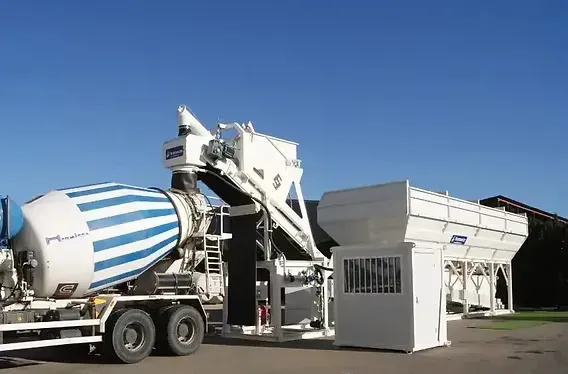

A ready-mix operation is its own operating model, not a coverage line — and the thing that defines its insurance is the fleet. A producer batches concrete and delivers it with a fleet of mixer trucks, and that fleet is a trucking business first: it runs the heaviest vehicles on the road, under the federal motor-carrier rulebook, against a clock that does not stop. That is a very different risk picture from a crew that pours flatwork or a contractor that runs a single pump, and it demands a program built around the trucks, the drivers, and the federal regime they operate under rather than a generic business policy.
One exposure sits at the center of this model: the fleet itself. The mixer trucks are the operation, and they create liability the moment they leave the yard. A loaded mixer is among the heaviest vehicles on the road, carrying a liquid load that is high and that shifts as the drum turns — a center of gravity that makes rollover a severe risk and any at-fault accident a potentially catastrophic one. The line that answers for all of it is commercial auto: auto liability for the third-party harm the trucks cause and physical damage for the trucks themselves. For ready-mix, that is the dominant line, not a supporting one.
Layered on top of the road exposure is the federal motor-carrier regime. A mixer fleet running in interstate commerce — or in a state that applies the federal rules to intrastate carriers — generally falls under the Federal Motor Carrier Safety Administration (FMCSA) and the U.S. Department of Transportation (DOT), with a USDOT number identifying the carrier and the federal motor-carrier safety rules that govern its trucks and drivers. The MCS-90 endorsement — the real federal financial-responsibility endorsement — often comes with that territory. And the load adds its own pressure: ready-mix concrete is perishable, beginning to set up if it is not placed in time, so the fleet runs against a clock that compounds the driving exposure.
This page covers how ready mix insurance is built for the trucking-first model: what the model is and the work it covers, the fleet-and-federal risk profile, the coverage stack it leans on, the drivers that move cost, and how carriers underwrite it. Ready-mix is not the install model and it is not the single-pump model. If your crews also pour and finish flatwork and foundations, the Concrete Construction Insurance page leads with that exposure; if you also run a boom pump, the Concrete Pumping Insurance page is built around that single high-value truck. Many producers do more than one of these, and each scope is rated on its own terms.
Running a mixer fleet? Get a quote built around commercial auto, the federal motor-carrier layer, and the trucks you run.
Get a Free QuoteWhat makes ready mix insurance different
Ready-mix risk is trucking risk, and it lands where a generic business policy does not look. The first reason is that commercial auto is the dominant line, not a supporting one — the fleet is the business, the trucks are the heaviest vehicles on the road, and the at-fault accident or the rollover is the loss that defines the class. The second is the federal layer: a mixer fleet is regulated as a motor carrier, so the DOT and FMCSA rules, the USDOT number, and the MCS-90 endorsement attach to the program in a way they never do for a shop or an install crew. A policy rated to a generic contractor or light-commercial risk treats none of this with the emphasis a motor-carrier fleet needs.
The practical consequence is that two producers with similar revenue can carry very different exposures depending on how their fleets run. A producer hauling locally on owned mixers carries a different federal and severity profile than one running for-hire or across state lines, and a fleet with a strong driver-safety and maintenance discipline opens different markets than one without. We separate the fleet exposure from the yard and the batch plant, read the federal motor-carrier dimension honestly, and weight the stack toward the auto-and-umbrella severity the ready-mix model actually carries — rather than averaging the trucks into a generic concrete policy.
The work this covers
The ready-mix model holds several kinds of work that share one risk profile — a fleet of mixer trucks delivering a perishable load under the federal motor-carrier rules. These are the operations that live within this pillar:
- Mixer truck fleets. The core of the model — a fleet of mixer trucks that is the business and the dominant exposure, carrying auto liability and physical damage as the trucks run the road and maneuver at the pour.
- Ready-mix delivery. Batched concrete delivered to the placement site against the clock — the day-to-day operation where the driving exposure and the perishable load both run highest.
- Batch-plant-to-pour logistics. The dispatch-and-delivery operation that moves concrete from the batch plant to the job, where routing, timing, and the load on board drive the risk.
- Batch plant operations. The plant and yard that load the fleet — the fixed-site exposure that sits behind the trucks, alongside the rolling exposure of the fleet itself.
- Volumetric mixers. Truck-mounted volumetric units that batch on site — still a truck-centered, auto-dominant exposure that runs under the same motor-carrier logic as a drum fleet.
- For-hire and interstate hauling. The dimension that deepens the federal layer — a fleet running for-hire or across state lines generally carries the fuller motor-carrier regime and the MCS-90 territory.
Pouring and finishing the concrete, or placing it through a boom pump, are not the lead of this model — they are the install and pumping pillars, which carry their own signature exposures. If your operation hauls ready-mix and also pours or pumps, each scope is underwritten on its own terms.
State and regulatory considerations
What shapes ready-mix risk by location is the federal motor-carrier regime and the way states apply it. A mixer fleet running in interstate commerce generally falls under the FMCSA and the U.S. Department of Transportation, with a USDOT number and the federal safety rules for trucks and drivers; many states also apply the federal framework, in whole or in part, to intrastate carriers, so whether and how the rules reach your fleet depends on where and how you run. Worker safety in the yard and at the plant runs through OSHA standards, and a documented safety program is something carriers look for. Workers compensation rules vary by state, including the four monopolistic states — North Dakota, Ohio, Washington, and Wyoming — where coverage comes only through the state fund, which matters for a producer whose drivers cross a state line or whose ownership runs plants in more than one state.
We name the federal bodies and the MCS-90 honestly and do not attach a regulation citation or a penalty figure we cannot verify. As our state pages come online we link the motor-carrier, workers-compensation, and worker-safety specifics for the states we serve. We write across all 48 licensed states, with priority markets including Texas, California, Florida, Indiana, and Ohio.
Coverage breakdown
Here is the stack a ready-mix operation carries, weighted for the trucking-first model. Each line links to its full page — and commercial auto, carrying the fleet, the federal motor-carrier layer, and the MCS-90, is the signature placement for this model.
- Commercial Auto Insurance — the signature line: auto liability for the third-party harm the mixer fleet causes and physical damage for the trucks themselves, plus the federal motor-carrier layer a USDOT-numbered fleet runs under — DOT and FMCSA, the covered-auto symbols, and the MCS-90 endorsement.
- Umbrella Liability Insurance — excess limits above commercial auto and the other primary lines for the serious fleet loss: a fully loaded mixer rollover or at-fault accident is exactly the severity an umbrella is built to sit behind.
- Workers Compensation Insurance — medical and lost-wage coverage for drivers and the yard and batch-plant crew, with employers liability and honest handling of the monopolistic state-fund states.
- General Liability Insurance — third-party bodily injury and property damage around the delivery and the site, lighter for this model than for an install contractor but still part of the program.
- Commercial Property Insurance — the batch plant, the yard, stored materials, and the equipment against fire, theft, and the perils a producer’s fixed site carries, with business income for a covered shutdown.
What ready mix insurance costs
Premium tracks the fleet, not a sticker price. The drivers that move it most are the size and value of the mixer fleet and how the trucks run, your driver payroll and motor-vehicle records, whether you haul locally, for-hire, or across state lines, your USDOT and federal motor-carrier profile, the limits your contracts and the federal rules call for, your batch-plant and yard values, your prior auto and workers-compensation claims, and your driver-safety and maintenance discipline. A fleet running for-hire or interstate generally carries a deeper federal and severity profile than a producer hauling locally on owned trucks, and a strong driver-safety record opens markets a poor loss history closes. We price to that real picture and stand behind any figure we give — verified ranges come from us directly, never a generic guess.
Claims scenarios
These are plausible ready-mix claim categories, described qualitatively and with generic carrier language — every claim is handled by the carrier, never named here — and with no fabricated cost, frequency, or penalty figures.
- A loaded mixer rolls over. A fully loaded truck shifts and rolls, with the potential for serious third-party harm and a major loss — the auto-liability and physical-damage exposure, with an umbrella behind it for the severity.
- An at-fault road accident. A mixer causes third-party bodily injury or property damage on the road or maneuvering at the pour — a commercial-auto liability claim, with the MCS-90 backstopping the public where the federal rules apply.
- A driver injury. A driver or a yard worker is hurt loading, delivering, or working around the plant — a workers compensation claim, including the monopolistic-state handling where it applies.
- A loss at the batch plant. Fire, theft, or a covered peril damages the plant, the yard, or stored materials — a commercial-property claim, distinct from the rolling exposure of the fleet.
Underwriting realities
Carriers writing the ready-mix class look at the fleet and the discipline: the number, age, and value of the mixers, the driver payroll and motor-vehicle records, whether you run locally, for-hire, or interstate, your USDOT and federal motor-carrier profile, your batch-plant and yard values, your safety and maintenance program, and your prior auto and workers-compensation history. A well-maintained fleet with strong driver records, a documented safety program, and a clean loss history opens more markets; an older fleet without a maintenance record, poor driver records, or a serious auto loss narrows them. A producer that also pours or pumps gets that portion underwritten separately so the fleet book is not subsidizing — or stranding — the rest. We position your operation to the carriers most likely to want a motor-carrier-style concrete fleet rather than sending one generic submission everywhere.
Why Concrete Guard Insurance
We write one class — concrete contractors — and within it we treat ready-mix as the trucking operation it is. We weight your stack toward commercial auto and the umbrella severity a loaded mixer fleet carries, name the DOT and FMCSA regime and the MCS-90 endorsement precisely for a USDOT-numbered fleet, read the load-shift, rollover, and perishability exposures against the way you run, and structure workers compensation, general liability, and the batch-plant property around the fleet rather than ahead of it. We place coverage with carriers that want the ready-mix class. Start with a quote, or talk it through with us first.
Learn more
Ready-mix is one of three operating models we write, and the coverage stack shifts with the work. The signature exposure for this model lives on the commercial auto page, with umbrella liability close behind for fleet severity. If your crews also pour and finish flatwork and foundations, the Concrete Construction Insurance page leads with the completed-operations exposure; if you also run a boom pump, the Concrete Pumping Insurance page is built around that single high-value truck and the power-line exposure.
Coverage for ready-mix operations
- General Liability Insurance
- Commercial Auto Insurance
- Commercial Property Insurance
- Workers Compensation Insurance
- Umbrella Liability Insurance
Insurance by operating model
Get covered
Primary sources
Frequently asked questions about Ready Mix Insurance
What insurance does a ready-mix concrete operation need?
A ready-mix operation is a trucking business first, so commercial auto is the dominant line — auto liability and physical damage on the mixer fleet, with the federal motor-carrier mechanics that come with running trucks. Around it sits an umbrella for the severity a fully loaded mixer can create, workers compensation for the drivers and the yard crew, general liability for the delivery and site exposure, and commercial property for the batch plant, the yard, and the equipment. The weight sits on the trucks: a mixer fleet runs under DOT and FMCSA rules, carries the heaviest vehicles on the road, and runs against a clock, so we build the stack around the fleet and the federal layer rather than a generic business policy.
What is an MCS-90 and does my mixer fleet need one?
The MCS-90 is a real federal endorsement — the financial-responsibility endorsement tied to the Motor Carrier Act of 1980 — that typically attaches to a for-hire or interstate motor carrier’s auto liability policy. It works as a safety net for the public: it generally guarantees that an injured member of the public can be paid for bodily injury or property damage up to the applicable federal minimum, even where a coverage dispute might otherwise apply, after which the carrier can seek reimbursement from the insured. It is a surety mechanism that backstops the public, not primary coverage that broadens your own protection. Whether your ready-mix fleet needs one depends on how and where it runs and the federal motor-carrier rules that apply — which is part of what we determine before placing the program. We name the form precisely and describe the federal minimum qualitatively rather than guess at a figure.
How does DOT and FMCSA regulation affect a ready-mix fleet?
A mixer fleet is regulated as motor-carrier equipment. The Federal Motor Carrier Safety Administration (FMCSA), part of the U.S. Department of Transportation (DOT), regulates motor carriers, and a fleet operating in interstate commerce — or in a state that has adopted the federal rules for intrastate carriers — generally falls under that regime. It is built around a USDOT number identifying the carrier and the federal motor-carrier safety rules that apply to its trucks and drivers. These are real federal bodies and a real identifier; whether and how they apply to your fleet depends on how and where you run, which is part of what we read before placing the program. We do not attach a regulation citation or a penalty figure we cannot verify.
Why is commercial auto the dominant line for ready-mix?
Because the fleet is the business. A ready-mix producer delivers concrete with a fleet of mixer trucks, and that fleet is a trucking operation — so the line that covers the trucks, commercial auto, carries the heaviest exposure. A loaded mixer is among the heaviest vehicles on the road, with a high, shifting center of gravity that makes rollover a severe risk, and the fleet runs under the federal motor-carrier regime on top of ordinary road liability. That is a very different center of gravity from an install crew, whose signature exposure is the completed work it leaves behind, or a pumping contractor, whose program turns on a single high-value boom truck. For ready-mix, the auto program and the federal layer are the spine, and the other lines are built around them.
Does insurance cover a load that sets before delivery?
Ready-mix concrete is perishable — it begins to set up if it is not placed in time — so a fleet runs against the clock in a way that compounds the driving exposure. How a policy treats a load that is lost because it sets up before delivery is a specific question rather than an assumption: it is not the same as the third-party harm a truck causes on the road, which is auto liability, and it is not the same as the building and equipment exposure that runs through commercial property. The perishability pressure is part of why ready-mix is a distinct operating model, and reading how your program responds to a spoiled or rejected load is exactly the kind of detail we work through with a producer rather than leaving it to chance. We do not promise a coverage outcome we have not read against the policy in front of us.
I both haul ready-mix and run a pump truck — which coverage do I need?
Many producers do both, and the honest answer is that each scope is underwritten on its own terms. The mixer fleet is the trucking-first, auto-dominant exposure this page is built for — commercial auto, the federal motor-carrier layer, and the load-shift and rollover severity of a loaded fleet. A boom pump truck is a different animal: a single high-value mobile asset whose program turns on physical damage to the truck and the catastrophic power-line exposure on the pour, which is the model the concrete-pumping page leads with. If you run both, you carry both profiles, and we structure the program so the fleet and the pump are each rated to what they really are rather than averaged into one generic concrete policy. This page is the fleet; the pumping page is the boom truck.
Ready-Mix Insurance by State
We write ready-mix operations in all 48 licensed states. Pick your state for the local motor-carrier, workers-compensation, and coverage picture for the mixer-fleet model.
- Alabama
- Arizona
- Arkansas
- California
- Colorado
- Connecticut
- Delaware
- Florida
- Georgia
- Idaho
- Illinois
- Indiana
- Iowa
- Kansas
- Kentucky
- Louisiana
- Maine
- Maryland
- Massachusetts
- Michigan
- Minnesota
- Mississippi
- Missouri
- Montana
- Nebraska
- Nevada
- New Hampshire
- New Jersey
- New Mexico
- New York
- North Carolina
- North Dakota
- Ohio
- Oklahoma
- Oregon
- Pennsylvania
- Rhode Island
- South Carolina
- South Dakota
- Tennessee
- Texas
- Utah
- Vermont
- Virginia
- Washington
- West Virginia
- Wisconsin
- Wyoming
Insure your mixer fleet the way it runs
Tell us how your fleet runs — local, for-hire, or interstate — and we will market it to carriers that write the ready-mix class, with commercial auto and the federal motor-carrier layer covered, not assumed.