
Ready mix insurance · South Dakota
Ready Mix Concrete Business Insurance in South Dakota
Insurance for the South Dakota ready-mix operation — a fleet of mixer trucks delivering ready-mix is a trucking business first, and in South Dakota it runs across two very different delivery maps: the eastern I-29 and I-90 prairie where Sioux Falls is the growth engine, and the West River ranch country and Black Hills where a pour can sit long distances from the nearest batch plant. Commercial auto is the dominant line, the fleet runs under the federal motor-carrier regime, and every haul runs against the workability clock on a perishable load.

A ready-mix operation in South Dakota is defined less by a single risk than by a single measurement: distance. The product a producer sells is perishable — wet concrete begins to set the moment it is batched — and it is delivered from a fixed batch plant to a pour that can sit anywhere from a few blocks away to the far side of a county. That gap between the plant and the pour, run against a clock that does not stop, is the thing that shapes the whole operation, and in South Dakota the gap is not one number but two very different ones. The state is really two delivery maps stitched together, and a mixer fleet that serves both is running two different businesses out of the same yard.
East River is the eastern corn-and-soybean prairie along the I-29 and I-90 corridors, where Sioux Falls is the clear growth engine — the state’s fast-growing commercial and residential market, dense enough that a delivery there behaves like metro ready-mix anywhere: short hauls, tight pour windows, and traffic rather than distance eating the clock. West River is ranch country and the Black Hills, where the towns are farther apart and a pour can sit long distances from the nearest plant, so the same load that never tests the freshness window in Sioux Falls can run close to the edge of it on a long ranch-country haul. The spread between those two worlds is the whole challenge — and it is why a South Dakota ready-mix program cannot be rated as if every delivery looked alike.
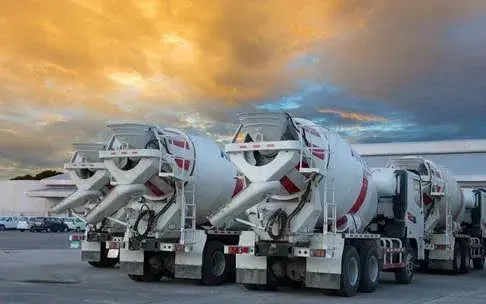
Underneath the geography sits the structural fact that makes ready-mix its own operating model: the fleet is the business. A producer batches concrete and delivers it with a fleet of mixer trucks, and that fleet is a trucking business first — the heaviest vehicles on the road, run under the federal motor-carrier rulebook, against the workability clock. That is a very different risk picture from a South Dakota crew that pours flatwork or a contractor that runs a single pump, and it demands a program built around the trucks, the drivers, and the regulation they operate under rather than a generic business policy. The line that answers for the fleet is commercial auto, and for ready-mix it is the dominant line, not a supporting one.
This page covers how ready mix insurance is built for the South Dakota trucking-first model — the two delivery maps and the haul radius each one carries, the ASTM C94 workability window that governs a long West River run, the federal-and-state regulatory axis a mixer fleet answers to, the coverage stack it leans on, the competitive-market workers-comp decision that lands on the drivers and the yard crew, and the excise-tax registration that stands in for a license. Ready-mix is not the install model and it is not the single-pump model; the South Dakota concrete contractor insurance page leads with completed-operations on installed work over South Dakota’s shifting soils, and the South Dakota concrete pumping insurance page is built around a single high-value boom truck and the power-line exposure. Many South Dakota producers do more than one, and each scope is rated on its own terms.
Running a mixer fleet in South Dakota? Get a quote built around commercial auto, the federal motor-carrier layer, and the hauls you actually run.
Get a Free QuoteTwo delivery maps: East River metro versus West River ranch hauls
Start with the geography, because for a ready-mix fleet the geography is the exposure. South Dakota splits into two delivery worlds that share almost nothing but a state line. To the east lies the corn-and-soybean prairie strung along the I-29 and I-90 corridors, and Sioux Falls anchors it as the clear growth engine — the state’s largest and fastest-growing market, where commercial build-out, residential subdivisions, and infrastructure work concentrate the pours a fleet feeds. A delivery inside the Sioux Falls metro is short-haul, high-frequency work: the plant is close to the job, the trucks cycle quickly, and what pressures the clock is traffic and the pour schedule rather than raw distance. In that respect an East River fleet looks like ready-mix anywhere a state has a growing metro.
West River is the opposite problem. The ranch country and the Black Hills west of the Missouri run to long distances between towns, and a plant there feeds pours that can sit far out on a county road, at a remote agricultural site, or up a grade into the Hills. The trucks spend more of the day on two-lane highways and interstate at speed, covering ground rather than cycling short. That distance is not just a scheduling headache; it is a road-exposure fact. The further and longer a mixer runs, the more highway miles it accumulates, the more grades and open-road speeds it faces, and the more the whole delivery depends on the truck running on time over country where help and infrastructure are farther apart. Between and beyond the two poles sits the state’s spread, low-rise agricultural work, fed by hauls that can be long in either direction.
For an insurance program, the honest read is that two South Dakota ready-mix operations with similar revenue can carry very different exposures depending on which map they run. A Sioux Falls-corridor fleet concentrates its risk in dense, high-frequency short hauls; a West River fleet concentrates it in long-distance runs at speed over sparse country. Most producers who serve the whole state carry some of both. We separate those delivery profiles rather than averaging them into a single generic rate, because the auto exposure — the miles, the speeds, the grades, and the time on the road — is where the ready-mix program lives, and the two maps generate it very differently. The spread between them is not a footnote to a South Dakota ready-mix program; it is the thing the program is built to price.
The workability clock across ranch-country distance
Ready-mix concrete is a perishable product, and that single fact drives the discipline of the whole operation. Concrete begins to hydrate and stiffen the moment water meets cement in the drum, and the industry works to a well-known delivery guideline in ASTM C94, the standard specification for ready-mixed concrete, which is commonly described as discharging the load within roughly 90 minutes — or about 300 revolutions of the drum — from the time of batching, whichever comes first, unless a specific mix is designed and accepted to run longer. That guideline is the only delivery-window number on this page, and it is a real published figure rather than one we invented: it is the freshness window a driver and a dispatcher are managing on every load.
In the two-map state, that window behaves like two different constraints. Inside the Sioux Falls metro, a short haul rarely comes close to the edge of the workability window — the load is discharged with time to spare, and the clock is a background fact rather than a live pressure. On a long West River haul, the same clock becomes the governing constraint: a mixer running a remote ranch-country pour or a site well out from the nearest plant can consume much of the freshness window in transit before it ever reaches the placement. That is why West River delivery geography shapes so much of how a producer runs — where the batch plant is sited relative to the pours it feeds, how batching and dispatch are timed so a truck leaves at the right moment, and how mix design and admixtures are used to keep a load workable over distance. None of that is guesswork we assign a figure to; it is the operating reality a ready-mix producer manages every day.
The workability clock connects to insurance through the trucks, not through a coverage line of its own. A fleet built to serve long hauls on time runs more highway miles at speed, keeps drivers on the road longer, and depends heavily on the reliability and scheduling of the equipment — all of which are auto-exposure and operational facts a carrier weighs. A fleet that mostly serves short metro deliveries carries a different, denser profile. We read where a producer’s hauls actually fall on that spectrum — how much of the book is short Sioux Falls-corridor work and how much is long West River distance — because the delivery geography and the workability window together describe how hard the fleet is worked, and that is a real input to the program rather than a marketing detail.
Commercial auto and the federal motor-carrier regime
Because the fleet is the business, commercial auto is the signature line for a South Dakota ready-mix operation, and layered on top of ordinary road liability is the federal motor-carrier regime that treats a mixer fleet as what it is: a motor carrier. A fleet that crosses state lines for hire operates under the Federal Motor Carrier Safety Administration (FMCSA) and the U.S. Department of Transportation (DOT) — identified by a USDOT number, governed by the federal safety rules for its trucks and drivers, and, for a for-hire interstate carrier, carrying the MCS-90 endorsement. A fleet that runs only within South Dakota handles registration instead through the state’s prorate and motor-carrier program, with the South Dakota Highway Patrol enforcing weight and safety at the roadside across long rural distances, and the South Dakota Public Utilities Commission also in the picture for intrastate carriers. We name the federal and state bodies a South Dakota mixer fleet actually answers to and never invent a rule or a number it does not carry.
The MCS-90 deserves its own plain-language explanation because it is widely misunderstood. It is a real federal financial-responsibility endorsement tied to the Motor Carrier Act of 1980, and it typically attaches to a for-hire or interstate carrier’s auto liability policy. It functions as a surety mechanism backstopping the public: it generally guarantees that a member of the public injured by the carrier can be paid up to the applicable federal minimum, after which the carrier can be required to reimburse the insurer. It is not primary coverage that broadens your own protection, and it is not a substitute for adequate auto limits — it is a public guarantee bolted onto the policy. We describe the federal minimum qualitatively because the figure that applies turns on the commodity, the operation, and the rules in force for your fleet, and guessing at a dollar amount would be exactly the kind of fabricated number we refuse to put on a page. Whether and how each piece of the federal apparatus applies depends on where and how your fleet runs, which is part of what we read before placing the program.
The road exposure that all of this sits on top of is real and severe. A loaded mixer is among the heaviest vehicles on the road, carrying a liquid load that rides high in the drum and shifts as the drum turns — a center of gravity that makes rollover a genuine risk, especially on a highway grade, an on-ramp, or a curve taken with a full load. Any at-fault accident involving a truck that size can produce serious third-party harm, and on South Dakota’s long open highways and interstate grades the fleet runs that exposure over more miles than a purely metro operation would. We keep the severity qualitative — no invented weights, distances, or crash figures — but we do not understate it: the commercial-auto line, with an umbrella behind it, is built precisely for the loss a heavy mixer can cause, and the MCS-90, where it applies, is the federal financial-responsibility layer that backstops the public after a covered loss.
South Dakota workers comp for the drivers and yard crew
South Dakota runs a competitive workers-compensation market, so comp is placed with a private carrier rather than through a state fund — the state is not monopolistic. For a ready-mix operation the workers-comp exposure sits with two distinct groups, and both matter. The first is the drivers, who spend most of the day behind the wheel of a heavy truck over long South Dakota distances, loading and discharging at pour sites, and are exposed to the ordinary hazards of commercial driving and of working around a running mixer. The second is the batch-plant yard crew, who load the trucks, wash out drums, move aggregate, cement, and materials, and work around the plant’s machinery and the yard traffic. Neither group looks like an office payroll, and comp is a core line for both.
Workers compensation provides the medical and lost-wage coverage for an on-the-job injury and shields the business from employee-injury suits, and many general contractors, developers, and project contracts require it regardless of anything else. Because South Dakota places comp in a competitive private market rather than a monopolistic state fund, coverage is written by a private carrier and can be structured to the real shape of the operation. We build it to the actual driver and yard payroll classifications and the way the work is genuinely done — long-haul driving on one side of the ledger, batch-plant and yard work on the other — rather than treating comp as a single undifferentiated line. For a fleet that runs long West River hauls, the driving payroll carries real weight; for a plant-heavy operation, the yard classifications do. We read which is which and coordinate the comp placement with the commercial auto, umbrella, general liability, and property lines beside it.
Licensing in South Dakota: an excise-tax registration, not a license
South Dakota does not issue a statewide license to work as a general or concrete contractor, and hauling or delivering ready-mix is not a state-licensed trade — there is no state concrete-contractor license to hold. What the state does require is a contractor’s excise-tax license from the Department of Revenue, and it is important to be precise about what that is: it is a tax registration, not a contractor license. It registers a business for the excise tax that applies to construction work; it does not credential the trade, vouch for competence, or function as the kind of license a licensing state issues. Treating the excise-tax license as though it were a contractor license would misstate what South Dakota actually requires, and we do not.
What stands in the place of a statewide license is a combination of things. Some localities require their own licenses or registrations on top of the excise-tax registration, so the local gate varies by city and county. A mixer fleet also carries its motor-carrier registration — a USDOT number for an interstate fleet, or registration through the state’s prorate and motor-carrier program for an intrastate one — which is its own separate obligation distinct from anything a contractor registry would cover. And the general contractor or project owner sets its own insurance, certificate-of-insurance, and additional-insured requirements in the contract, which in practice is often the sharpest gate a ready-mix supplier actually has to clear. The honest summary is that the gate in South Dakota is the excise-tax registration, local permitting where it applies, the motor-carrier registration the fleet carries, and the contract — not a statewide concrete license — and we never imply a credential the state does not issue.
The metros and haul radius a South Dakota mixer fleet serves
For a ready-mix fleet the metros are not a list of office locations; they are the markets the trucks serve and the anchors from which the haul radius is measured. South Dakota’s construction demand runs across agriculture and ag-processing, residential and commercial growth, and infrastructure and highway work, and it concentrates around a handful of centers that each shape the delivery map differently.
- Sioux Falls. The state’s largest market and the East River growth engine on the I-29 and I-90 corridors, where commercial build-out, residential subdivisions, and infrastructure work concentrate the highest volume of short-haul, high-frequency deliveries a South Dakota fleet runs — the closest thing the state has to metro ready-mix, where traffic and pour windows compress the clock more than distance does.
- Rapid City. The West River hub at the edge of the Black Hills, where the haul radius stretches into ranch country and up grades into the Hills, and where the long-distance, on-time delivery problem — a perishable load against real distance — is at its sharpest.
- Aberdeen. A northeastern-prairie market anchoring agricultural, commercial, and residential demand, fed by hauls that run out across the surrounding farm country.
- Brookings. A steady eastern market on the I-29 corridor with a mix of institutional, commercial, and residential work drawing regular deliveries.
- Watertown. A northeastern glacial-till center feeding agricultural, commercial, and residential pours across a spread service area.
The point for a ready-mix program is that these anchors describe two things at once: the demand a fleet feeds, and the distances it covers to feed it. A Sioux Falls-centered operation runs dense and short; a Rapid City or ranch-country operation runs long and open; a producer serving Aberdeen, Brookings, and Watertown covers spread prairie in between. The metros matter to the program as delivery markets and haul radii — because the denser the market the more the traffic and pour windows pressure the clock, and the more remote the pour the more distance and open-road exposure the fleet carries. Both extremes generate the same core line, commercial auto, but they generate it differently, which is exactly why the two delivery maps drive the whole program.
Coverage breakdown for a South Dakota ready-mix fleet
Here is the stack a South Dakota ready-mix operation carries, weighted for the trucking-first model. Each line links to its full page — and commercial auto, carrying the fleet, the federal motor-carrier layer, and the MCS-90, is the signature placement for this model, over both the short East River hauls and the long West River runs.
- Commercial Auto Insurance — the signature line: auto liability for the third-party harm the mixer fleet causes and physical damage for the trucks themselves, over long West River hauls and dense Sioux Falls-corridor traffic alike, plus the federal motor-carrier layer a USDOT-numbered South Dakota fleet runs under — DOT and FMCSA, the ISO covered-auto symbols, and the MCS-90 endorsement for a for-hire interstate carrier.
- Umbrella Liability Insurance — excess limits above commercial auto and the other primary lines for the serious fleet loss: a fully loaded mixer rollover on an I-90 grade or a two-lane ranch-country highway, or an at-fault accident, is exactly the severity an umbrella is built to sit behind.
- Workers Compensation Insurance — medical and lost-wage coverage for the drivers who run the long South Dakota hauls and the batch-plant yard crew — placed in South Dakota’s competitive private market, structured to the real driver and yard payroll classifications rather than assumed.
- General Liability Insurance — third-party bodily injury and property damage around the delivery and the placement site, lighter for the fleet model than for an install contractor but still part of the program, from a Sioux Falls jobsite to a remote ranch-country pour.
- Commercial Property Insurance — the batch plant, the yard, stored aggregate, cement, and materials, and the equipment against fire, theft, and the perils a producer’s fixed site carries, with business income for a covered shutdown — the more so when a plant sites far from the pours it feeds.
Claims scenarios
These are plausible South Dakota ready-mix claim categories, described qualitatively and with generic carrier language — every claim is handled by the carrier, never named here — and with no fabricated cost, frequency, or penalty figures.
- A loaded mixer rolls over. A fully loaded truck shifts and rolls on an I-90 grade, an interstate on-ramp, or a two-lane West River highway, with the potential for serious third-party harm and a major loss — the auto-liability and physical-damage exposure, with an umbrella behind it for the severity.
- An at-fault road accident on a long haul. A mixer causes third-party bodily injury or property damage on an open South Dakota highway or maneuvering at a remote pour — a commercial-auto liability claim, with the MCS-90 backstopping the public where the federal rules apply to the fleet.
- A driver or yard injury. A driver is hurt on the road or discharging a load, or a batch-plant worker is injured loading, washing out, or working around the yard — a workers compensation claim placed in South Dakota’s competitive private market.
- A loss at the batch plant. Fire, theft, or a covered peril damages the plant, the yard, stored aggregate and cement, or the equipment — a commercial-property claim, distinct from the rolling exposure of the fleet.
Why Concrete Guard Insurance
We write one class — concrete contractors — and in South Dakota we treat ready-mix as the trucking operation it is. We weight your stack toward commercial auto and the umbrella severity a loaded mixer fleet carries over both the short Sioux Falls-corridor hauls and the long West River runs, name the DOT and FMCSA regime and the MCS-90 endorsement precisely for a USDOT-numbered fleet, account for the state’s prorate and motor-carrier program and the South Dakota Highway Patrol enforcement an intrastate fleet runs under, read the competitive-market workers-comp decision against your drivers and your batch-plant yard crew, and structure general liability and the batch-plant property around the fleet rather than ahead of it. We are honest that the state’s gate is an excise-tax registration and the contract, not a license the state does not issue, and we read where your hauls actually fall on the two-map spread. We place coverage with carriers that want the ready-mix class. Start with a quote, or talk it through with us first.
Learn more
Ready-mix is one of three operating models we write in South Dakota, and the coverage stack shifts with the work. The signature exposure for this model lives on the commercial auto page, with umbrella liability close behind for fleet severity. If your crews also pour and finish flatwork and foundations, the South Dakota concrete contractor insurance page leads with the completed-operations exposure over South Dakota’s shifting soils; if you also run a boom pump, the South Dakota concrete pumping insurance page is built around that single high-value truck and the power-line exposure.
Coverage for a South Dakota ready-mix fleet
- Commercial Auto Insurance
- Umbrella Liability Insurance
- Workers Compensation Insurance
- General Liability Insurance
- Commercial Property Insurance
Insurance by operating model
Get covered
Primary sources
Frequently asked questions about South Dakota ready mix insurance
Does a South Dakota ready-mix fleet need a USDOT number or an MCS-90?
It depends on how and where the fleet runs. A South Dakota mixer fleet that crosses state lines for hire operates under the Federal Motor Carrier Safety Administration (FMCSA) and the U.S. Department of Transportation (DOT), which is built around a USDOT number identifying the carrier and the federal motor-carrier safety rules for its trucks and drivers; a for-hire interstate carrier is also where the MCS-90 endorsement typically attaches. A fleet operating only within South Dakota handles registration instead through the state’s prorate and motor-carrier program, with the South Dakota Highway Patrol enforcing weight and safety at the roadside and the South Dakota Public Utilities Commission also in the picture for intrastate carriers. The MCS-90 is a real federal financial-responsibility endorsement tied to the Motor Carrier Act of 1980; it generally guarantees a member of the public can be paid up to the applicable federal minimum, after which the carrier can seek reimbursement from the insured. We name the federal and state bodies your fleet actually answers to and describe the federal minimum qualitatively rather than guess at a figure.
How do DOT and FMCSA rules apply to a South Dakota mixer fleet?
A mixer fleet is regulated as motor-carrier equipment, so the federal rulebook lands on it in a way it never does for a generic business. The FMCSA, part of the DOT, regulates motor carriers, and a South Dakota fleet operating in interstate commerce — or under the federal rules as applied to intrastate carriers — generally falls under that regime, identified by a USDOT number and governed by the federal safety rules for its trucks and drivers. A fleet that runs only within South Dakota registers through the state’s prorate and motor-carrier program, with the South Dakota Highway Patrol enforcing weight and safety at the roadside across long rural distances. These are real federal and state bodies and a real identifier; whether and how each applies turns on where and how you run, which is part of what we read before placing the program. We do not attach a regulation citation or a penalty figure we cannot verify.
Why is commercial auto the main line for a South Dakota ready-mix operation?
Because the fleet is the business. A South Dakota ready-mix producer batches concrete and delivers it with a fleet of mixer trucks, and that fleet is a trucking operation — so the line that covers the trucks, commercial auto, carries the heaviest exposure. A loaded mixer is among the heaviest vehicles on the road, with a high, shifting center of gravity that makes rollover a severe risk, and in South Dakota the fleet runs that risk over long two-lane ranch-country highways, the I-29 and I-90 corridors, and the grades into the Black Hills, on top of ordinary road liability. That is a very different center of gravity from an install crew, whose signature exposure is the completed work it leaves behind, or a pumping contractor, whose program turns on a single high-value boom truck. For ready-mix, commercial auto and the federal layer are the spine, and the umbrella, workers compensation, general liability, and property are built around them.
How does the workability clock affect a long West River ready-mix haul?
Ready-mix concrete is perishable — it begins to set once it is batched — and the industry works to the ASTM C94 guideline, which is commonly described as delivery within roughly 90 minutes or about 300 drum revolutions from batching, whichever comes first, unless a mix is specifically designed otherwise. In eastern South Dakota, a short delivery inside the Sioux Falls metro rarely tests that window. West River, where a pour can sit long distances from the nearest batch plant across ranch country and the Black Hills, the same load can run much closer to the edge of the workability window, which drives plant siting, batching-and-dispatch timing, and admixture decisions. This affects insurance indirectly rather than directly: the further and longer the haul, the more road exposure the fleet carries and the more the operation depends on the trucks running on time. We read that real delivery geography rather than treating every haul as a short one, and the 90-minute-or-300-revolution guideline is the only delivery-window figure we cite.
How does South Dakota workers comp affect mixer-truck drivers and the yard crew?
South Dakota runs a competitive workers-compensation market, so comp is placed with a private carrier rather than a state fund. For a ready-mix operation the exposure sits with two groups: the drivers, who are on the road for most of the day over long South Dakota distances, and the yard crew who load, wash out, and work around the batch plant. Comp provides the medical and lost-wage coverage for an on-the-job injury and shields the business from employee-injury suits, and many general contractors, developers, and project contracts require it regardless. South Dakota is not a monopolistic state-fund state, so coverage is placed with a private carrier and structured to the real driver and yard payroll classifications and the way the work is actually done — not treated as a box to check.
Does South Dakota require a license to run a ready-mix concrete business?
South Dakota does not issue a statewide license to work as a general or concrete contractor — there is no state concrete-contractor license to hold, and hauling or delivering ready-mix is not a state-licensed trade. What does apply is a contractor’s excise-tax license from the Department of Revenue, which is a tax registration rather than a contractor license, and some localities require their own licenses on top of it. Alongside that sit the motor-carrier registration a mixer fleet carries — a USDOT number for an interstate fleet or registration through the state’s prorate and motor-carrier program for an intrastate one — and the local gate, where a general contractor or project owner sets its own insurance, certificate-of-insurance, and additional-insured requirements. The gate in South Dakota is the excise-tax registration, local permitting, and the contract, not a statewide concrete license, and we are honest about that rather than implying a credential the state does not issue.
Is South Dakota ready-mix insurance different from concrete or pumping coverage?
Yes — the operating model changes the program even within South Dakota. The ready-mix model is the trucking-first, auto-dominant fleet this page is built for: commercial auto, the federal motor-carrier layer, the load-shift and rollover severity of a loaded mixer, and the long-haul spread across the state on a perishable load. A concrete construction operation leads with the completed work it installs — the slab or foundation over Pierre Shale clay or glacial till that can fail downstream — and a labor-heavy crew, which is the focus of the South Dakota concrete contractor page. A concrete pumping contractor builds the program around a single high-value boom truck and the power-line exposure on the pour, which is the South Dakota concrete pumping page. The shared South Dakota facts — the competitive private comp market, the excise-tax registration in place of a license, the metros you serve — apply to all three, but they frame differently for a mixer fleet under federal trucking rules. If you do more than one, each scope is rated on its own terms.
Insure your South Dakota mixer fleet the way it runs
Tell us how your fleet runs — short Sioux Falls-corridor hauls, long West River distance, local, for-hire, or across state lines — and we will market it to carriers that write the ready-mix class, with commercial auto and the federal motor-carrier layer covered, not assumed.