
Coverage line
General Liability Insurance for Concrete Contractors
The foundation policy for a concrete business — and the two signature exposures that define the trade: a slab or foundation that fails downstream after the pour, and a pump boom that contacts an overhead power line. The completed-operations side of general liability is built to answer for them.
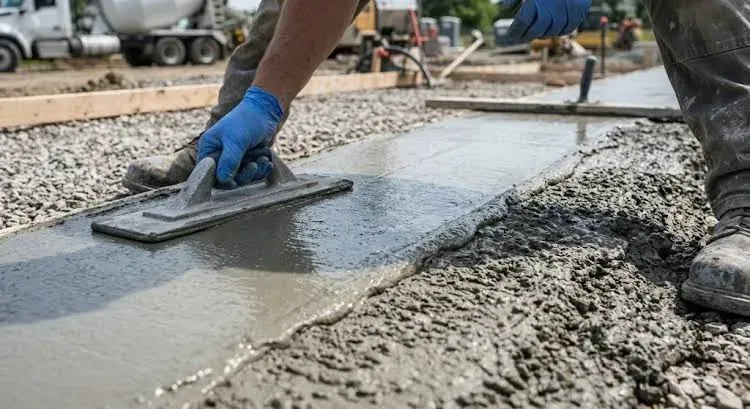

General liability is the coverage that answers for the people and property around your work — not your own crew, and not your own trucks, equipment, or yard, but everyone else who can be hurt or have something damaged because of what your concrete business does and what it leaves behind. For a concrete contractor it is the foundation policy: the one general contractors and project owners want to see first, the one your certificate-of-insurance and additional-insured requirements are built on, and the one that decides whether a third-party claim is a phone call or a bill you pay out of pocket.
But concrete carries two exposures that set it apart from most businesses, and they are the reason this is the signature general-liability page rather than a generic one. The first is the work you leave behind: a slab, footer, driveway, or foundation that fails after the pour is finished, long after you have left the site. The second belongs to the pumping side of the trade: a boom pump truck whose boom can contact an overhead power line during placement, with catastrophic results. This page covers the everyday third-party exposure up top, then gives each of those two signature exposures its own deep section, names the additional-insured endorsements a general contractor will demand of you, and finally draws the honest seam where general liability stops and commercial auto begins.
Third-party bodily injury and property damage on the job
Before the signature exposures, general liability answers for the ordinary third-party risk of running concrete work where the public and other trades are around. A property owner, a passerby, a delivery driver, or another contractor’s worker hurt around your pour, your forms, your trucks on site, or your materials is a third-party bodily-injury claim, and general liability is built to respond to it and to the legal defense that comes with it.
The same is true of damage you do to property that is not yours. A blowout that floods a finished basement, overspray or washout that stains a neighbor’s drive, a truck that clips a property wall, concrete placed where it should not be — these are third-party property-damage claims that arise around the operation, and general liability responds to them. What it draws a careful line around is damage to your own work and the cost of redoing it — which is where the completed-operations section picks up.
The signature exposure (1): completed operations on your installed work
This is the first section worth slowing down on, because completed operations is the loss that defines installed concrete and the one owners most often misunderstand. Almost every business carries some general-liability exposure; few carry the completed-operations tail the way a concrete contractor does, because the work you finish keeps existing — bearing load, weathering, freezing and thawing, settling — long after you collect final payment, and a failure in it can turn into a serious third-party loss months or years later.
The standard commercial general liability policy answers for this through what it calls the products-completed operations hazard. In the standard ISO coverage form — the one most general liability policies start from, typically the occurrence-based form known as CG 00 01 — that hazard is a defined term: it covers bodily injury and property damage arising out of “your work,” occurring away from your premises, once the work is complete. For a contractor, the finished installation is “your work” — this is the completed-WORK mechanism, not a product made and shipped off a line — and for a concrete business it is the heart of why the coverage matters.
The scenarios it is built for are specific and serious:
- A slab or foundation fails under load. A structural slab, footing, or foundation you placed cracks, settles, or fails after the job is done and causes third-party bodily injury or damages the structure built on it.
- Flatwork fails and someone is hurt. A driveway, sidewalk, or patio that heaves, spalls, or cracks into a trip hazard injures a member of the public after you have left the site.
- Decorative or specialty work fails downstream. Stamped, stained, or architectural concrete that fails and damages the surrounding property or finishes.
- A failure traced back up the chain. Your completed concrete is blamed for a failure in the larger project, and the claim follows your work back to you long after substantial completion.
Now the trigger nuance that trips owners up, and the one we walk every contractor through. The standard CG 00 01 form is written on an occurrence basis — it responds to bodily injury or property damage that occurs during the policy period, regardless of when the claim is finally made, even years later. There is also a claims-made version, the CG 00 02 form, which responds based on when the claim is reported and depends on continuous coverage and retroactive dates. Because a concrete failure can surface a long time after the pour, the long-tail nature of this exposure usually makes occurrence-based coverage valuable to a contractor — but the form your policy actually uses is something to read before a loss, not during one, and we check it against the work you do.
There is a second line underneath the first, and it is constantly misread. Completed operations responds to the third-party harm your failed work causes — the person hurt, the other property damaged, the structure that relied on your concrete. It does not simply pay to tear out and re-pour your own defective work because it failed: the standard form carries exclusions, framed around “your work,” that treat redoing your own concrete as a business cost rather than a covered third-party claim. The resulting damage to others is the insured event; the rebuild of your own failed pour is not. Getting that line right before a claim — and structuring the program with it in mind — is exactly the work we do with a concrete business rather than letting an owner assume the policy makes them whole on their own callbacks.
The products-completed operations aggregate
The structural point a contractor has to understand is the limit. General liability does not carry one single cap; it carries several, and completed-work claims draw against their own. The products-completed operations aggregate is a separate limit bucket — distinct from the general aggregate that responds to the on-site, in-progress claims — and it is the cap that the serious completed-operations losses erode. For a concrete contractor that is the number to watch, because this is a class where that bucket actually gets used.
Because the products-completed operations aggregate is separate and finite, a contractor with real completed-work exposure — or one whose contracts demand higher limits — often layers umbrella liability above the primary policy to add limit over both aggregates. Reading how your policy treats that aggregate, and whether it is adequate for the work you take on, is exactly the kind of check we do before binding rather than discovering during a claim.
The signature exposure (2): the concrete-pumping power-line exposure
The second signature exposure belongs to the pumping side of the trade, and it is the single most distinctive — and most severe — general-liability exposure a concrete pumper carries. A boom pump truck places concrete through a long articulated boom, and that boom is a tall, conductive steel arm swung into position over a pour. When placement happens near overhead power lines, boom contact is a known catastrophic hazard: contact can energize the boom, the truck, the line, and the ground around it, and the result is among the most serious in all of construction — severe, frequently fatal bodily injury by electrocution to the pump operator, the spotters and finishers on the pour, and bystanders, along with property damage.
We describe this exposure plainly and without dressing it in statistics, because it does not need them: it is catastrophic, it is often fatal, and it is the exposure that defines pumping risk. General liability is built to respond to the third-party bodily injury and property damage that boom contact causes — the people hurt who are not your employees, and the property damaged that is not yours. (Injuries to your own crew run through workers compensation, a separate line.)
The exposure also has a prevention side that sits alongside the coverage rather than in place of it: maintaining clearance from overhead lines, using trained spotters, treating every line as energized, and following the placement and safety practices the work demands. Those practices reduce the chance of a loss; general liability is what responds when a third party is nonetheless hurt. And a related point of confusion is worth naming here: the power-line exposure is a general-liability bodily-injury exposure, but the high-value pump truck itself — the asset, the physical damage to it, its auto liability on the road — is commercial auto, not general liability. The seam below makes that split explicit.
Additional insured: the endorsements your general contractor will require
Concrete contractors rarely work alone — most work as a sub under a general contractor or for a project owner whose contract dictates the insurance terms. One of the first things that contract will demand is additional-insured status on your general liability, and getting the endorsements right is what keeps a coverage requirement from stalling a job or costing you the account.
In ISO’s system this is typically handled with two endorsements, and a well-drafted contract usually requires both:
- CG 20 10 — ongoing operations. Adds the general contractor (or owner) as an additional insured for your ongoing operations — the protection they want for the duration of the work, while your crews are on site.
- CG 20 37 — completed operations. Extends that additional-insured status to your completed operations — the protection the GC wants after your concrete work is finished, which matters precisely because concrete carries the long completed-operations tail described above.
The pair matters: CG 20 10 alone protects the GC while you are working but can leave them without additional-insured status once you have wrapped up — and the completed-operations tail is exactly when a concrete claim tends to surface. Many policies can add these on a blanket basis — additional-insured status “where a written contract requires it” — rather than scheduling each general contractor by name, which is far more practical for a sub bidding multiple jobs. But whether your policy carries blanket additional-insured wording, whether it includes the completed-operations endorsement, and at what limits, all depend on the endorsements actually attached to your policy. Reading your contracts against your endorsements is work we do before binding, not after a certificate request lands on your desk.
Where general liability stops: the commercial auto seam
One exposure looks like it should be covered here and is not, and naming it honestly is the whole point — because a concrete contractor who assumes general liability answers for everything finds the gap during a claim. General liability covers the work you do and the harm it can cause to third parties. It does not cover your vehicles.
For a pumping or ready-mix operation, the truck is the core of the business, and it sits under a different line. A boom pump truck is a high-value mobile asset whose road liability and physical damage run through commercial auto. A ready-mix mixer fleet is regulated as motor-carrier equipment, with auto liability as its dominant line and the federal endorsements that come with running trucks. General liability answers the power-line bodily injury caused by the boom and the completed-work failure your crews leave behind; commercial auto answers the truck itself — the asset, the at-fault accident, the load-shift and rollover on the road. The two lines are written together, and reading the line between them is part of building the program. This is the honest seam for concrete: general liability and commercial auto, not a single form that pretends to do both.
Why concrete contractors need it
What separates this class from ordinary business risk is that your work keeps existing after you leave the site, and a failure in it can become a third-party injury or property-damage claim long after final payment, in a place you will never see — and, for pumpers, that a single boom movement near a power line can become the most serious loss in the trade. General liability is the line that responds when one of those events turns into a third-party claim, and it is the coverage general contractors, owners, and project contracts insist on before they will let you on the job — with the completed-operations piece scrutinized precisely because concrete has a long tail.
Because the exposure differs by operating model, the policy has to fit the model. A Concrete Construction contractor lives on the completed-operations exposure — the flatwork, slabs, and foundations that have to perform for years. A Concrete Pumping contractor adds the power-line exposure and the truck-centered risk that comes with running a boom. A Ready Mix operation is a trucking business first, with general liability sitting alongside a commercial-auto program built for a fleet. Writing all three off one generic form misprices the work and leaves the signature exposures exposed. We rate each to the real operation.
What general liability responds to
These are the categories underwriters expect on a concrete general liability file. They are described qualitatively and with generic carrier language — every claim is handled by the carrier, never named here — with no fabricated cost or frequency figures.
- Completed-operations injury and damage. Installed concrete — a slab, footer, driveway, or foundation — that fails downstream, after the work is complete, and causes third-party bodily injury or property damage. The signature exposure of the installation side, answered under the products-completed operations hazard.
- The power-line-contact exposure. Third-party bodily injury and property damage from a pump boom contacting an overhead line during placement — the catastrophic signature exposure of the pumping side.
- Premises and operations bodily injury. A member of the public, a property owner, a delivery driver, or another contractor’s worker injured around your pour, your forms, or your materials on site.
- Third-party property damage. Damage to property that is not yours — a finished basement flooded by a blowout, a neighbor’s drive stained by washout, a structure damaged by your operation.
- Additional-insured and certificate obligations. The general-contractor, owner, and project-contract requirements a general liability policy is written to satisfy, including completed-operations additional-insured status where the contract demands it.
Limits and structure
General liability is usually written with a per-occurrence limit and separate aggregates that cap total payouts for the policy term — and for a concrete contractor the products-completed operations aggregate, the cap specific to completed-work claims, is the piece to watch, because that is where this class’s exposure concentrates. The right structure for your operation is driven by the work you do and how you operate — whether you pour flatwork and foundations, run a pump, or haul ready-mix; the contracts on your books; how your coverage treats prior-year work; and your claims history. General-contractor and project accounts especially drive the additional-insured and certificate-of-insurance requirements, often demanding completed-operations status at specified limits. Rather than quote a number, we read what your contracts actually demand and build the limit and endorsement structure to satisfy them. Where an account or a larger contract calls for limits above your primary layer, that is what umbrella liability is for, sitting excess of this policy.
Why Concrete Guard Insurance
We are an independent agency that writes one class — concrete contractors — and we place coverage with carriers that actually want the work. That focus is the point. We know to ask whether you pour flatwork and foundations, run a boom pump, or haul ready-mix before we quote; to read whether your policy is written on the occurrence or claims-made form; to structure the completed-operations coverage and its aggregate with concrete’s long tail in mind; to underwrite the power-line exposure as the catastrophic risk it is for a pumper; and to set the CG 20 10 and CG 20 37 additional-insured endorsements to match what your contracts actually require. When a general contractor lands a certificate request on your desk with completed-operations additional-insured requirements you do not recognize, that is a call we take. Start with a quote, or talk it through with us first.
Learn more
Coverage for a concrete business works as a system. General liability pairs most often with commercial auto for the pump and mixer trucks, commercial property for the building, yard, and equipment, workers compensation for your crew, and umbrella liability when an account demands limits above your primary layer. How it is written also differs by operating model across the three service pillars — Concrete Construction Insurance, Concrete Pumping Insurance, and Ready Mix Insurance.
Coverage for concrete contractors
- Commercial Auto Insurance
- Commercial Property Insurance
- Workers Compensation Insurance
- Umbrella Liability Insurance
Insurance by operating model
Get covered
Primary sources
Frequently asked questions about General Liability Insurance
What does general liability cover for a concrete contractor?
General liability responds to third-party bodily injury and property damage that arise from your operation — a member of the public, a general contractor’s crew, a property owner, or a passerby hurt around your work, and physical damage to property that is not yours. For a concrete contractor the signature pieces are the completed-operations exposure (a slab, footer, driveway, or foundation you placed that later fails and injures someone or damages property) and, for pumping contractors, the power-line-contact exposure on the pour. It does not cover injuries to your own crew, your own building and equipment, or your trucks — those sit under workers compensation, commercial property, and commercial auto.
Does general liability cover a slab or foundation that fails after I finish the job?
That is the completed-operations side of general liability, and on installed concrete work it is the exposure that matters most. The standard ISO commercial general liability coverage form — the one most policies start from, typically the occurrence-based form known as CG 00 01 — responds to bodily injury and property damage arising out of "your work" away from your premises, after the work is complete. For a contractor, the finished installation is "your work," so a slab that heaves, a footer that settles, or a driveway that fails downstream and injures someone or damages property is the kind of third-party claim the products-completed operations hazard is built for. How the policy is triggered — occurrence versus claims-made — changes how a claim that surfaces years after the pour is handled, which is exactly the nuance we walk owners through.
What is the difference between occurrence and claims-made coverage?
It is the trigger. An occurrence policy — typically the standard CG 00 01 form — responds to bodily injury or property damage that occurs during the policy period, no matter when the claim is finally made, even years later. A claims-made policy — the CG 00 02 version — responds based on when the claim is reported instead, and it depends on keeping continuous coverage and watching retroactive dates. Because a concrete failure can surface a long time after the pour, the long-tail nature of a concrete contractor’s completed-operations exposure usually makes occurrence-based coverage valuable — but the right answer depends on your situation and the form your policy actually uses.
What happens if my concrete pump boom contacts an overhead power line?
A boom contacting an overhead power line is the catastrophic exposure unique to concrete pumping — the boom is a long conductive arm, and contact during placement can energize the truck and the surroundings and cause severe, often fatal third-party bodily injury to crew, spotters, or bystanders, along with property damage. It is among the most serious exposures in the trade. General liability is built to respond to that third-party bodily injury and property damage. The prevention side — spotters, clearance from lines, and the safety practices the work demands — sits alongside the coverage, not in place of it. The truck itself is covered under commercial auto, not general liability.
My general contractor requires me to add them as additional insured — what does that mean?
Concrete contractors routinely work as subs under a general contractor whose contract requires additional-insured status on your general liability. In ISO’s system, that is typically done with two endorsements: CG 20 10, which adds the general contractor as an additional insured for your ongoing operations during the job, and CG 20 37, which extends that status to completed operations after your concrete work is done. A well-drafted contract often requires both, because the GC wants protection both while you are working and after you have left the site. Many policies can add these on a blanket basis "where a written contract requires," rather than scheduling each party — but whether your policy does, and at what limits, depends on the endorsements actually attached, which is what we read against your contracts before binding.
Does general liability cover my pump truck or mixer fleet?
No — and that is the seam every concrete contractor should understand. General liability covers the work and the harm it can cause: the completed installation that fails, the premises-and-operations injury, and the power-line bodily injury on the pour. It does not cover the vehicles. A boom pump truck and a ready-mix mixer fleet are covered under commercial auto, which answers auto liability, physical damage, and — for a ready-mix fleet running under federal motor-carrier rules — the endorsements that come with it. The two lines work together: general liability for the job and the work you leave behind, commercial auto for the trucks that place it.
Get general liability built around the work you leave behind
Tell us whether you pour flatwork and foundations, run a boom pump, or haul ready-mix, and we will market it to carriers that write the class — with completed operations and the power-line exposure covered, not assumed.