
Ready mix insurance · Wyoming
Ready Mix Concrete Business Insurance in Wyoming
Insurance for the Wyoming ready-mix operation — a fleet of mixer trucks feeding remote energy-site pours over long distances and high mountain passes is a trucking business first. Commercial auto is the dominant line, the fleet runs under the federal motor-carrier regime (DOT and FMCSA, the USDOT number, and the MCS-90 endorsement) with WYDOT weighing it at the ports of entry, and because Wyoming is a monopolistic workers-comp state, the drivers and the yard crew carry comp through the Wyoming Workers Compensation Division state fund while you place the rest of the program privately.

A ready-mix operation in Wyoming is defined before anything else by distance. Wyoming pairs the thinnest population in the country with some of the longest empty stretches between towns, and a mixer fleet lives or dies on that geography — a producer batches concrete and delivers it with a fleet of mixer trucks, and in Wyoming those trucks run long, remote hauls to well-site and industrial pours far from the batch plant, over high mountain passes and across wind-exposed corridors that a fleet in a dense metro never sees. That is the risk picture this page is built around, and it is a very different one from a crew pouring flatwork or a contractor running a single boom pump.
The load makes the distance bite. Ready-mix concrete is perishable — it begins to set up if it is not placed in time, and the ASTM C94 workability guideline (roughly a 90-minute or 300-revolution window) is the clock a loaded drum runs against on every delivery. A remote energy-site pour in the Powder River Basin or out toward the trona fields consumes that freshness window in a way a Cheyenne or Casper in-town delivery never does, and the grades and passes between the plant and the pad only tighten it. So the Wyoming ready-mix story starts with the haul: how far the fleet runs, how remote the pours are, and how the distance presses on both the driving exposure and the perishable load at the same time.
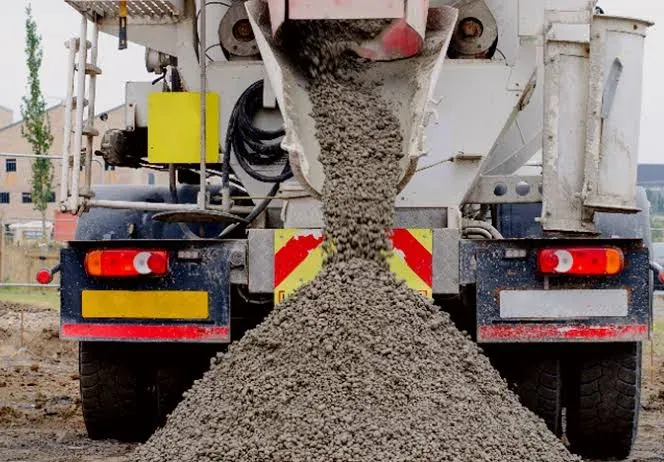
Because those trucks are the operation, one exposure sits at the center of the program: the fleet itself. A loaded mixer is among the heaviest vehicles on the road, carrying a liquid load that is high and that shifts as the drum turns — a center of gravity that makes rollover a severe risk, and a Wyoming mountain grade or a gusting corridor only sharpens it. The line that answers for all of it is commercial auto: auto liability for the third-party harm the trucks cause and physical damage for the trucks themselves. For ready-mix, that is the dominant line, not a supporting one.
This page covers how ready mix insurance is built for the Wyoming trucking-first model — the long-haul geography first, then the federal-and-state motor-carrier regime the fleet answers to, then the monopolistic workers-comp reality that puts the drivers and yard crew on the state fund, the energy delivery map, the local licensing gate, and the coverage stack the whole thing leans on. Ready-mix is not the install model and it is not the single-pump model; the Wyoming concrete construction insurance page leads with completed-operations on installed flatwork, and the Wyoming concrete pumping insurance page is built around a single high-value boom truck and the power-line exposure. Many Wyoming producers do more than one, and each scope is rated on its own terms.
Running a mixer fleet across Wyoming? Get a quote built around commercial auto, the long remote hauls, and the federal motor-carrier layer.
Get a Free QuoteLong hauls to remote energy-site pours
What shapes ready-mix risk in Wyoming first is not a regulation — it is the map. Wyoming is the most sparsely populated state, and the pours that fill a mixer schedule are scattered across wide, empty country rather than clustered in a dense downtown. A loaded drum leaving a batch plant here may run far longer than it ever would in a metro, and the distance is not incidental to the coverage — it is the coverage. The further the haul, the more road miles the fleet accumulates, the more time a driver spends on open highway and mountain grade, and the more the auto exposure builds. A Wyoming ready-mix program is priced and structured around miles that a fleet in a compact market would never turn.
The terrain compounds it. Deliveries run over high mountain passes, down long grades, and through wind-exposed corridors where a gust can push on a high, loaded truck. None of that is quantified here — the severity of a grade, a pass, or a crosswind is real but qualitative — but all of it feeds the same place: the driving exposure that commercial auto answers. A fully loaded mixer descending a long grade is working its brakes and its stability at once, and a high center of gravity on a windy corridor is exactly the setup where rollover moves from a remote possibility to a live one. The Wyoming fleet does not just drive farther; it drives harder country.
And the load runs against the clock the whole time. Wet concrete is perishable, and the ASTM C94 guideline — roughly a 90-minute or 300-revolution window before workability degrades — is the only window number that matters here, referenced as the industry guideline rather than dressed up with variants. On a short in-town run that window is comfortable; on a long remote haul to a well-site or industrial pad it is the binding constraint, and the schedule, the routing, and the number of trucks a producer runs are all built to beat it. A Wyoming fleet that plans its hauls around that window is managing a real operational risk, and the insurance program is built to sit behind the operation that distance creates rather than a generic delivery business.
The federal motor-carrier regime and WYDOT ports of entry
Once the haul is understood, the regulation follows the trucks. A Wyoming mixer fleet is regulated as a motor carrier, and the federal rulebook lands on it in a way it never does for a shop or a generic business. A fleet operating in interstate commerce generally falls under the Federal Motor Carrier Safety Administration (FMCSA) and the U.S. Department of Transportation (DOT) — identified by a USDOT number, governed by the federal safety rules for its trucks and drivers, and, for a for-hire interstate carrier, carrying the MCS-90 endorsement. A fleet that runs only within Wyoming answers instead to the Wyoming Department of Transportation (WYDOT), Motor Carrier Services, which handles in-state registration and the ports-of-entry weigh points a loaded mixer clears on the highway. We name the federal and state bodies a Wyoming fleet actually answers to and never invent a rule or a number it does not carry.
The MCS-90 is worth naming precisely because it is real and because it is easy to misread. It is a federal financial-responsibility endorsement tied to the Motor Carrier Act of 1980; it typically attaches to a for-hire or interstate carrier’s auto-liability policy and guarantees that a member of the public can be paid up to the applicable federal minimum after a covered loss, after which the carrier can seek reimbursement from the insured. It is a surety mechanism backstopping the public, not primary coverage that broadens your own protection — and the federal minimum it references is described qualitatively here, because the verified figure is something to confirm against the rules that apply to your fleet rather than guess at. The ISO covered-auto symbols (the 1, 7, 8, and 9 that define which vehicles a policy answers for) and the USDOT number are likewise real identifiers, not numbers to strip. Whether and how each piece applies turns on where and how your fleet runs, which is part of what we read before placing the program.
Workers comp in Wyoming: the monopolistic state fund
Here Wyoming departs sharply from most of the country, and the difference organizes the whole program. Wyoming is a monopolistic workers-compensation state: comp is available only through the state fund — the Wyoming Workers Compensation Division — and private carriers cannot write it here. That is not a placement decision we make; it is the structure of the state. The injury coverage for your drivers, who are on the road most of the day, and for your batch-plant yard crew, who load, wash out, and work around the plant the rest of it, runs through the state fund rather than something we shop on the open market. We are direct about that rather than implying a private option that does not exist for Wyoming comp.
What that means in practice is a split program, and it is important to say so plainly. The comp itself sits with the state fund. Everything else — the commercial auto that carries the fleet, the umbrella above it, the general liability on the delivery and placement site, and the commercial property on the plant and yard — is the private-market program we build and place. Our job on the comp side is not to write it but to coordinate around it: to make sure the private program and the state-fund coverage fit together so nothing falls between the two for a fleet whose people move between the road and the yard all day. A producer coming from a private-comp state should expect this to work differently in Wyoming, and we walk through exactly where the line between the state fund and the private program sits.
This is also where a Wyoming ready-mix program diverges from the way comp is handled elsewhere in the country. There is no non-subscriber choice to make and no private comp carrier to market — the drivers and yard crew are covered through the Wyoming Workers Compensation Division, full stop, and the rest of the stack is what we compete for on your behalf.
The energy delivery map: Powder River Basin to the trona fields
Where a Wyoming mixer fleet actually goes is an energy map, and it explains the hauls. In the northeast, the Powder River Basin is coal, oil, and gas country — heavy industrial and well-site construction scattered across remote pads that a fleet feeds at real distance from the nearest plant. In the southwest, the trona and gas fields around Green River anchor the other pole of the map, with their own remote industrial pours. Between and around them, highway and infrastructure work and the residential and commercial build-out of the population centers fill out the schedule. For a ready-mix fleet, that reads as delivery demand spread across long distances rather than a compact metro delivery radius.
The delivery hubs are the population centers the fleet works out of and around: Cheyenne and Casper as the main markets, with Laramie, Gillette, Rock Springs, and Sheridan anchoring the rest. But the defining runs are not the in-town deliveries in those cities — they are the long hauls out to the energy pads and industrial sites, where the distance from the plant is greatest and the ASTM C94 window is tightest. Gillette sits close to the Powder River Basin work; Rock Springs and Green River sit near the trona and gas fields; Casper serves the central oil corridor. The metros matter to a Wyoming ready-mix program as the bases the fleet operates from and the markets it serves, but the risk that shapes the program lives on the long runs between them and the remote pours they feed.
Licensing in Wyoming: the local gate, not a state license
Licensing in Wyoming is a negation case, and it is important to be honest about it. Wyoming does not issue a statewide license to work as a general or concrete contractor — there is no state concrete-contractor license to hold, and hauling or delivering ready-mix is not a state-licensed trade. Licensing is handled by individual cities and counties, so requirements vary by jurisdiction, and only electrical contractors are licensed at the state level. What stands in the place of a statewide credential is twofold. The first is the motor-carrier registration the fleet already carries: a USDOT number for an interstate fleet, or WYDOT registration and the ports-of-entry weigh points for an in-state one. The second is the local gate — cities and counties set permits and inspections, and on the energy-sector projects that drive so much of the state, the general contractor or project owner sets its own insurance, certificate-of-insurance, and additional-insured requirements on top of that.
So the gate in Wyoming is local permitting and the contract, not a statewide concrete license, and we say so rather than implying a credential the state does not issue. For a mixer fleet that means two things run in parallel: keep the motor-carrier registration current for the way the fleet runs, and meet whatever the local jurisdiction and the project owner require on each job. We help read the insurance and additional-insured requirements a contract puts on your certificates so the program you carry actually satisfies the work you are bidding, rather than discovering a gap after a pour is scheduled.
Coverage breakdown for a Wyoming ready-mix fleet
Here is the stack a Wyoming ready-mix operation carries, weighted for the trucking-first model. Each line links to its full page — and commercial auto, carrying the fleet, the long remote hauls, the federal motor-carrier layer, and the MCS-90, is the signature placement for this model. Note the workers-comp line: in Wyoming that coverage runs through the state fund, while the rest of the stack is the private program we build around it.
- Commercial Auto Insurance — the signature line: auto liability for the third-party harm the mixer fleet causes and physical damage for the trucks themselves, plus the federal motor-carrier layer a USDOT-numbered Wyoming fleet runs under — DOT and FMCSA, the ISO covered-auto symbols, and the MCS-90 endorsement — carrying the long remote hauls that define the state.
- Umbrella Liability Insurance — excess limits above commercial auto and the other private lines for the serious fleet loss: a fully loaded mixer that rolls on a mountain grade or an at-fault highway accident on a long energy-field run is exactly the severity an umbrella is built to sit behind.
- Workers Compensation Insurance — medical and lost-wage coverage for the drivers and the batch-plant yard crew — but Wyoming is a monopolistic state, so this comp is carried through the Wyoming Workers Compensation Division state fund rather than a private carrier, and we coordinate the private program around it.
- General Liability Insurance — third-party bodily injury and property damage around the delivery and the placement site, lighter for the fleet model than for an install contractor but still part of the private program a producer carries.
- Commercial Property Insurance — the batch plant, the yard, stored aggregate, cement, and materials, and the equipment against fire, theft, and the perils a producer carries at a fixed site, with business income for a covered shutdown.
Claims scenarios across empty country
These are plausible Wyoming ready-mix claim categories, described qualitatively and with generic carrier language — every claim is handled by the carrier or, for comp, the state fund, never named here — and with no fabricated cost, frequency, or penalty figures.
- A loaded mixer rolls on a mountain grade. A fully loaded truck shifts and rolls descending a Wyoming pass or fighting a crosswind on a long energy-field run, with the potential for serious third-party harm and a major loss — the auto-liability and physical-damage exposure, with an umbrella behind it for the severity.
- An at-fault accident on a long remote haul. A mixer causes third-party bodily injury or property damage on a highway run or maneuvering at a remote pour — a commercial-auto liability claim, with the MCS-90 backstopping the public where the federal rules apply to the fleet.
- A driver or yard injury. A driver or a batch-plant worker is hurt on the road, loading, or working around the plant — a workers compensation claim carried through the Wyoming Workers Compensation Division state fund, coordinated with the private program.
- A loss at the batch plant. Fire, theft, or a covered peril damages the plant, the yard, or stored aggregate, cement, and materials — a commercial-property claim, distinct from the rolling exposure of the fleet.
Why Concrete Guard Insurance
We write one class — concrete contractors — and in Wyoming we treat ready-mix as the trucking operation it is, built for distance. We weight your stack toward commercial auto and the umbrella severity a loaded mixer fleet carries over long remote hauls and mountain grades, name the DOT and FMCSA regime and the MCS-90 endorsement precisely for a USDOT-numbered fleet, account for the WYDOT ports-of-entry path an in-state fleet runs, and place the private program — auto, umbrella, general liability, and the batch-plant property — around the state-fund comp that Wyoming requires for your drivers and yard crew rather than pretending we can shop it. We place coverage with carriers that want the ready-mix class. Start with a quote, or talk it through with us first.
Learn more
Ready-mix is one of three operating models we write in Wyoming, and the coverage stack shifts with the work. The signature exposure for this model lives on the commercial auto page, with umbrella liability close behind for fleet severity — and in Wyoming the workers compensation line runs through the state fund rather than a private carrier. If your crews also pour and finish flatwork and foundations, the Wyoming concrete construction insurance page leads with the completed-operations exposure; if you also run a boom pump, the Wyoming concrete pumping insurance page is built around that single high-value truck and the power-line exposure.
Coverage for a Wyoming ready-mix fleet
- Commercial Auto Insurance
- Umbrella Liability Insurance
- Workers Compensation Insurance
- General Liability Insurance
- Commercial Property Insurance
Insurance by operating model
Get covered
Primary sources
Frequently asked questions about Wyoming ready mix insurance
Does a Wyoming ready-mix fleet need a USDOT number or an MCS-90?
It depends on how and where the fleet runs. A Wyoming mixer fleet that crosses state lines operates under the Federal Motor Carrier Safety Administration (FMCSA) and the U.S. Department of Transportation (DOT), which is built around a USDOT number identifying the carrier and the federal motor-carrier safety rules for its trucks and drivers; a for-hire interstate carrier is also where the MCS-90 endorsement typically attaches. A fleet operating only within Wyoming answers instead to the Wyoming Department of Transportation (WYDOT), Motor Carrier Services, which handles in-state registration and the ports-of-entry weigh points a loaded mixer clears on the highway. The MCS-90 is a real federal financial-responsibility endorsement tied to the Motor Carrier Act of 1980; it generally guarantees a member of the public can be paid up to the applicable federal minimum, after which the carrier can seek reimbursement from the insured. We name the federal and state bodies your fleet actually answers to and describe the federal minimum qualitatively rather than guess at a figure.
How do the long hauls to Wyoming energy sites affect the coverage?
They sit at the center of it. Wyoming pairs the thinnest population in the country with some of the longest empty stretches between towns, so a mixer fleet lives or dies on distance — the delivery map runs from Powder River Basin coal, oil, and gas country in the northeast to the trona and gas fields around Green River in the southwest, sending loaded drums on long runs to remote industrial and well-site pours over high mountain passes and wind-exposed corridors. Those distances and grades raise the driving exposure the commercial-auto line answers, and they press hard on the ASTM C94 workability guideline for wet concrete, because a remote energy-site pour far from a batch plant consumes the freshness window that a Cheyenne or Casper in-town delivery never touches. We build the program around the trucks and the miles they actually run rather than treating a Wyoming fleet like an urban one.
How is workers comp handled for a Wyoming mixer fleet?
Honestly and directly, because Wyoming is different from most states here. Wyoming is a monopolistic workers-compensation state: comp is available only through the state fund — the Wyoming Workers Compensation Division — and private carriers cannot write it. That means the injury coverage for your drivers and your batch-plant yard crew runs through the state fund rather than something we shop on the open market, and we are direct about that rather than implying otherwise. What we do place is everything around it: the commercial auto that carries the fleet, the umbrella above it, the general liability on the delivery and placement site, and the property on the plant and yard. We coordinate that private-market program with the state-fund comp so nothing falls between the two for a fleet whose people are on the road most of the day and working around the plant the rest of it.
Why is commercial auto the main line for a Wyoming ready-mix operation?
Because the fleet is the business. A Wyoming ready-mix producer delivers concrete with a fleet of mixer trucks, and that fleet is a trucking operation — so the line that covers the trucks, commercial auto, carries the heaviest exposure. A loaded mixer is among the heaviest vehicles on the road, with a high, shifting center of gravity that makes rollover a severe risk, and in Wyoming those trucks run long remote hauls over mountain grades and wind-exposed corridors on top of ordinary road liability and the federal motor-carrier regime. That is a very different center of gravity from an install crew, whose signature exposure is the completed flatwork it leaves behind, or a pumping contractor, whose program turns on a single high-value boom truck and the power-line exposure over a remote pour. For ready-mix, commercial auto and the federal layer are the spine, and the umbrella, the state-fund comp, general liability, and property are built around them.
Does Wyoming require a license to run a ready-mix concrete business?
Wyoming does not issue a statewide license to work as a general or concrete contractor — there is no state concrete-contractor license to hold, and hauling or delivering ready-mix is not a state-licensed trade. Licensing is handled by individual cities and counties, so requirements vary by jurisdiction, and only electrical contractors are licensed at the state level. What does apply to a mixer fleet is twofold: the motor-carrier registration it carries — a USDOT number for an interstate fleet or WYDOT registration and the ports-of-entry weigh points for an in-state one — and the local gate, where cities and counties set permits and inspections, and a general contractor or project owner on the energy-sector work that drives the state sets its own insurance, certificate-of-insurance, and additional-insured requirements on top of that. The gate in Wyoming is local permitting and the contract, not a statewide concrete license, and we are honest about that rather than implying a credential the state does not issue.
Is Wyoming ready-mix insurance different from concrete or pumping coverage?
Yes — the operating model changes the program even within Wyoming. The ready-mix model is the trucking-first, auto-dominant fleet this page is built for: commercial auto, the federal motor-carrier layer, the long remote hauls to energy-site pours, and the load-shift and rollover severity of a loaded mixer on a mountain grade. A concrete construction operation leads with the completed flatwork and foundations it installs and leaves to perform for years, which is the focus of the Wyoming concrete construction page. A concrete pumping contractor builds the program around a single high-value boom truck and the catastrophic long-overhead-transmission power-line exposure on remote energy-field pours, which is the Wyoming concrete pumping page. The shared Wyoming facts — the monopolistic state-fund comp, no statewide license, the delivery hubs you serve — apply to all three, but they frame differently for a mixer fleet under federal trucking rules. If you do more than one, each scope is rated on its own terms.
Insure your Wyoming mixer fleet the way it runs
Tell us how your fleet runs — local, for-hire, or across state lines — and we will market it to carriers that write the ready-mix class, with commercial auto and the federal motor-carrier layer covered and the private program built around the state-fund comp, not assumed.