

Hired and non-owned auto is the commercial-auto coverage for vehicles a concrete business uses but does not own outright — and it catches an exposure many owners do not realize they carry. Hired autos are the units you rent, lease, or borrow. Non-owned autos are the vehicles used on your behalf that you do not own, most often an employee’s own car or pickup driven on company business. A concrete operation can own no company cars at all and still have this exposure the moment an employee runs a company errand in a personal vehicle.
This post explains what hired and non-owned auto covers, why a business with only owned trucks can still have the gap, how the ISO business auto form picks the coverage up through the covered-auto symbols, and where this coverage sits alongside the rest of your program. The short version: your owned schedule covers the trucks you own, and hired and non-owned auto covers the ones you use but do not — a real gap that lives on commercial auto.
Two kinds of vehicles you use but do not own
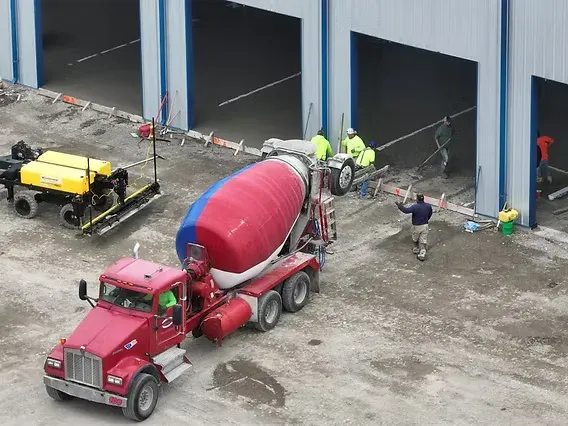
Every concrete business thinks first about the trucks it owns — the mixers, the work trucks, the boom pump truck — and schedules them on the auto policy as owned autos. But an owned schedule only covers what is on it, and a concrete operation runs on more vehicles than the ones it owns. Two categories fall outside the owned schedule, and hired and non-owned auto is built for exactly them.
The first is hired: a vehicle you rent, lease, or borrow. A contractor who brings on an extra unit to cover a busy stretch, or borrows one to keep a job moving, is using a vehicle that is not on the owned schedule. The second is non-owned: a vehicle used on your behalf that you do not own, most often an employee’s personal car or pickup driven on company business. Neither is a vehicle you own and scheduled, which is precisely why an owned-only auto program can leave the exposure open. Both gaps are real for a concrete contractor, and both are worth confirming rather than assuming.
Why a business with no company cars can still have the exposure
Here is the part owners most often get wrong: you do not need to own a single company car to carry non-owned auto exposure. The exposure is not about what the business owns — it is about how vehicles are used. The moment an employee runs a company errand in a personal vehicle, a personal car or pickup is being used on company business, and a resulting liability claim can reach back to the business that sent them.
For a concrete operation, that happens constantly. A foreman drives a personal pickup between job sites. An employee makes a parts run or a supply run in their own vehicle. Someone takes a company deposit to the bank on the way home. None of those vehicles is on the owned schedule, and none of them stops being a business exposure just because the business does not own it. A concrete contractor whose owned schedule covers the mixers and the boom truck but not the errands can carry a real gap — one that hired and non-owned auto is built to fill.
How the covered-auto symbols pick it up
On the standard ISO business auto form, coverage is assigned through covered-auto symbols — numbers that designate which autos a given coverage applies to. Hired and non-owned auto is typically picked up through two of them: in the standard examples, Symbol 8 means hired autos — the vehicles you rent, lease, or borrow — and Symbol 9 means non-owned autos — the vehicles used on your behalf that you do not own, most often an employee’s own vehicle.
Those two symbols are the practical mechanism behind the coverage. Confirming they are present on your policy is how you make sure the borrowed unit and the employee errand are actually covered rather than assumed. This sits alongside the symbol for your owned units — the specifically described autos, the mixers and the boom truck you schedule — so the whole picture is owned plus hired plus non-owned. For how the owned side and the full symbol set work across a fleet, see ready-mix trucking and the covered-auto symbols; for the high-value owned unit, see insuring the boom pump truck. Forms and editions vary by carrier, so how the symbols are assigned is something to read on the actual policy.
What it does — and does not — do
It helps to be honest about the shape of the coverage. Hired and non-owned auto is primarily about liability — the third-party bodily injury and property damage that can arise when a rented, borrowed, or employee-owned vehicle is used on company business. That is the real gap it fills: a single at-fault accident in a borrowed unit or a personal vehicle on company time can produce a liability claim against the business, and an owned-only schedule does not answer it.
What it generally does not do is repair an employee’s personal car. That vehicle is the employee’s own property and typically looks first to the employee’s own auto policy; the business coverage is there for the liability that reaches the company, not to fix a car the company does not own. Physical damage on hired units can sometimes be arranged, but the core purpose is the liability gap. What your policy actually includes, and at what limits, depends on how it is written — so this is a coverage to read rather than assume, especially for the limits.
Real-World Scenario: A concrete contractor owns its mixers and a work truck but no cars. On a busy afternoon, an employee takes their own pickup to grab a load of supplies for the crew, and on the way is at fault in an accident that injures another driver. Because the vehicle belonged to the employee and was being used on company business, the claim reaches back toward the business — and the owned schedule, which lists only the mixers and the truck, does not answer it. The contractor who had non-owned auto on the policy has a coverage built for exactly this moment; the one who assumed owning no cars meant no auto gap finds out otherwise during the claim.
Where the auto coverage stops: the general-liability seam
Every part of the auto program — owned, hired, and non-owned — covers vehicles. None of it covers the work your crews perform, or the third-party harm the work itself causes. That harm is general liability: the premises-and-operations exposure while a job runs, and the completed-operations exposure on a slab or foundation you placed that fails downstream. A borrowed truck or an employee errand is auto; the work you leave behind is general liability.
The two lines are written together and read together, but they answer different exposures — commercial auto for the vehicles you drive, owned or not, and general liability for the work. Where a claim from a hired or non-owned vehicle could test the primary auto layer, an umbrella can sit excess of the policy and add height over it. Holding that seam keeps the program honest: a claim involving a vehicle runs to auto, and a claim involving your work runs to general liability.
Closing the gap before a claim finds it
The takeaway is straightforward: a concrete business drives more vehicles than it owns, and hired and non-owned auto is what covers the ones it does not. Confirm the rented-and-borrowed exposure is picked up through the hired-auto symbol, confirm the employee-errand exposure is picked up through the non-owned symbol, and confirm the limits fit how much of your work rides in vehicles the business does not own. Both a pumping contractor and a ready-mix operation carry this gap alongside their owned trucks. When you are ready, start a quote and tell us how your people actually move, read the full commercial auto page to see how the line fits together, or browse the coverage overview to see where each line sits. For what actually drives the cost, see what drives concrete insurance cost. Naming the coverage is the point — a gap you closed on purpose is worth far more than one you found during a claim.