

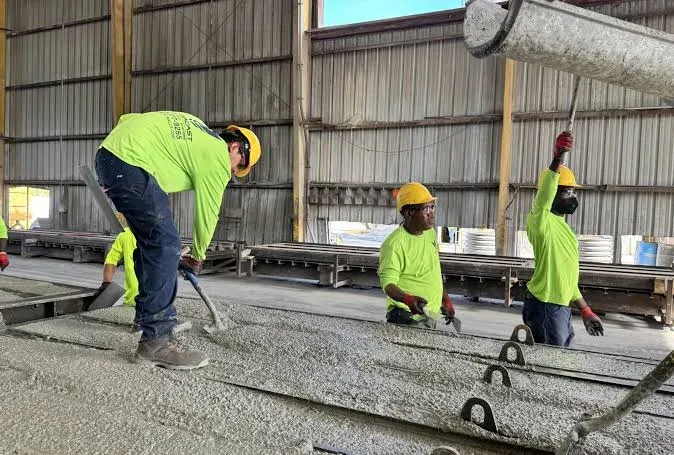
Completed operations is the part of your general liability that pays for the work you leave behind. After a concrete crew pours and finishes a slab, driveway, footer, or foundation and drives off the site, that installed concrete keeps existing — and if it fails downstream and injures someone or damages property, completed operations is the coverage built to respond. For a concrete installation contractor it is the single most important piece of the policy, because the concrete you place can fail long after the crew is gone.
This post explains what completed operations actually is, which form it lives in and how it is named, why a claim can surface years after the pour, and where general liability stops and commercial auto begins. The short version: your finished installation is “your work” in the policy’s language, and completed operations is the coverage for the harm that work can cause once you have left.
Why completed operations is the concrete installer’s signature exposure
Almost every business carries some general-liability risk — a visitor slips, a crew damages a customer’s property on site. What sets a concrete contractor apart is the long tail on the work itself. You do not just create an on-site exposure while the job is running; you leave a finished installation behind that has to perform for years, on ground that moves and through weather that stresses it. A general liability policy handles both, but for an installer the piece that defines the class is the second one: the completed work.
That is completed operations. It is the exposure that a slab, footer, driveway, sidewalk, or foundation you placed could fail after the job is done — and that a failure could become a serious third-party bodily-injury or property-damage claim. The concrete keeps existing after your crew leaves, which means the exposure keeps existing too. For a concrete installation contractor, this is the coverage that matters most, because it answers for the thing you are actually selling: work that lasts.
Where completed operations lives in your policy
Most general liability policies start from the standard ISO commercial general liability coverage form — typically the occurrence-based version known as CG 00 01. Inside that form, the coverage for work you have finished sits in what the policy calls the products-completed operations hazard. That is the defined part of the policy that responds to bodily injury and property damage arising out of “your work” away from your premises, after the work is complete and has left your control.
The phrase to hold onto is “your work.” A concrete contractor performs work — you pour, place, and finish concrete on a site and leave it behind. The finished installation is “your work” in the policy’s language, so a slab that heaves, a footer that settles, or a driveway that fails downstream and hurts someone is precisely the kind of claim the products-completed operations hazard is built to answer. Naming the hazard is worth doing, because it hands you an actionable check: confirm it is in your policy. Coverage always depends on the specific policy and its endorsements, so read the form rather than assume — but this is where the coverage lives.
The long tail: why a claim can surface years after the pour
The defining feature of completed operations is time. A slab does not usually fail the day you finish it; it fails downstream, after seasons of movement, loading, and weather have worked on it. On expansive clay a foundation can settle or heave a year or more after the pour; a driveway can fail under use long after the crew has moved on. The third-party claim arrives when the failure surfaces, which can be well after the job closed and the check cleared.
That delay is not a detail — it is the whole reason completed operations is a separate, named part of the policy. It is also why the way your policy is triggered matters so much for a concrete contractor, more than for a trade whose exposure ends when the job does.
Real-World Scenario: A crew pours and finishes a foundation on a commercial build and closes out the job. Two years later, after the ground has moved through several wet-and-dry cycles, the slab above it cracks and a section fails, and the building owner brings a claim for the resulting property damage. The crew has long since finished and been paid — but the harm traces back to the work they left behind. This is the completed-operations exposure in its natural form: the claim lands years after the pour, on work that was done and gone. The contractor who understood that this coverage exists, and confirmed the hazard was in the policy, is in a very different position than the one who assumed the job ended when the crew drove away.
Occurrence vs claims-made: why the trigger matters
Because a concrete failure can surface long after the pour, the trigger on your policy is a real decision, not boilerplate. An occurrence policy — typically the standard CG 00 01 form — responds to bodily injury or property damage that occurs during the policy period, no matter when the claim is finally made, even years later. A claims-made policy — the CG 00 02 version — responds based on when the claim is reported instead, and depends on keeping continuous coverage and watching retroactive dates.
For an installer whose signature exposure is defined by delay, occurrence-based coverage is usually the more natural fit, because it does not ask you to still be carrying the same policy years later when a claim surfaces. But the right answer depends on your operation and the form your policy actually uses — which is a distinction worth walking through deliberately rather than discovering after a loss.
The limit to watch: the products-completed operations aggregate
General liability does not carry one single limit; it carries several. The one tied to your finished work is the products-completed operations aggregate — a separate annual cap, distinct from the general aggregate that responds to your premises-and-operations claims. Completed-operations claims draw against this specific bucket, which is why, for a contractor, it is a limit worth knowing rather than assuming. When the work you leave behind could produce a claim large enough to test that bucket, an umbrella sits above the primary policy and adds limit over it. It does not replace the aggregate; it extends the height of coverage over it.
Make sure the hazard is not excluded
Naming the coverage hands you the check to run: confirm the products-completed operations hazard is actually present in your policy and has not been carved out. Some policies can exclude it with an endorsement — in ISO’s system, an exclusion along the lines of CG 21 04 — which would remove the very coverage a concrete contractor most needs. It is an easy thing to miss on a policy bought on price, and a hard thing to discover after a failure. Reading whether the hazard is in, whether the additional-insured endorsements your general contractors require are attached, and whether the limits fit the work is the kind of review worth doing before you sign, not after a claim.
Where general liability stops: the commercial auto seam
The cleanest way to understand completed operations is to see what it is not. General liability covers the work and the harm it causes — the completed installation that fails, the premises-and-operations injury, and, for a pumping contractor, the power-line-contact exposure on the pour. It does not cover your vehicles. A boom pump truck and a ready-mix mixer fleet are covered under commercial auto, which answers auto liability and physical damage on the trucks themselves. General liability also does not answer for injuries to your own crew — those sit under workers compensation — or for your own building and equipment, which sit under commercial property. That is the seam every concrete contractor should hold clearly: general liability for the work you leave behind, commercial auto for the trucks that place it. The two lines work together, but they are separate coverages answering separate exposures — and a claim involving a truck runs to auto, while a claim involving your finished concrete runs to completed operations.
Getting completed operations built around your work
The takeaway is simple: for a concrete contractor, completed operations is not a minor clause — it is the coverage that answers for the thing you sell, on the timeline your work actually fails. Make sure the products-completed operations hazard is present, that the trigger fits an exposure defined by delay, that the aggregate is set for the work you do, and that the seam to commercial auto is clean so the trucks are covered where they belong. When you are ready, start a quote and tell us about the work your crews leave behind, read the full general liability page to see how the whole line fits together, or browse the coverage overview to see where each line sits. For what actually drives the cost of that coverage, see what drives concrete insurance cost. The point of naming the form is so you can check it — coverage that is confirmed before a loss is worth far more than coverage you assumed you had.