

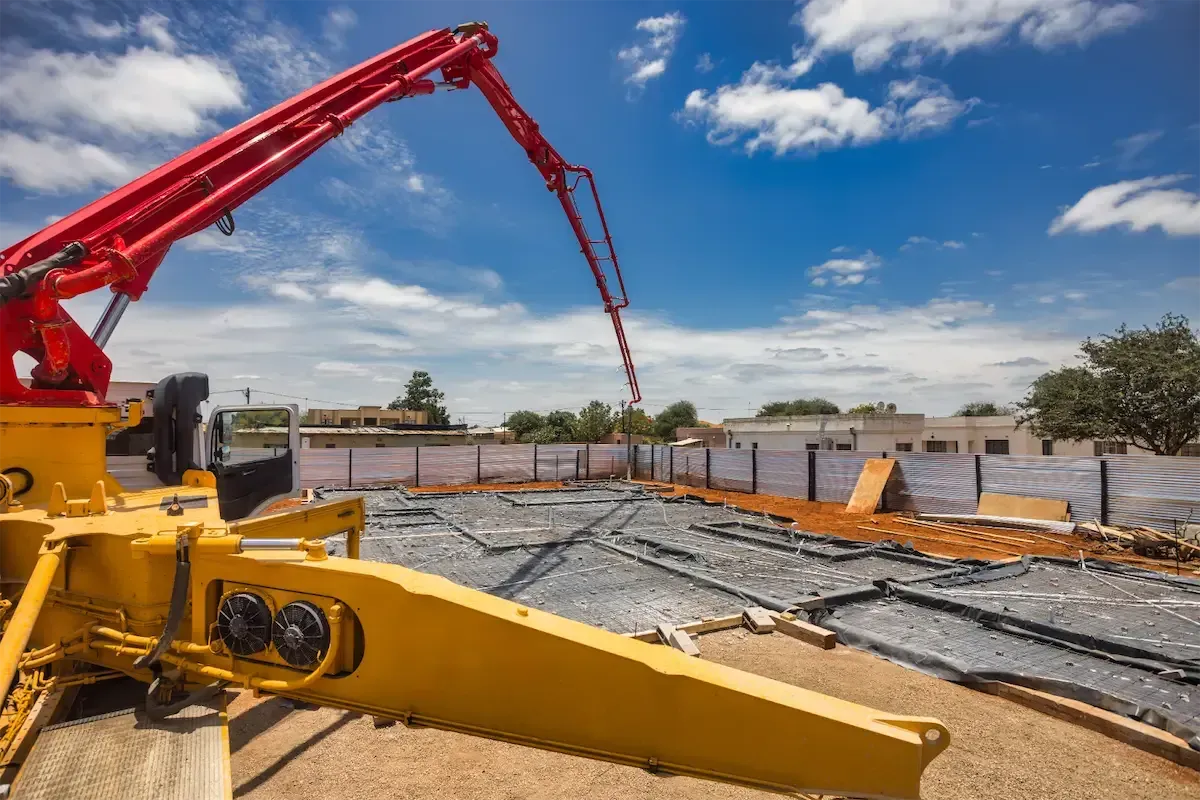
A boom pump truck is usually the single most expensive item a concrete business owns, and the coverage that stands behind the asset itself is commercial-auto physical damage. This is not a fleet problem — it is one very high-value unit, a truck chassis carrying an articulated placing boom and a pumping system — and the physical-damage decision on that single truck is one of the most important calls in a pumping contractor’s insurance program. Collision protects it against an accident, comprehensive protects it against theft, fire, and other non-collision perils, and the value it is scheduled to is what makes the coverage real.
This post explains why the boom pump truck deserves its own attention, what physical damage actually covers, how the truck’s value is set on the policy, how the ISO business auto form picks up the owned unit, and where commercial auto stops and general liability begins. The short version: the truck is a high-value asset that lives on commercial auto, physical damage is what protects it, and the harm the boom causes to others is a separate line.
The boom pump truck as a high-value single unit
What makes the boom pump truck different from the rest of a concrete operation’s vehicles is concentration. A pumping contractor may run a modest number of trucks, but one of them carries most of the value: a specialized, high-value mobile asset built to place concrete precisely where a crew cannot reach by chute. That concentration changes the insurance question. Insuring a group of ordinary work trucks is about spreading risk across a schedule; insuring the boom pump truck is about protecting a single asset whose loss would land hard on the business all at once.
Because so much value sits in one unit, the physical-damage coverage on it is not a line item to accept by default — it is a decision to make deliberately. A wrecked or stolen pump truck is not a routine expense a concrete business can shrug off; it is the kind of loss that can stall the operation until the asset is replaced. That is why a pumping contractor’s auto program has to be built around the truck rather than treated as a generic vehicle schedule.
What physical damage actually covers
Physical damage is the commercial-auto coverage that protects the truck itself, and it comes in two real parts. Collision responds when the truck is damaged in an accident — a wreck on the road, a maneuvering mishap on a tight site. Comprehensive responds to non-collision perils: theft, fire, vandalism, and similar covered causes of loss. Together they are what stand between a damaged or stolen boom pump truck and a loss the business would otherwise absorb on its own.
For a machine this valuable, physical damage is not an afterthought bolted onto a liability policy — it is a central piece of the program. Collision and comprehensive are standard terms across the market, but the specific perils, the deductibles, and the way a loss is settled depend on how the policy is written. Coverage always depends on the specific policy and its endorsements, so the terms are worth reading on the actual policy rather than assuming they match a general description. Naming the two coverages hands you the check to run: confirm both are on the truck, and confirm they are set the way a unit this expensive calls for.
Scheduling the truck to its real value
The number that matters most on a boom pump truck is not on any rate sheet — it is the truck’s actual value, scheduled honestly. Because the unit is so specialized and so expensive, getting the scheduled value right is central to the physical-damage coverage. It drives how a total loss would be settled, and it determines whether the coverage actually reflects what the asset is worth or quietly falls short of it.
There is a real distinction in how the value is written. A unit can be covered on an agreed-value, stated-value, or actual-cash-value basis, and those settle differently after a loss — which, for an asset this valuable, is worth confirming rather than discovering during a claim. We schedule the truck to its real value and read the settlement basis against it, and we do not attach a dollar figure we cannot verify. The point is not to name a price for your truck; it is to make sure the price your truck is actually worth is the price the policy is built around.
The covered-auto symbol that picks up the owned truck
On the standard ISO business auto form, coverage is assigned through covered-auto symbols, and an owned unit like the boom pump truck is generally picked up as a specifically described auto — Symbol 7 in the standard examples, the units actually listed on the policy. That is how physical damage is typically attached to a scheduled truck: the unit is described on the policy, and the coverage applies to it.
For a pumping contractor this is the practical check behind the coverage. Confirming the pump truck is scheduled correctly is how you make sure the physical-damage coverage really lands on it, coverage by coverage, rather than being assumed. Forms and editions vary by carrier, so how the symbols are assigned is something to read on the actual policy. Naming the symbol is worth doing precisely because it turns an abstract coverage into a concrete thing to verify.
Real-World Scenario: A pumping contractor’s boom pump truck — the single most expensive unit the business owns — is destroyed by a fire in the yard overnight. Because the truck was written with comprehensive physical damage and scheduled to its real value, the commercial-auto policy responds to the loss of the asset itself, and the business can move toward replacing the unit rather than absorbing the whole loss alone. The owner who treated the boom truck as the high-value asset it is, and confirmed the physical damage and the scheduled value before anything happened, is in a very different position than the one who carried liability only and assumed the truck was covered.
Where physical damage stops: the general-liability seam
Physical damage covers the truck; it does not cover the harm the boom causes to others. This is the seam every pumping contractor should hold clearly. When the boom contacts an overhead power line and injures a spotter, a finisher, or a bystander, that catastrophic third-party bodily injury is general liability — the work acting on the world around it, not the vehicle suffering damage. The truck that carries the boom is commercial auto; the power-line harm the boom causes is general liability.
The same split runs to the work you leave behind: a slab or foundation you placed that fails downstream is general liability’s completed-operations exposure, never an auto loss. Commercial auto answers for the vehicles, general liability answers for the work and the harm — two lines written together and read together. Where the value of the asset or a large loss could test the primary layer, an umbrella sits excess of the policy and adds height over it, though it extends the tower rather than replacing the physical-damage coverage underneath.
One expensive truck, not a fleet
The takeaway is simple: the boom pump truck is one very expensive asset, and it should be insured like one. That is a different problem from a ready-mix fleet, where the program turns on fleet economics and the motor-carrier rules a group of trucks runs under — and it is a different problem again from the hired and non-owned exposure created by borrowed units and employees’ own vehicles. All of it lives on commercial auto, but the boom truck earns its own decision: confirm collision and comprehensive are on it, confirm the scheduled value reflects what the asset is really worth, and confirm the seam to general liability is clean so the power-line exposure sits where it belongs. When you are ready, start a quote and tell us about the truck, read the full commercial auto page to see how the line fits together, or browse the coverage overview to see where each line sits. For what actually drives the cost, see what drives concrete insurance cost. Naming the coverage is the point — an asset this valuable is worth protecting on purpose, not by assumption.