

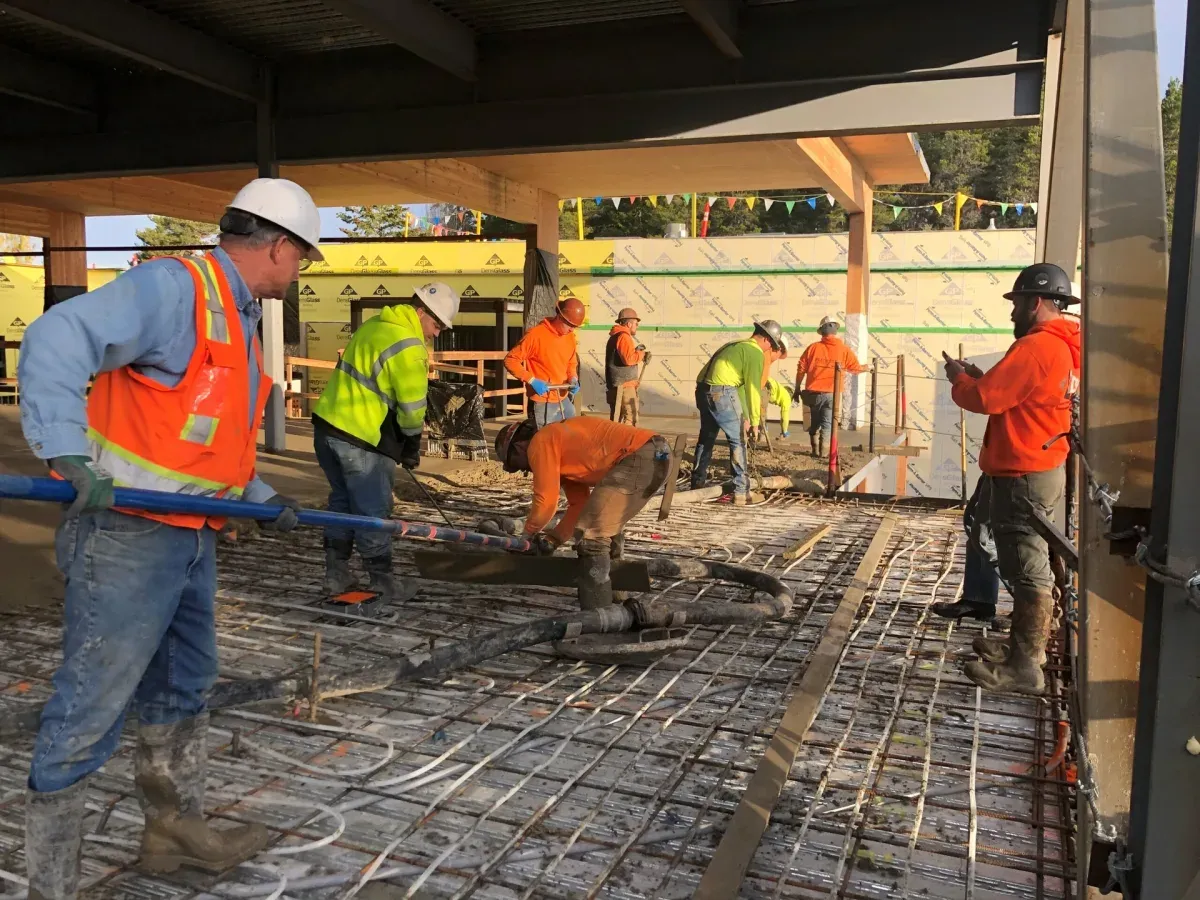
A contractor who does both masonry and concrete can insure them on the same program, but both trades have to be described on the application, because each one is classified separately. The policy answers for the work it was told about, so the description of operations matters more on a mixed operation than on a concrete-only crew.
This post is for concrete contractors who also lay block, brick or stone, and for masons who pour their own footings and slabs.
Why the mix matters to an underwriter
Concrete and masonry share a jobsite, a mixer and often a crew, but an underwriter sees different exposures. Flatwork and foundations are mostly at grade. Masonry adds scaffold work, wall bracing during construction, and veneer, chimney and retaining-wall work that can fail years after the job. A carrier that likes one trade may limit the other.
The application asks for the share of revenue and payroll in each trade. Answer it accurately. The general liability page explains how the policy is built for concrete; the sections below cover what changes when masonry is added.
General liability: each trade is classified separately
General liability rates the work by classification, and masonry and concrete construction fall under different ones. A policy that lists only concrete classifications has not been priced for masonry. Two things follow.
First, the audit. At the end of the term the carrier reviews payroll or sales by classification and bills the difference. Unreported masonry shows up there.
Second, the exclusions. Some policies issued to concrete contractors carry endorsements that limit work above a set height, residential work or particular exterior wall systems. Read the exclusions against the masonry you actually do. The completed operations post explains why finished work stays an exposure after the crew leaves.
Workers’ comp: the payroll split needs records
Workers’ comp also classifies the two trades separately, and the rates differ. When one employee pours on Monday and lays block on Tuesday, construction is one of the industries where that payroll can commonly be divided between classifications, provided time records show the hours in each. Without records, the auditor will typically put the payroll in the higher-rated classification.
Keep daily time sheets by task. They also help after an injury, because the claim is coded to the work being done. The workers’ compensation page and the concrete worker insurance post cover the crew side in more depth.
Next step. Send a breakdown of revenue and payroll by trade through the quote form. We read the form before it binds, so the masonry is on it.
Safety rules treat the two together
Federal OSHA groups the trades in the same construction subpart, Concrete and Masonry Construction. Its equipment rule, for example, requires hazardous energy sources on mixers and pumps used for concrete and masonry work to be locked out and tagged before maintenance where accidental start-up could cause injury (29 CFR Part 1926, Subpart Q, section 1926.702). A written safety program that covers both trades is something an underwriter will ask to see.
Real-World Scenario: A concrete contractor known for driveways and foundations takes on a block retaining wall for a commercial customer. The policy application, completed two renewals earlier, describes flatwork only. A section of the wall leans after a wet season and damages a neighboring fence and parking area. The carrier investigates the claim and asks why masonry was never listed. A mid-term call to the agent when the wall job was signed would have put the trade on the policy.
Licensing differs by state
States do not agree on whether the trades belong together. Minnesota lists masonry and concrete, including poured walls, slabs and poured-in-place footings, as a single special skill under its residential contractor licensing law (Minn. Stat. 326B.805). Mississippi’s State Board of Contractors lists Concrete as its own specialty classification (Mississippi classifications). Nevada grants a separate classification for concrete contracting.
A license that covers one trade may not cover the other. Certificate requests from general contractors often ask for both the license and the insurance, so confirm the classification before you bid. The state pages describe licensing for concrete where a state regulates it.
Equipment and the rest of the program
Masonry adds scaffolding, saws and mixers to the equipment list. Those are insured as contractor’s equipment under the commercial property part of the program, not under general liability. Trucks hauling block and scaffold go on commercial auto, and a general contractor’s limit requirement may call for an umbrella.
If you subcontract the masonry instead of using your own crew, collect a certificate of insurance from the mason before the work starts. Many policies charge for, or limit coverage on, work done by subcontractors who cannot show their own insurance, and the audit will ask for those certificates.
The concrete construction page covers the full program for install crews. If your work has grown to include masonry since the last renewal, tell your agent now instead of at audit, and use the quote form if you want the program reviewed.