

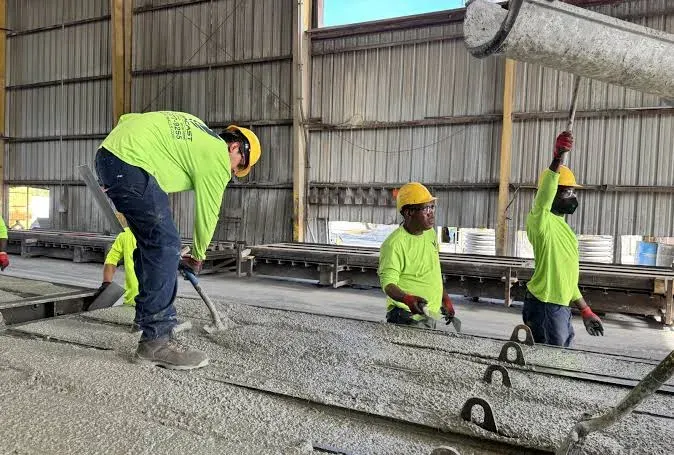
You get concrete contractor insurance in Indiana by describing your work plainly, gathering payroll, revenue, vehicle and loss records, and having an agent who writes concrete take that file to carriers before a contract asks for a certificate. The order matters, because the answers to a concrete underwriter’s questions decide which carriers will quote at all.
This post is for Indiana flatwork, foundation and decorative contractors buying a policy for the company or replacing one that no longer fits the work. It covers the steps. What the program costs, and why, is in the Indiana cost guide.
Start with a plain description of the work
Underwriters price concrete by what the crew actually does, so write it down before you call anyone:
- The mix of work: driveways and other flatwork, footings and foundation walls, decorative finishes, commercial slabs, or a combination.
- Residential versus commercial, and whether you work for house owners, builders or general contractors.
- Anything you sub out, such as sawcutting, pumping or finishing.
- How deep you dig and how tall you form, because wall height and excavation depth change carrier appetite.
- The counties where crews work, and any work across state lines.
A description that says “concrete” and nothing more draws generic pricing or a decline. A description that separates flatwork from foundation walls lets a carrier class each part of the payroll correctly.
Gather the records carriers ask for
Most applications want the same file:
- Payroll split by the type of work each person does, in records that support the split.
- Gross revenue, and the portion of it paid to subcontractors.
- Certificates of insurance from every subcontractor you use.
- A vehicle list with drivers, and a schedule of equipment such as mixers, saws, power screeds, skid steers and trailers.
- Loss runs from your current carriers for recent policy periods, or a note that the company is new.
- Copies of the contracts you sign most often, especially the insurance and indemnity sections.
The concrete business insurance checklist lists the same items in a form you can work through at the desk.
Secure workers’ comp the Indiana way
Indiana’s Worker’s Compensation Board says the law requires most businesses to carry worker’s compensation insurance. Under IC 22-3-5-1, a covered employer insures that liability with an authorized insurer or furnishes the Board proof of financial ability to pay compensation directly, which is self-insurance and is uncommon for a small crew. The Board administers compliance, can request an employer’s proof of coverage and can assess civil penalties when that proof is not provided (Indiana Worker’s Compensation Board).
In practice, an Indiana concrete employer buys workers’ compensation from a private carrier through an agent. Concrete is a labor-heavy class, so place it before the crew starts, not after a general contractor asks for proof. The workers’ comp options post explains the routes if carriers decline.
Indiana also operates an OSHA-approved state plan, listed in 29 CFR Part 1952, that covers private-sector employers in the state with some exceptions. A written safety program and training records help the comp submission whichever carrier reads it.
Check local licensing and permits
Contractor licensing and permits for concrete work in Indiana are commonly handled by the city or county where the work happens, so check with each jurisdiction before you bid there. Some local registrations ask for proof of general liability or a bond, and a permit office may want a certificate on file before it issues a permit. The entity and licensing post covers how the business structure and any registration tie back to the policy.
Next step. Send your description and records through the quote form. We write concrete, so the questions will be the ones a concrete underwriter asks.
Read the certificate request before you sign
Once a policy is bound, the work it supports comes with paperwork. General contractors and owners ask for a certificate, additional insured status and often a waiver of subrogation. Indiana limits what the contract itself can demand: IC 26-2-5-1 makes void a construction or design contract provision that indemnifies the promisee for its sole negligence or willful misconduct, with an exception for highway contracts (IC 26-2-5). That rule does not change what your policy covers, so compare the contract’s insurance section with your endorsements. The additional insured post explains the endorsements.
Finished work stays an exposure. Indiana’s repose statute for improvements to real property, IC 32-30-1-5, measures the deadline from substantial completion, so keep completed operations coverage in force every year rather than letting it lapse when a slow season comes.
Real-World Scenario: An Indiana flatwork contractor wins a commercial sidewalk package from a general contractor. The subcontract asks for additional insured status for ongoing and completed operations, a waiver of subrogation and proof of workers’ comp. The contractor’s policy carries the ongoing operations endorsement but not the completed operations version, and the new finishers were never reported on the comp policy. Sorting out both delays the start. Sending the subcontract before the policy bound would have caught both gaps.
Putting the program together
A typical Indiana concrete program combines general liability, workers’ comp, commercial auto for trucks and trailers, coverage for tools and equipment, and an umbrella when contracts call for higher limits. The Indiana page covers the state picture, and the Indiana concrete construction page covers install crews. If you are weighing more than a quote, how to choose concrete insurance walks through the comparison. When the file is ready, start at the quote form.