

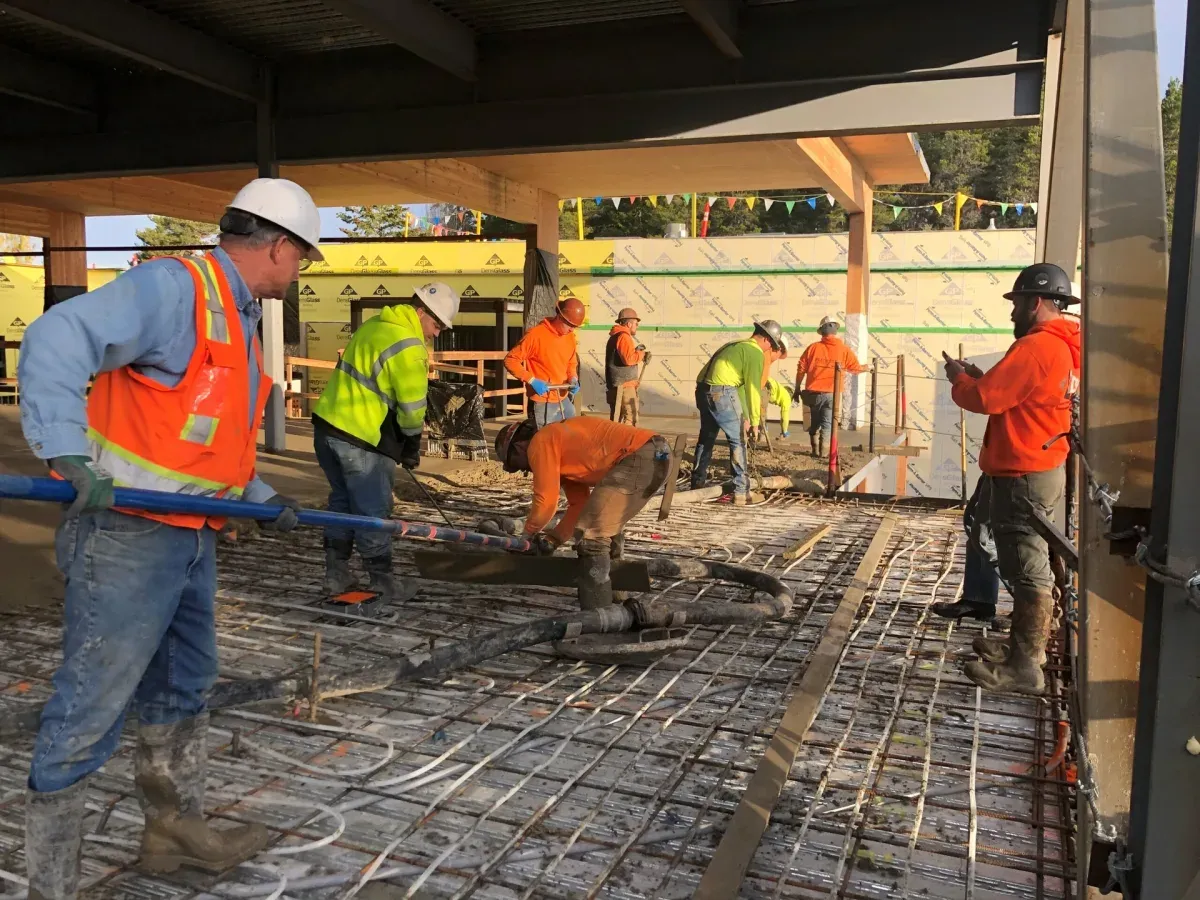
To choose concrete insurance for a small business, start with an accurate description of the work, check what your contracts require, pick an agent who writes concrete, confirm the agent and carrier with your state, and compare quotes only after those steps. Doing them in that order is what keeps a low price from hiding a policy that does not fit.
This post is for owners of small concrete businesses, from a finisher with a truck and a trailer to a growing crew placing slabs and foundations. If you already have quotes in hand, the guide to comparing concrete contractor insurance quotes walks through them line by line. If price is the concern, the post on what moves premium for a small concrete business explains the levers. This post covers the decisions that come before either.
Start with the work you actually do
Underwriters price and accept concrete risks by the work, so the description you give decides which policies are even available. Write down what the crew does in a typical month: flatwork, foundations, decorative or stamped finishes, cutting and coring, pumping, demolition, residential or commercial, new construction or repair. Note whether you sub out any of it and whether you work in more than one state.
Be specific about the hard parts. Foundation walls, work on new homes, work at height, boom pumping near power lines and cutting into occupied buildings all change the market. A policy written for sidewalks may exclude the basement walls you pour most weeks.
Read your contracts before you shop
The contracts you sign set a floor under the program. General contractors and property owners commonly ask for set liability limits, additional insured status for ongoing and completed operations, primary and noncontributory wording, a waiver of subrogation and an umbrella. The post on what concrete clients require explains each one.
Gather the last few contracts and the insurance exhibit from each. Give them to the agent at the start, not after the policy is bound. A program that misses a contract requirement can cost you the job or leave you paying a claim the contract shifted to you. Keep a copy of each certificate you issue with the contract it answers.
Choose an agent who writes concrete
The agent decides which carriers see your account. A generalist may only have access to a policy that treats a concrete contractor like any other trade, with exclusions that land on the work you do most. An agent who handles concrete accounts knows which markets accept foundations or pumping and which forms carry residential, subsidence or subcontractor limits.
Ask a prospective agent direct questions: how many concrete contractors the agency insures, which of your contract requirements the policy will meet, what exclusions to expect and who handles a certificate request on a Friday afternoon. We write concrete, so the questions will be the ones a concrete underwriter asks.
Next step. Send a short description of your work and a recent contract through the quote form.
Check the agent and the carrier with the state
Your state insurance department is generally where you confirm that an agent holds a license and whether a carrier is authorized to write insurance in your state. Many departments also publish complaint information. It takes a few minutes and is worth doing before you sign an application.
Ask whether each policy is written by an admitted carrier or in the surplus lines market. Surplus lines policies are legitimate and common for harder concrete classes, but the forms and the state protections can differ. The sibling post on insurance markets for concrete subs on large commercial jobs explains the difference. Ask for each carrier’s financial strength rating from an independent rating agency as well.
Real-World Scenario: A small concrete business buys its first general liability policy through a personal lines agent who also insures the owner’s home. The premium is low and the certificate looks fine. A few months later the business pours footings for a homebuilder, and a review of the policy turns up an exclusion for new residential construction. The owner moves the policy to an agent who writes concrete and rebuilds the program around the work before a claim tests it.
Decide on the program, then compare quotes
Once the work, the contracts, the agent and the carriers check out, decide what the program should contain. Most small concrete businesses need general liability, workers’ compensation for employees and commercial auto for the trucks, with equipment coverage and an umbrella as the business grows. The sibling post on workers’ comp insurance options for concrete businesses covers where that policy can come from.
Ask how each policy is audited and paid. General liability and workers’ comp are commonly rated on payroll or sales and adjusted at audit, so the deposit premium is an estimate. A business that grows during the year can owe more at audit, and one that shrinks may get a return. Knowing that up front keeps the audit from becoming a cash-flow surprise.
Then line up the quotes on the same limits, exclusions and endorsements. Price is a fair tiebreaker once coverage matches. To start with a review of the work and the contracts, use the quote form.