

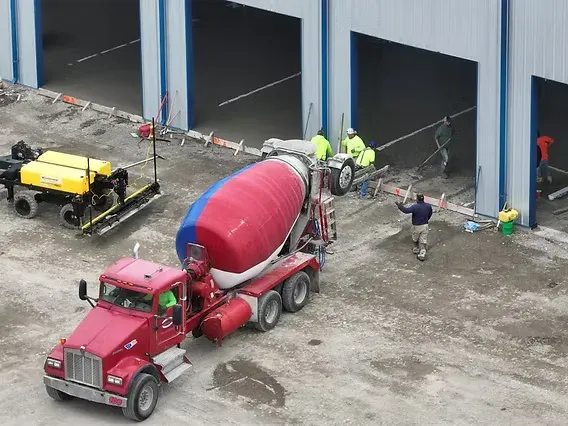
Iowa stretches the ready-mix problem the opposite way from a congested metro state. It is spread, agricultural country where a batch plant may serve pours across long rural distances, so the delivery clock and the route map, not city traffic, define how far a loaded drum can reach. There is no published price for ready-mix insurance in Iowa, and any figure quoted before an underwriter has seen your fleet is a guess. What a carrier actually does is build the cost from your operation — and for an Iowa producer that cost is led by the mixer trucks regulated as a motor carrier, a fleet that covers real ground between the plant and the pour.
That answer frustrates owners who want a single number, but it is the honest one, and Iowa’s geography makes a statewide average especially misleading. A metro Des Moines fleet running short pours and an outlying plant covering long farm-country distances price from different pictures. Below are the drivers that move the number, in roughly the order they matter.
Distance first: why the fleet leads an Iowa premium
For a ready-mix producer the fleet is the operation, and in Iowa the mixer trucks cover distance most trades never touch. Commercial auto covers the fleet’s liability and physical damage, and it is the leading line for this model — the way general liability leads for an install crew and a single boom truck leads for a pumper. The cost scales with how many trucks you run, what they are worth, the miles they cover, and the records of the drivers behind the wheel. Long rural runs to a food-processing plant, a grain or ethanol facility, or a spread farm site concentrate the exposure on the road, which is exactly where commercial auto responds, so scheduling the fleet to real value and real routes is where this driver is managed.
The motor-carrier profile and the Iowa DOT route maps
A mixer fleet is a regulated motor carrier, and Iowa adds a routing dimension most states do not press as hard. An Iowa-only fleet gets its intrastate operating authority and credentials from the Iowa DOT’s Office of Motor Carrier Services out of its Ankeny office, and the same agency publishes bridge-embargo and pavement-restriction maps that a heavy loaded mixer route has to respect. A for-hire fleet crossing into Missouri, Illinois, or Nebraska operates under the Federal Motor Carrier Safety Administration and the U.S. Department of Transportation with a USDOT number and carries the MCS-90 endorsement, which guarantees a public settlement up to the applicable federal minimum. Your FMCSA safety scores, your USDOT standing, and your driver qualification files are real inputs a carrier reads on the ready-mix program — the regulatory axis an install crew and a pumper never carry.
Bridge embargoes, thaw seasons, and forced routing
Ready-mixed concrete has a workability window — the industry references the ASTM C94 standard — and in Iowa the pressure on that window is distance compounded by routing. When a bridge embargo or a spring-thaw pavement restriction closes the shortest line to a rural pour, a loaded mixer takes the longer legal route, which burns time against the window and adds road miles. The insurance consequence is the driving that forces: extended rural runs and heavy shifting loads raise the load-shift and rollover exposure that sits on commercial auto. A high center of gravity and a moving drum make a mixer a real rollover risk on a two-lane farm road, and a carrier reads your routing and dispatch discipline when it prices it.
Real-World Scenario: A Des Moines-area producer batches near the I-80 and I-35 crossing and runs short metro pours that sit comfortably inside the workability window. An outlying plant serves a food-processing expansion and rural site work across long farm-country distances, and a bridge embargo forces its loaded mixers onto a longer route to reach a pour. Both run mixers, but the underwriter reads them differently — the metro fleet’s short-radius profile and the rural fleet’s long forced routes each price on their own terms. Same ready-mix class, two delivery pictures, and clean records and safety scores give a carrier a reason to price the fleet down.
Drivers, records, and the competitive comp market
Because commercial auto leads this model, the drivers are a direct cost input: motor-vehicle records, experience, and driver qualification files feed how a carrier prices the fleet, and on long rural runs experienced drivers matter. Your drivers and plant crew also put payroll on the workers compensation line, and Iowa runs a competitive comp market, so that line is placed with a private carrier and structured to the real crews and classifications. For a ready-mix operation comp sits behind commercial auto in the cost picture rather than leading it — which separates it from the Iowa concrete contractor cost picture, where crew payroll leads, and from the Iowa concrete pumping cost picture, where the boom truck leads.
Contractor registration through the Division of Labor
Iowa does register contractors: construction contractors above a low annual earnings threshold register through the Iowa Division of Labor, a registration rather than a competency-exam license, and there is no separate concrete-contractor license. A general contractor or project owner layers its own certificate-of-insurance and additional-insured requirements on top. The registration is a compliance gate rather than a direct rating input, but it is part of the picture, and we confirm the credential that actually applies to your work rather than assume one that does not.
The coverage choices that move your premium
What you buy is a driver. The limits your customers and contracts require push a ready-mix producer toward an umbrella that sits over the auto exposure, because a single fleet loss on a rural highway can run high. Whether you carry commercial auto at the limits your routes and the federal minimum call for, whether you schedule the plant and fleet property to real value, and how your general liability fits alongside all feed the number. For a fleet operation these are deliberate choices, not places to under-buy.
Getting an accurate Iowa quote
The path to a real number is to describe the real operation. Tell a broker the size and value of your fleet, your USDOT and motor-carrier profile, your driver records, the rural distances and routes you run, how bridge embargoes and thaw seasons reshape them, your loss history, and the limits your contracts require. From there a carrier with genuine motor-carrier and ready-mix appetite can price it. When you are ready, start a quote, or browse the full coverage overview and the general concrete insurance cost guide. For the market and regulatory picture behind these drivers, see the Iowa ready-mix insurance page, and the state regulator, the Iowa Insurance Division, fills in the rest. The number at the end will reflect your business, which is the only number worth having.