

Occurrence versus claims-made is the trigger — the rule that decides when your general liability answers a claim. An occurrence policy responds to injury or damage that happens during the policy period, no matter when the claim finally arrives. A claims-made policy responds based on when the claim is reported. For a concrete business, where work fails on a delay, that one difference is everything.
This post walks through what each trigger actually does, which form each one lives in and how it is named, what the extended reporting period — the “tail” — means on a claims-made policy, and why the long tail of completed operations usually makes occurrence the more natural fit for the work a concrete crew leaves behind. The short version: the trigger decides whether a slab that fails years after the pour is still a claim your policy will answer.
The trigger is the whole difference
The trigger is what determines when a policy responds — and it is the single most important structural choice on a general liability form. Two policies can carry the same limits and the same coverages and still behave completely differently, because one answers based on when the harm occurred and the other answers based on when the claim was reported. For most businesses the distinction is academic, because their exposure ends when the job does. For a concrete contractor it is not academic at all, because the work keeps existing — and can fail — long after the crew has gone.
Everything else about general liability flows from this. The products-completed operations hazard, the aggregate, the additional-insured endorsements — all of it sits on top of a trigger, and the trigger decides whether the coverage underneath is actually reachable when a delayed claim lands.
Occurrence: built for work that fails on a delay
An occurrence policy responds to bodily injury or property damage that occurs during the policy period, regardless of when the claim is finally made. Most general liability policies start from the standard ISO commercial general liability coverage form — in ISO’s system, the occurrence version is typically the one known as CG 00 01. Under it, if the harm happened while the policy was in force, the claim is answered even if it surfaces years later, and even if you have long since moved to a different policy or a different carrier.
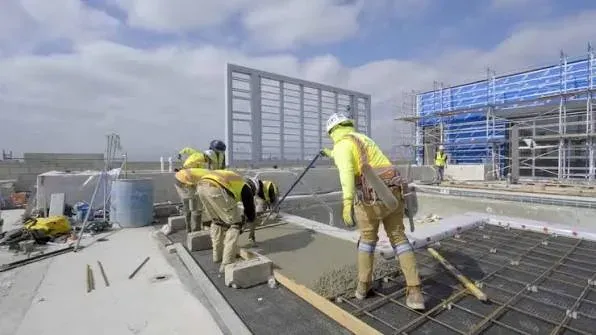
For a concrete installation contractor, that timing is the whole point. You pour and finish a slab, footer, driveway, or foundation, and that finished installation is “your work” in the policy’s language. If it fails downstream and injures someone or damages property, an occurrence form answers based on when the failure occurred — it does not ask you to still be holding the same policy at the moment the claim arrives. That is why occurrence is usually described as the more natural fit for a trade defined by delay.
Claims-made: coverage tied to when the claim is reported
A claims-made policy responds based on when a claim is reported, not when the harm occurred. In ISO’s system the claims-made version of the standard form is typically the CG 00 02 form. It answers claims first made and reported while the policy is active, and it depends on two moving parts most owners never think about until they matter: a retroactive date, which sets how far back covered work can reach, and continuous coverage, because a gap or a lapse can leave old work unanswered.
Claims-made coverage is not wrong — it exists for good reasons in some lines — but for a concrete contractor it asks more of you. You have to keep the coverage continuous, watch the retroactive date, and understand what happens if you ever change or drop the policy. Because a concrete failure can arrive on a long delay, the reporting-based trigger is where an owner can get surprised, and it is the reason the trigger is worth reading on your own form rather than assuming.
The extended reporting period, or the “tail”
A claims-made policy only answers claims reported while it is in force, which creates an obvious problem: what happens to work you have already finished when the policy ends? The answer is the extended reporting period — commonly called a “tail” — an option that preserves the ability to report claims for work already done after the policy itself has lapsed or been replaced.
The tail is a concept, not a single named ISO form, and its terms and length vary by carrier — so it is exactly the kind of thing to confirm rather than invent. For a concrete business the relevance is direct: if your finished work can fail two or three years out, then dropping a claims-made policy without a tail could leave those old pours in a gap. If you carry claims-made coverage, understanding the tail before you change anything is not a technicality — it is how you keep the work you already left behind covered.
Real-World Scenario: A crew finishes a foundation on a commercial job and closes it out. A couple of years later the ground has moved through repeated wet-and-dry cycles, a section fails, and the building owner brings a property-damage claim. If the contractor was carrying an occurrence policy when the pour was done, the claim is answered by that policy based on when the harm occurred — even though the contractor has since renewed, changed limits, or moved to another carrier. If the contractor had a claims-made policy and had let it lapse without a tail, the same claim could fall into a gap. Same failure, same finished work, two very different outcomes — decided entirely by the trigger.
Why occurrence usually fits the concrete long tail
The reason occurrence is so often the better fit comes down to one fact about the trade: your exposure does not end when the job does. Installed concrete has a long tail — it heaves, settles, spalls, and fails downstream on a timeline that has nothing to do with when you were paid. An occurrence form matches that reality, because it answers the harm on the timeline the harm actually happens, without requiring you to still be carrying the same policy when the claim finally shows up.
That does not make claims-made coverage a mistake in every case, and the right answer depends on your operation and the form your policy actually uses. But for most concrete contractors, whose signature exposure is completed operations on the work they leave behind, an occurrence trigger removes a whole category of “was I still covered?” risk. It is the difference between a claim that is a phone call and one that is an argument.
The trigger, the aggregate, and the umbrella above it
The trigger decides whether a delayed claim is answered; the limits decide how much is there when it is. Those are separate questions, and both matter for completed work. Completed-operations claims draw against the products-completed operations aggregate — a separate limit bucket from the general aggregate — and on an occurrence form, an old claim is answered by the policy in force when the harm occurred, against that period’s aggregate.
When the work you leave behind could produce a claim large enough to test that bucket, umbrella liability sits above the primary policy and adds limit over it. The trigger, the aggregate, and the umbrella work as a stack — and reading how they line up on your own policy is the kind of check worth doing before a loss.
Where general liability stops: the truck seam
The trigger question lives entirely inside general liability, and it is worth remembering what that line does and does not cover. General liability answers for the work and the harm it causes — the finished installation that fails, the premises-and-operations injury on the job. It does not cover your vehicles. A boom pump truck and a ready-mix mixer fleet are covered under commercial auto, which answers auto liability and physical damage on the trucks themselves. The occurrence-versus-claims-made decision shapes how your general liability responds to the work; the trucks sit under a separate line with its own terms.
Read your own form before a loss
The takeaway is simple: for a concrete contractor, the trigger on your general liability is a real decision, not boilerplate — because your work fails on a delay, and the trigger decides whether a delayed claim is answered at all. Confirm whether your policy is written on the occurrence form or the claims-made version, and if it is claims-made, understand the retroactive date and the tail before you ever change or drop it. Coverage depends on the specific policy and its endorsements, and forms and editions vary by carrier, so read it rather than assume.
When you are ready, start a quote and tell us how your general liability is written, read the full general liability page to see where the trigger sits in the whole line, or browse the coverage overview to see how each line fits together. For what drives the cost of the coverage underneath the trigger, see what drives concrete insurance cost. The point of naming the form is so you can check it — coverage confirmed before a loss is worth far more than coverage you assumed you had.