

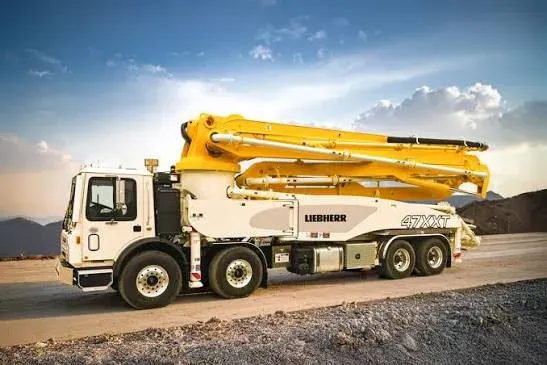
Most trades in Idaho worry about the crew. A concrete pumping contractor has a different cost center, and it comes down to two things a foundation crew never carries on its books: a single very expensive boom pump truck, and the overhead power-line exposure that arrives every time a boom lifts concrete through the air. Ask what pumping insurance costs in Idaho and the honest answer is that no one has posted a real number, because a carrier assembles the premium from your specific operation rather than reading it off a rate sheet.
That is not a dodge — it is how the class works, and for a pumper the drivers are distinct enough that understanding them beats any average. A one-truck operation working Meridian subdivisions and a fleet reaching across spread rural sites in the Idaho Falls country are the same class in name only. Here is what genuinely moves the number for an Idaho pumping operation.
The number lives in your operation, not a rate sheet
A premium is what an underwriting model produces after it looks at your real exposures — the boom truck you run, how close your pours sit to overhead lines, your crew, your loss history, and the limits your contracts require. Adjust any one of those and the figure shifts. There is no shortcut around it.
Idaho makes a statewide average especially hollow. The Treasure Valley around Boise, Meridian, and Nampa is one of the fastest-growing metros in the country, producing subdivisions, commercial pads, and a slowly rising base of Boise mid-rise, while the rest of the state is sparse, mountainous, and spread across the Rockies and high plains. A pumper concentrated in valley growth work and one reaching booms across long rural runs price from different pictures.
Long rural runs: the power-line exposure that leads Idaho
Start with the exposure that defines the class here, because Idaho’s geography sharpens it. Outside the Treasure Valley the state is sparse and mountainous, and poles and open conductors follow every rural road. A boom places concrete in three dimensions, and contact between that boom and an energized overhead line is the severe event a carrier underwrites against — it can cause serious bodily injury, and it is precisely what general liability and an umbrella are built to answer. On spread rural and mountain-access sites the line often runs right along the frontage; even in rising Boise mid-rise the boom works near built-up service. Because the severity is high, your clearance discipline, spotter protocol, and placement record are weighed heavily — not as a flat surcharge, but as a real exposure priced on how you manage it.
Real-World Scenario: A crew feeds a slab on a spread lot outside Idaho Falls, extending a boom across open ground where a rural distribution line follows the road frontage, while another sets up on a graded foothill lot in the Treasure Valley near the service feeding a new commercial pad. Different country, same defining exposure — the boom near energized conductors — and the same two lead drivers, the truck and the power-line risk. The operator who documents clearance and spotter procedure gives a carrier a reason to price that severity down.
The boom truck: one asset that carries the program
For a pumping contractor the truck is not a support vehicle — it is the business, and it concentrates a large amount of value in one specialized unit. That is why the commercial auto line covering its physical damage and its liability, both on the highway and set up over a pour, is a leading driver. A foundation crew’s trucks are ordinary; they ride behind the crew and the finished work. A pumper’s truck is the work itself. Its value, the reach of the boom, how many units you run across long Idaho distances, and the maintenance behind them are weighed closely, because a truck loss is expensive and it takes you off the job. Scheduling the unit to its real value is where this driver is decided.
When the delivery line fails
There is a third exposure sitting beneath the truck and the overhead runs: the pressurized delivery system itself. A pipe or hose that ruptures during placement can injure a crew member and damage the surrounding site, so it belongs to the general liability a carrier weighs. Keeping a documented service record on your lines and couplings helps, since fewer pressure failures mean fewer of the exact on-site claims an underwriter is trying to anticipate.
A lean crew, licensing, and a lighter comp share
A pumping operation does not run a labor-heavy finishing crew — it runs lean, usually an operator and a spotter. Workers compensation is still a real line, and Idaho runs a competitive private market for it, overseen alongside the admitted market by the Idaho Department of Insurance. Idaho does license contractors — the state requires contractor registration through the Idaho Contractors Board rather than a competency exam, with no separate concrete-contractor license — and general contractors commonly require comp regardless. But because the crew is small, the payroll-driven comp line is generally a smaller share of a pumper’s cost than the truck and the power-line exposure, which is exactly why pumping is a different cost conversation than a labor-heavy operation.
How claims shape the quote
Your claims file is something you have effectively been underwriting for years. A clean history opens carriers and improves terms; a significant power-line, auto, or liability loss in the last few years shrinks the options and raises the figure. Carriers read the shape of the losses too — a lone incident with clearance and spotter fixes afterward lands differently than a run of similar ones. What durably helps is documented discipline: boom-to-line clearance, spotter protocol, and operator training under OSHA standards, all of which surface when a carrier prices a concrete pumping operation.
Coverage limits and the umbrella question
What you carry is a driver in itself. Since a power-line contact is a catastrophic event, the limits general contractors require tend to move an Idaho pumper onto an umbrella faster than most trades, and higher limits cost more than lower ones. Whether your general liability matches what the boom exposure calls for, whether the truck and any property are scheduled to true value, and how the limits are structured all feed the figure. This is a poor place to under-buy, because the single catastrophic loss the coverage exists for is exactly why the class prices the way it does.
Building an accurate Idaho quote
An accurate figure starts with an accurate description of the operation. Tell a broker the boom truck you run and its value, the pours you place and how close they sit to overhead lines, your clearance and spotter discipline, your crew, your loss history, the limits your contracts require, and where you work — Treasure Valley growth, long rural runs, mountain access, or a mix. From there a carrier with real pumping appetite can price it, and you can compare like for like. When you are ready, start a quote and tell us about your equipment and your placements, browse the full coverage overview, or read the market picture on the Idaho concrete pumping insurance page. To see how these drivers compare across the trade, the concrete insurance cost overview sets them side by side.