

There is no published price for concrete contractor insurance in Ohio, and Ohio starts from an unusual place: workers compensation isn’t bought from a private carrier here at all — it runs through the state fund. An admitted carrier still builds the rest of your program from your crew, the concrete you leave behind, and your record, but the comp piece works differently than in most states.
That single fact reshapes how the cost conversation should open in Ohio, so this guide leads with it. Understanding the drivers of an install contractor’s program is worth far more than a fake statewide average, because a two-crew flatwork operation and a foundation contractor setting deep footings on glacial clay are the same class only in name. Below are the drivers that actually move an Ohio install contractor’s number, and what you can do about each.
The state-fund comp reality that frames an Ohio program
Ohio is a monopolistic workers-compensation state. That means comp is available only through the state fund — the Ohio Bureau of Workers Compensation (BWC) — and private carriers cannot write it here. Concrete is labor-heavy, so payroll is still the dominant force behind your overall exposure: pouring, finishing, lifting, and material handling drive the injury profile whether the comp sits with a state fund or a carrier. What changes is where that line lives. We place the rest of the program — general liability, commercial auto, property, and umbrella — with a private carrier, and we are direct that comp itself runs through the state fund rather than implying otherwise. Getting that division right, and coordinating the private lines around a crew whose comp is handled by the BWC, is the honest starting point in Ohio.
Why there is no published price for Ohio concrete contractor insurance
A premium is the output of an underwriting model, not a sticker. The private carrier takes your specific exposures — how many people you employ and what they do, the revenue behind your completed concrete, your loss history, and the limits your contracts demand — and prices each line against them. Change any input and the number moves. Ohio adds the comp wrinkle on top: because that line is carved out to the state fund, a blended “Ohio concrete insurance average” would blur two different things and tell you almost nothing about your own operation. The rest of this guide is the drivers that actually build the private program.
Crew payroll — still the rating spine, even with state-fund comp
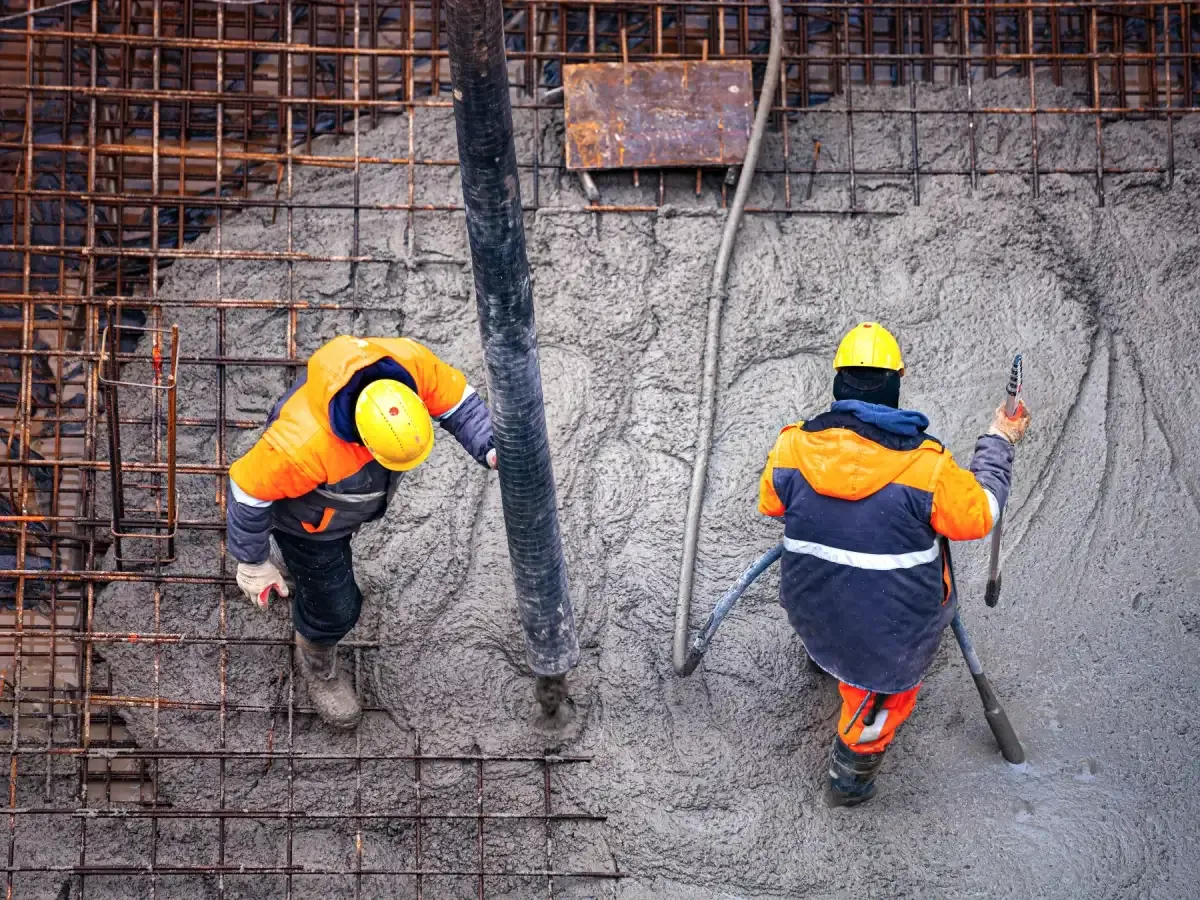
Even though comp itself sits with the BWC, payroll remains central to what you pay overall, because it also drives a large part of your general liability with the private carrier. And it is not just the dollar figure — it is which work the payroll covers. Pouring, finishing, lifting, and setting and stripping forms carry a very different injury profile than supervisory or office work, so both the state fund and your private carrier care about how the payroll classifies. The exposure is real on a concrete crew: placing and finishing concrete is physically demanding work, and in Ohio that often means working ahead of the cold to hit a freeze-durable pour. Reading your workers compensation obligations against the state-fund system, and lining the private lines up around them, is part of getting this driver right.
Freeze-thaw, glacial clay, and the completed-operations tail
Your revenue is a rating basis for general liability, but the exposure that defines the install class is completed operations — the work you leave behind. Ohio makes this concrete in the most literal way. Northeast Ohio pairs some of the country’s most punishing freeze-thaw cycles with dense glacial clay, so deep footings and freeze-durable mixes define slab and foundation work here. A slab that heaves, a foundation that spalls after a hard winter, or a footing set too shallow for the frost line can surface as a third-party claim months or years after the crew is gone. The completed-operations side of general liability is the signature line built to answer for it, and because installed concrete carries such a long tail, your revenue and your finishing-and-durability record are inputs a carrier weighs closely. This is the install contractor’s defining cost driver.
Real-World Scenario: A Cleveland foundation crew sets footings and basement walls through the fall, racing to beat the frost, while a Columbus flatwork crew pours commercial slabs and walks across a mixed-use development. Both leave finished concrete that has to survive years of freeze-thaw on glacial clay, but the underwriter reads them differently — the foundation contractor’s completed-operations tail rides on fewer, higher-stakes pours where heave or settlement can be severe, the flatwork crew’s on many smaller placements. Same Ohio, same install class, but the revenue mix and the completed-work picture price differently, and the owner who can describe that clearly gets the sharper quote.
No statewide license — local permitting is the real gate
Ohio does not require a statewide license to work as a general or concrete contractor. There is no state concrete-contractor license; general-contractor licensing is municipal, and only certain specialty trades are licensed at the state level. That means the practical gate for a concrete crew is local permitting and the contract you sign, not a statewide credential. This shapes eligibility and paperwork more than it drives premium directly — but it matters, because the general contractor, developer, or project owner layers its own certificate-of-insurance and additional-insured requirements on top, and those requirements often set the limits you end up carrying across concrete construction work.
The yard, your forms, and your equipment
The property line covers what you own and store — the yard, the forms, the power trowels, screeds, floats, and mixers, and any shop or storage you keep. For an install contractor this is usually a smaller driver than the crew and the completed-work exposure, but it is still real, and it is one you control by scheduling your property and equipment to real value rather than guessing. Underinsuring the tools that get your crews to a finished pour is a false economy; accurate scheduling is where this driver is won.
Work trucks — the minor auto line for an install model
Unlike a pumping or ready-mix operation, an Ohio install crew’s vehicles are ordinary work trucks and trailers hauling crews, forms, and tools — real exposure, but not the center of the risk. Commercial auto is a genuine line for this model and grows with your rolling stock, but it does not lead the way it does for the other concrete operating models. That is the same install-model pattern you’ll see across our concrete insurance cost guides: same trade, different cost conversations depending on how the work moves.
Claims history and the coverage choices that finish the number
Your loss record is a driver you have been writing for years. A clean history opens markets and prices better; a serious general-liability or completed-operations loss in the last several years narrows the field, and a frequency pattern of small claims can matter as much as one large one. Carriers read the story behind the losses — a single claim followed by corrected safety and finishing procedures reads differently than repeated incidents, and documented crew training under OSHA standards shows up in the record. What you buy finishes the picture: the limits your contracts require push you toward an umbrella, and a single completed-operations failure on a foundation can run above a primary limit, so those choices are places to buy deliberately, not to under-buy blindly.
How to get an accurate Ohio quote
The path to a real number is to describe your real operation. Tell a broker your crew payroll and the work it covers, your revenue and the concrete you leave behind, your storage yard and equipment values, your claims history, the limits your contracts require, and where in Ohio you work — Cincinnati, Dayton, Akron, Toledo, or the Columbus and Cleveland metros. From there a private carrier with genuine concrete appetite can price the general liability, auto, property, and umbrella, while comp runs through the state fund. When you’re ready, start a quote and tell us how your crews work, browse the full coverage overview, or see the market and regulatory picture on our Ohio concrete contractor insurance page. The number at the end will reflect your business, which is the only number worth having.