
Concrete contractor insurance · Missouri
Concrete Contractor Business Insurance in Missouri
Insurance for the Missouri concrete installation contractor — flatwork, slabs, driveways, footers, and foundations poured across a state with two distinct ground hazards: shrink-swell clay in the west around Kansas City and genuine New Madrid seismic risk in the southeastern Bootheel. The completed-operations exposure on the work you leave behind and a labor-heavy crew define the program.

A Missouri concrete installation contractor pours work that has to stand up to two genuinely different ground hazards, and they sit in two different corners of the state. In the west, around Kansas City and running south through Cass and Bates counties, the soil is very-high-shrink-swell Wymore-Ladoga montmorillonite clay — ground that swells when it takes on water and shrinks when it dries, working against a slab or footer through every wet and dry season. In the southeastern Bootheel, the exposure is seismic: the New Madrid zone is a genuine hazard, capable of a major earthquake. One book of installed concrete can span both, and the completed-operations tail on that work is the reason the installation model carries the insurance it does.
The work is the business, and it keeps existing long after final payment — a slab bearing load, a footer carrying a structure, a driveway weathering season after season. Two exposures lead this model in Missouri. The first is completed operations — the work you leave behind. Installed concrete that fails downstream, after the job is done and the crew is gone, can become a serious third-party injury or property-damage claim months or years later, and the completed-operations side of general liability is the signature line built to answer for it. In a state where western clay and Bootheel seismic ground both work against a finished pour, that completed-operations tail is anything but abstract. The second is the labor-heavy crew — pouring, lifting, setting and stripping forms, and finishing are physically demanding work, which makes workers compensation a core line for this model. In Missouri that line is placed with a private carrier in a competitive market, structured to the real payroll and crew classifications a finishing crew runs.
This page is the Missouri installation model: the two-hazard ground it works across, the completed-operations-and-labor risk profile, how Missouri licensing and workers compensation actually work, the coverage stack the model leans on, what moves cost, and how carriers underwrite it. It does not lead with the boom-pump-truck and power-line exposure that defines the pumping model, or the mixer-fleet trucking model that defines ready-mix — if your operation also runs a pump truck, our Missouri concrete pumping page is built for that exposure, and if you haul ready-mix, our Missouri ready-mix page leads with that fleet.
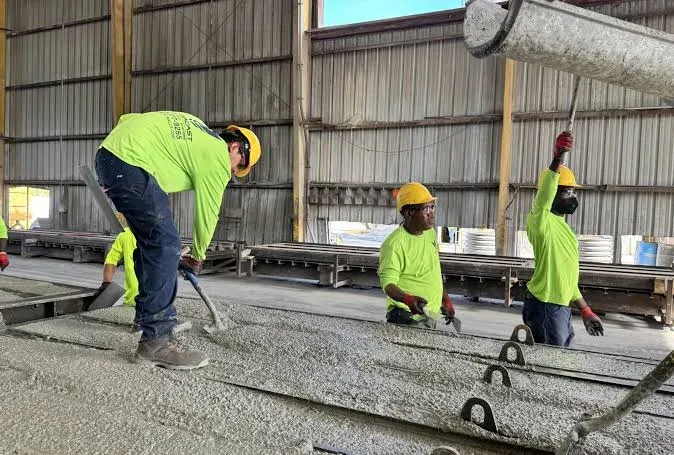
Pouring concrete in Missouri? Get a quote structured around the work you leave behind and the crew that places it.
Get a Free QuoteTwo hazards in two corners of the state
Installation risk is completed-work risk and labor risk, and in Missouri that completed-work risk has two distinct ground drivers pulling from opposite corners of the state. A policy rated to a generic business, or to a single statewide soil assumption, treats neither the western clay nor the Bootheel seismic exposure with the emphasis a concrete installer needs — and it treats the labor exposure as an afterthought. The install model here has to hold both ground hazards and the crew at once.
Underneath both is the same construction demand. St. Louis and Kansas City metro commercial and residential work, logistics and distribution, healthcare, and production and industry keep concrete pouring at volume, and an install crew that places flatwork, slabs, and foundations carries a deep completed-operations tail on all of it. Two Missouri facts frame the program before any premium is discussed: there is no statewide concrete-contractor license to hold, so the gate is local permitting and the contract, and workers compensation runs through a competitive private market. We separate the completed-operations exposure from the crew exposure — and the installation work from any pump or hauling operation in the same book — so none is mispriced.
Western clay in the west, New Madrid in the Bootheel
In the west, around Kansas City and running south through Cass and Bates counties, the ground is very-high-shrink-swell Wymore-Ladoga montmorillonite clay. It swells as it takes on water and shrinks as it dries, and that movement works against anything rigid placed on top of it — a slab can heave or crack, a footer can lift and settle unevenly, a foundation can move with the seasons. For an install crew, that is a completed-operations concern: the pour can be right on the day it is finished and still be worked on by the clay underneath it for years.
In the southeastern Bootheel, the hazard is seismic. The New Madrid zone is a genuine one, capable of a major earthquake, and it shapes the way structural slabs and foundations have to be placed and how their downstream performance is judged. Across much of the rest of the state the profile is thick loess over glacial till with moderate freeze-thaw — a steadier but still real driver of movement in flatwork and footings. One Missouri install book can carry clay-country work in the west, seismic-country work in the southeast, and ordinary freeze-thaw work in between: three different reasons a finished pour can be tested after the crew has gone, all landing on the same completed-operations line.
The install book across Missouri
The installation model holds several kinds of work that share one risk profile — concrete the crew pours, places, and finishes on a site, left behind to perform for years. Across the Missouri metros it is the same install lens, read against whichever ground hazard sits underneath:
- Kansas City. Residential subdivisions and commercial build-out across the metro — flatwork, slabs, and foundation pours placed over the western shrink-swell clay that works hardest against installed concrete.
- St. Louis. Commercial and residential construction, logistics and distribution, and healthcare work across the metro, where foundation and structural slab pours carry the deepest completed-operations tail in the install book.
- Springfield. Driveways, sidewalks, and slab-on-grade flatwork poured and finished crew by crew across a growing southwestern market.
- Columbia. Footers and poured foundations supporting new structures, with flatwork finishing the sites across the mid-Missouri corridor.
- Independence. Decorative and structural flatwork on a steady pipeline of residential and commercial work on the Kansas City side of the state.
- St. Charles. Concrete work feeding the St. Louis-area construction base — flatwork and foundation pours, finished and left behind.
The work types within the install model are the same statewide: flatwork, structural and on-grade slabs, driveways, sidewalks, patios, footers, poured foundations, and decorative concrete. Running a boom pump or hauling ready-mix is not part of this model — each carries its own truck-centered exposures and lives on its own Missouri page.
Missouri licensing and workers compensation
Missouri does not require a statewide license to work as a general or concrete contractor — there is no state concrete-contractor license to hold. Contractor licensing is handled by city and county governments while the state licenses only certain specialty trades. The gate in Missouri is local permitting and the contract, not a statewide license, and we are honest about that rather than implying a credential that does not exist. Where the ground is difficult — the western clay or the Bootheel seismic zone — the requirements that actually bite tend to arrive through local permitting and the additional-insured and limit terms in the contract, not through a state license.
Missouri runs a competitive workers-compensation market, so comp is placed with a private carrier — and on a labor-heavy install crew (pouring, finishing, lifting, setting and stripping forms) it is a core line, structured to the real payroll and classifications. Worker safety on a pour — silica exposure when cutting and grinding cured concrete, formwork and shoring, lifting and material handling, and struck-by hazards on an active site — runs through OSHA standards, and a documented safety program is something carriers look for.
Coverage breakdown
Here is the stack a Missouri concrete installation contractor carries, weighted for the install model. Each line links to its full page — and general liability, carrying the completed-operations exposure on the work you leave behind, is the signature placement for this model.
- General Liability Insurance — the signature line: third-party bodily injury and property damage from the operation, and the completed-operations side that answers when installed concrete — a slab, footer, driveway, or foundation you placed — fails downstream after the job is done and causes harm.
- Workers Compensation Insurance — medical and lost-wage coverage for a labor-heavy crew that lifts, pours, sets forms, and finishes, with the employers-liability side, placed in Missouri’s competitive market and structured to the real payroll and classifications.
- Commercial Property Insurance — the shop, the storage yard, stored materials, tools, and equipment against fire, theft, and the external perils a concrete operation carries, with business income for a covered shutdown.
- Umbrella Liability Insurance — excess limits above general liability and the other primary lines for the catastrophic completed-work failure that runs past them, and the higher limits a general contractor or project contract often requires of a concrete sub.
- Commercial Auto Insurance — the work trucks that move the crew, the forms, and the material to the site; a lighter emphasis for an install contractor than for a pumping or ready-mix operation, where the truck itself is the business.
Cost drivers for a Missouri concrete operation
Premium tracks the operation, not a sticker price. The drivers that move it most are your payroll and the crew classifications it covers, the kind of work you pour and how much structural and foundation work is in your book, the depth of your completed-operations exposure — deeper where you pour over the western clay or in the Bootheel seismic zone, shallower on ordinary flatwork — your building and yard values, the contracts you sign and the additional-insured and limit requirements they carry, your prior-claims history, and your safety discipline. Workers compensation factors in through your payroll and classifications, placed in Missouri’s competitive market. A contractor placing structural slabs and foundations carries a deeper completed-operations tail than one doing only decorative flatwork, and a large finishing crew concentrates more workers-compensation exposure than a small one. We price to that real picture and stand behind any figure we give — verified ranges come from us directly, never a generic guess.
Claims scenarios across a two-hazard state
These are plausible Missouri concrete-installation claim categories, described qualitatively and with generic carrier language — every claim is handled by the carrier, never named here — and with no fabricated cost or frequency figures.
- A foundation moves on western clay. A structural slab or foundation you placed over shrink-swell clay heaves or settles after the job is complete and causes third-party bodily injury or property damage — the completed-operations side of general liability, not a property claim.
- A Bootheel pour is tested by the ground. A structural pour in the southeastern seismic corridor fails downstream after the crew has left and injures someone or damages property — a completed-operations exposure on installed work.
- Flatwork becomes a trip hazard. A sidewalk or driveway the crew poured heaves or spalls into a hazard and injures a member of the public after the crew has left — a completed-operations exposure on installed work.
- A crew-member injury on the pour. A worker is hurt lifting, finishing, or setting forms on an active Missouri site — a workers compensation claim, with employers liability behind it.
- Third-party damage during the work. A washout, a blowout, or material placed where it should not be damages property that is not yours while the job is underway — a premises-and-operations general-liability claim.
Underwriting a book that spans both hazards
Carriers writing the concrete-installation class in Missouri look at the work, the ground, and the discipline: the kind of concrete you pour and how much structural, slab, and foundation work is in your book, how much of it sits over the western clay or in the Bootheel seismic zone, the depth of your completed-operations exposure, your crew payroll and classifications, your building and yard values, your safety and silica practices, your prior-claims history, and how your contracts line up with your limits. A focused operation with a clean claims history, a documented safety program, and contracts that match its limits opens more markets; a heavy structural and foundation book on difficult ground without a safety record, or a serious completed-operations loss, narrows them. Contractors who also run a pump or haul ready-mix get those portions underwritten separately so the installation book is not subsidizing — or stranding — the rest. We position your operation to the carriers most likely to want a Missouri concrete-installation risk rather than sending one generic submission everywhere.
Why Concrete Guard Insurance
We write one class — concrete contractors — and within it we treat the Missouri installation operation as what it is: a book that can span western shrink-swell clay and Bootheel seismic ground on the same set of pours. We weight your stack toward the completed-operations exposure on the work you leave behind and the workers-compensation needs of a labor-heavy crew, read the install scope so the completed-operations tail is structured for the work you pour and the ground you pour it over, and set commercial property, the umbrella, and the work-truck coverage around the way an install contractor really operates in Missouri. We place coverage with carriers that want the concrete-installation class. Start with a quote, or talk it through with us first.
Learn more
Concrete installation is one of three operating models we write in Missouri, and the coverage stack shifts with the work. The signature exposure for this model lives on the general liability page, with workers compensation close behind. If your operation runs a boom pump truck instead — a high-value mobile asset with the catastrophic power-line exposure on the pour — our Missouri concrete pumping page leads with that profile, and if you haul ready-mix, our Missouri ready-mix page leads with the mixer-fleet model.
Coverage for concrete contractors
- General Liability Insurance
- Commercial Auto Insurance
- Commercial Property Insurance
- Workers Compensation Insurance
- Umbrella Liability Insurance
Insurance by operating model
Get covered
Primary sources
Frequently asked questions about concrete contractor insurance in Missouri
Do concrete contractors need a license in Missouri?
Missouri does not issue a statewide license for general or concrete contracting — there is no state concrete-contractor license to hold, and pouring, finishing, and installing concrete is not a state-licensed trade here. Contractor licensing is handled by city and county governments while the state licenses only certain specialty trades. What does apply is local: permitting, registration where a city or county requires it, and the certificate-of-insurance and additional-insured terms a general contractor or project owner sets in the contract. On difficult ground — the western shrink-swell clay around Kansas City or the southeastern New Madrid seismic zone — those local permit and contract terms are usually what tighten, not a state license. We are honest that the gate in Missouri is local permitting and the contract.
How does workers compensation work for a Missouri concrete crew?
Missouri runs a competitive workers-compensation market rather than a state-fund monopoly, so when comp is carried it is placed with a private carrier. For a concrete crew it is a core line, because pouring, finishing, lifting, and setting forms is physically demanding work with a real injury profile — and that is true whether the crew is placing slabs over the western clay or structural work down in the Bootheel. Many general contractors, developers, and project contracts require comp regardless, and we structure it to the real payroll and crew classifications rather than treating it as a box to check.
Does general liability cover a slab or foundation that fails after the job in Missouri?
That is the completed-operations side of general liability, and on installed concrete in Missouri it is the exposure that matters most — in part because the ground itself works against a finished pour. The standard commercial general liability policy responds to bodily injury and property damage arising out of your work away from your premises after the work is complete. For an install contractor the finished pour is your work, so a slab that heaves on the western shrink-swell clay, a footer that settles, or a foundation placed in the seismic southeast that fails downstream and injures someone or damages property is the kind of third-party claim the products-completed operations hazard is built for. What it draws a careful line around is the cost of tearing out and redoing your own failed concrete, which tends to be treated as a business cost rather than a covered third-party claim. That nuance is exactly what we walk a Missouri contractor through before a loss, not during one.
What concrete construction work do you insure in Missouri?
The installation model across Missouri — the flatwork, slabs, driveways, sidewalks, patios, footers, foundations, and decorative concrete a crew pours and finishes on a site and leaves behind to perform for years. From Kansas City and Independence in the west, over the shrink-swell clay, to St. Louis and St. Charles, then out to Springfield, Columbia, and the seismic southeast, it is the same install risk profile: a completed-operations tail on the concrete you place and a labor-heavy crew that places it. We weight the program toward general liability and workers compensation, the two lines this model leans on, and structure the rest around the way an install contractor actually works.
I pour concrete and also run a pump truck in Missouri — which page is mine?
This page is the installation model — the flatwork, slabs, and foundations you pour and finish, where the completed-operations exposure on installed work and a labor-heavy crew lead the program. A boom pump truck is a distinct exposure: a high-value mobile asset on commercial auto with the catastrophic risk of a boom contacting an overhead power line on the pour, and that lives on our Missouri concrete pumping page. Hauling ready-mix is a third model — a mixer fleet underwritten as a motor carrier — and it has its own Missouri page. If your operation does more than one, you need each scope built into one program, and we read each rather than rating the whole book off a single generic form.
Why does the install page differ from the Missouri pumping and ready-mix pages?
Because they are genuinely different operations that an underwriter prices on different terms. The installation model on this page is about the work the crew leaves behind — completed operations on flatwork, slabs, and foundations, tested over time by Missouri’s western clay and its Bootheel seismic ground — and the labor-heavy crew that places it, so general liability and workers compensation lead. The pumping model is about a boom pump truck and its overhead power-line exposure, weighted toward commercial auto and general liability. The ready-mix model is about a mixer fleet regulated as a motor carrier. The Missouri facts they share — no statewide concrete-contractor license, with the gate at local permitting and the contract and a competitive private workers-compensation market — read differently through each lens, and we frame them for the install crew here rather than copying the pump or fleet pages.
Insure your Missouri concrete operation the way it runs
Tell us the work you pour, the crew you run, and the contracts on your books, and we will market it to carriers that write the concrete-installation class in Missouri — with completed operations covered, not assumed.