

There is no set price for ready-mix insurance in Utah, and any figure quoted before an underwriter has looked at your fleet is a guess. A carrier builds the cost from your specific operation — and Utah’s delivery geography is bifurcated, which makes a statewide average especially misleading. A Utah fleet runs dense, congestion-prone routes along the Wasatch Front and long climbs to mountain and high-desert job sites, and both are the work of a mixer fleet regulated as a motor carrier. That is where the cost concentrates. This guide walks the drivers that decide what a Utah ready-mix producer pays.
The honest answer disappoints owners who just want a number, but the drivers here are specific enough that understanding them beats a fake average. Below is what moves the number, and why Utah’s corridor-and-mountain split pushes it in two directions.
Two delivery worlds along the I-15 spine
Utah’s mixer demand concentrates on the Wasatch Front, where the I-15 corridor through Salt Lake City, Provo, and Ogden carries dense, congestion-prone runs, and traffic can eat into the workability window before a load reaches its pour — the industry references the ASTM C94 standard. Against that sits the other Utah: long climbs to mountain and high-desert job sites where distance, elevation, and wide seasonal temperature swings govern batch timing. The Silicon Slopes technology build-out, warehouse and data-center development, and sustained Wasatch Front residential growth keep demand strong but corridor-concentrated. A fleet fighting Front congestion and one climbing to a remote site price on different pictures, which is why a blended figure says little about your own operation. The routes a Utah fleet actually runs, more than the trucks it parks, are what a carrier reads first.
For the full Utah market and regulatory picture behind these drivers, see our Utah ready-mix insurance page. This guide is the companion cost explainer.
The mixer fleet leads the cost
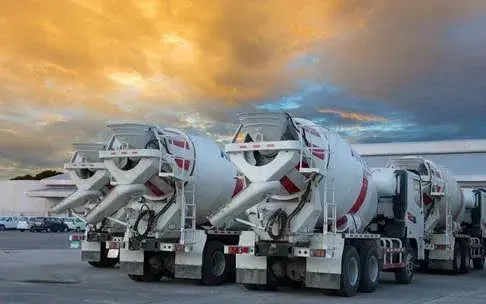
For a ready-mix producer the fleet is the operation, and the mixer trucks are on the road constantly. Commercial auto covers the fleet’s liability and physical damage, and it is the leading line for this model — the way general liability leads for an install crew and a single boom truck leads for a pumper. The cost scales with the number of trucks, their value, the miles they run, and the records of the drivers behind the wheel. A Utah fleet crawling the I-15 corridor or climbing to a mountain site concentrates its exposure on the road, which is where commercial auto responds. Fleet size, truck value, and how hard the trucks run are the inputs that move this driver most.
The motor-carrier and DOT profile
A Utah mixer fleet is a regulated motor carrier, and that profile shapes the cost. A for-hire fleet moving along the I-15 spine across state lines operates under the Federal Motor Carrier Safety Administration and the U.S. Department of Transportation with a USDOT number and the MCS-90 endorsement, which guarantees a public settlement up to the applicable federal minimum. A fleet operating only within Utah registers intrastate through the Utah DMV, with the UDOT Motor Carrier Section on the state axis. Your FMCSA safety scores, USDOT standing, and driver qualification records are inputs a carrier reads closely. This regulatory axis is signature to the ready-mix model — an install crew and a pumper never carry it.
Real-World Scenario: A for-hire producer runs interstate loads up the I-15 spine under its USDOT number and the MCS-90 endorsement to feed a Silicon Slopes build across a state line, while a second operator keeps its trucks inside Utah, registered through the Utah DMV and delivering across the Salt Lake City metro. Both run mixers, but the underwriter reads them apart — the interstate carrier’s federal safety profile and the in-state fleet’s congested corridor routes each price on their own terms. Same ready-mix class, but the motor-carrier picture, not the concrete, is what a carrier is really pricing.
Congestion, elevation, and the delivery window
Utah’s two delivery worlds press the workability window differently. Wasatch Front traffic can consume the window before a load reaches a dense metro pour, while long climbs to mountain and high-desert sites add elevation and wide seasonal temperature swings that govern batch timing on the way up. Both raise the road exposure that sits on commercial auto: a mixer’s high center of gravity and moving load make it a real rollover risk, sharper on grade and in stop-and-go traffic. A carrier reads your routes, your dispatch discipline, and your rollover record when it prices it, and telematics and load-securement discipline show up in the record.
Drivers, hiring, and workers comp
Because commercial auto leads this model, the people driving the trucks are a direct cost input — motor-vehicle records, experience, and driver qualification files feed how a carrier prices the fleet. Your drivers and plant crew also put payroll on the workers compensation line, which in Utah is a competitive private market overseen by the Utah Insurance Department, placed with a private carrier and structured to the real crews and payroll classifications. For a ready-mix operation the comp line sits behind commercial auto rather than leading it — unlike a general concrete crew, where crew payroll leads. Utah’s statewide contractor license under the Construction Trades Licensing Act, issued through the Division of Professional Licensing Contractors Board, applies to the construction side; the fleet cost turns on the motor-carrier profile above.
Coverage limits and the umbrella
What you buy is itself a driver. The limits your customers and contracts require push a ready-mix producer toward an umbrella that sits over the auto exposure, and higher limits cost more than lower ones — which matters when a single fleet loss in Wasatch Front traffic or on a mountain grade can run high. Whether you carry commercial auto at the limits your routes and the federal minimum call for, whether you schedule the fleet and plant property to real value, and how your general liability limits are set all feed the number. For a fleet operation these are deliberate choices, not places to under-buy.
Where Utah ready-mix demand sits
Utah’s demand is pinned to the Wasatch Front, the narrow corridor between the Great Salt Lake and the Wasatch Range where Salt Lake City, West Valley City, Provo, Ogden, and Lehi stack development onto valley floors and rising benches. The Silicon Slopes technology build-out, warehouse and data-center projects, and sustained residential growth concentrate mixer demand along the I-15 spine, where traffic is the binding delivery constraint. Reach beyond the Front — toward St. George in the southwest or the mountain and high-desert job sites — and distance, elevation, and wide seasonal temperature swings take over as the governing variables on batch timing. A fleet that runs the congested corridor and one that climbs to remote sites face genuinely different exposures, and a carrier prices them apart rather than blending them. Telling a carrier which of these your trucks run, how far the mountain hauls reach, and how the routes and dispatch are managed against traffic and grade is what turns a guess into an accurate read of the fleet — the kind of detail no statewide average can carry.
Getting an accurate Utah quote
The path to a real number is to describe the real operation: the size and value of your fleet, your USDOT and motor-carrier profile, your driver records, the corridor and mountain routes you run and where in Utah you deliver, your claims history, and the limits your contracts require. From there a carrier with genuine motor-carrier and ready-mix appetite can price it. When you are ready, start a quote and tell us about your fleet and your routes, or browse the full coverage overview to see how each line fits. For the broader picture across concrete models, see our concrete insurance cost guide, and for the Utah market behind these drivers, the Utah ready-mix insurance page. The number at the end will reflect your business, which is the only number worth having.