

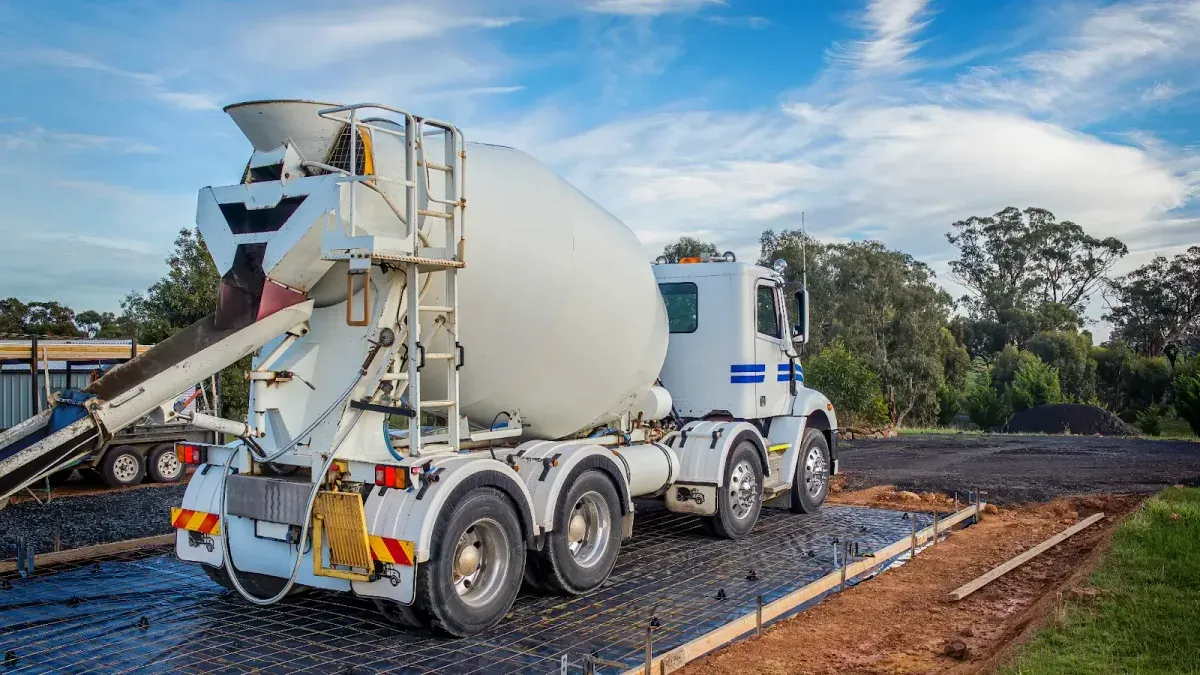
There is no published price for ready-mix insurance in Texas, and any number you see quoted before an underwriter has looked at your fleet is a guess. What a carrier actually does is build the cost from your specific operation — and for a ready-mix producer that cost is led by something a general concrete crew does not carry: a fleet of mixer trucks regulated as a motor carrier. This guide walks the drivers that decide what a ready-mix operation pays.
That answer frustrates owners who just want a number, but it is the honest one, and for a ready-mix producer the drivers are distinct enough that understanding them is worth far more than a fake average. A small intrastate fleet delivering within one metro and a for-hire fleet running interstate under federal rules are the same class only in name, and a carrier prices them from different pictures. Below is what moves the number for a ready-mix operation, in roughly the order it matters.
Why there is no published price for Texas ready-mix insurance
A premium is the output of an underwriting model, not a sticker. The carrier takes your specific exposures — the size and value of your fleet, your motor-carrier profile, the records of your drivers, the routes you run, your loss history, and the limits your contracts require — and prices each line against them. Change any input and the number moves. For a ready-mix producer the cost concentrates on the road, in a regulated fleet, in a way most trades never touch. The rest of this guide is those drivers.
Texas makes a statewide “average” especially misleading for ready-mix. The state runs enormous distances — long hauls from a batch plant to a remote Permian Basin pour or a spread suburban site — layered over metro congestion around Houston, Dallas, Fort Worth, San Antonio, and Austin. A fleet running open long-haul routes and one fighting metro traffic price differently, which is why a blended figure tells you almost nothing about your own.
For the full Texas market picture — the motor-carrier regulation a mixer fleet answers to, the licensing reality, and the non-subscriber workers-compensation system — see our Texas ready-mix insurance page. This guide is the companion to it: that page is the market and regulatory overview, this one is the cost explainer.
The mixer fleet — your dominant cost driver
For a ready-mix producer the fleet is the operation, and the mixer trucks are on the road constantly. Commercial auto covers the fleet’s liability and physical damage, and it is the leading line for this model — the way general liability leads for an install crew and a single boom truck leads for a pumper. The cost scales with the number of trucks, their value, the miles they run, and the records of the drivers behind the wheel. A mixer fleet running long Texas hauls concentrates its exposure on the road, which is exactly where commercial auto responds. How big the fleet is, what the trucks are worth, and how hard they run are the inputs that move this driver the most, and scheduling the fleet to real value is where it is managed.
The motor-carrier and DOT profile
A mixer fleet is not just a set of trucks — it is a regulated motor carrier, and that profile shapes the cost. A fleet that crosses state lines operates under the Federal Motor Carrier Safety Administration and the U.S. Department of Transportation with a USDOT number, and a for-hire interstate carrier carries the MCS-90 endorsement, which guarantees a public settlement up to the applicable federal minimum. A fleet operating only within Texas registers instead with the Texas Department of Motor Vehicles, and the Texas Department of Public Safety enforces commercial-vehicle safety statewide. Your FMCSA safety scores, your USDOT standing, and your driver qualification records are real inputs a carrier reads closely — a strong safety profile prices better, a weak one narrows the market. This regulatory axis is unique to the ready-mix model; it is the thing an install crew and a pumper never carry, and it is a signature part of what the ready-mix cost is built from.
Real-World Scenario: A for-hire fleet runs interstate loads out of a Texas batch plant under its USDOT number and the MCS-90 endorsement, while a second producer keeps its trucks inside the state, registered with the TxDMV and delivering across a single metro. Both run mixers, but the underwriter reads them differently — the interstate carrier’s federal safety profile and the intrastate fleet’s local routes and traffic each price on their own terms. Same ready-mix class — but the motor-carrier picture, not the concrete, is what a carrier is really pricing. The producer who can show clean safety scores and driver records gives a carrier a reason to price the fleet down.
Driver records and hiring
Because commercial auto leads this model, the people driving the trucks are a direct cost input. Motor-vehicle records, experience, and driver qualification files feed how a carrier prices the fleet, and a disciplined hiring and qualification program is one of the strongest levers a ready-mix producer has. This is a different emphasis than an install crew, where the workers-compensation injury profile of the finishing crew leads — for ready-mix, the driver behind the wheel is as much an auto-liability input as a workers-compensation one.
Load-shift, rollover, and the delivery window
Ready-mixed concrete has a workability window — the industry references the ASTM C94 standard — and the Texas heat and the state’s long hauls press against it, so plant siting and dispatch timing carry the operation as much as the trucks. The insurance consequence is less about the load itself and more about the driving it forces: fast turnarounds, heavy shifting loads, and long routes raise the load-shift and rollover exposure that sits on commercial auto. A high center of gravity and a moving load make a mixer truck a real rollover risk, and a carrier reads your routes, your dispatch discipline, and your rollover record when it prices it. Telematics and load-securement discipline are levers that show up in the record.
Drivers, workers comp, and the Texas non-subscriber wrinkle
Your drivers and plant crew put payroll on the workers compensation line, and in Texas that line carries the non-subscriber wrinkle: comp is elective under the non-subscriber system overseen alongside the admitted market by the Texas Department of Insurance, and many general contractors and customers require it regardless. For a ready-mix operation the comp line sits behind commercial auto in the cost picture rather than leading it — which is exactly what separates ready-mix from the Texas concrete contractor cost picture, where crew payroll leads, and from the Texas concrete pumping cost picture, where the boom truck and the power-line exposure lead. Three concrete models, three genuinely different cost conversations.
The coverage choices that move your premium
Finally, what you buy is a driver. The limits your customers and contracts require push a ready-mix producer toward an umbrella that sits over the auto exposure, and higher limits cost more than lower ones — which matters when a single fleet loss on the road can run high. Whether you carry commercial auto at the limits your routes and the federal minimum call for, whether you schedule the fleet and the plant property to real value, and how your limits are set all feed the number. For a fleet operation these are deliberate choices, not places to under-buy blindly.
How to get an accurate Texas quote
The path to a real number is to describe your real operation. Tell a broker the size and value of your fleet, your USDOT and motor-carrier profile, your driver records, the routes you run and how far, your claims history, the limits your contracts require, and where in Texas you deliver. From there a carrier with genuine motor-carrier and ready-mix appetite can price it — and you can compare apples to apples instead of chasing a headline rate. When you are ready, start a quote and tell us about your fleet and your routes, or browse the full coverage overview to see how each line fits together. For the market and regulatory picture behind these drivers, see the Texas ready-mix insurance page. The number at the end will reflect your business, which is the only number worth having.