

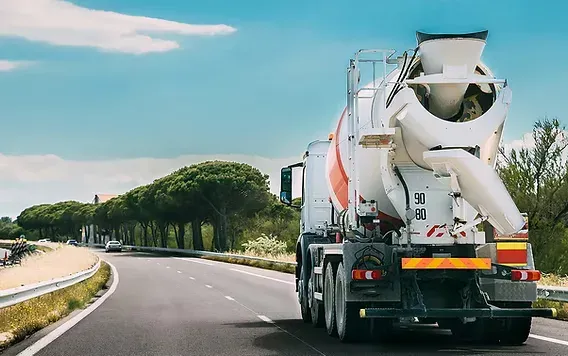
A Pennsylvania ready-mix operation lives on a dual footprint before the trucks even roll. Mixers running batch-plant loads within the state answer to PennDOT for registration and intrastate weight rules, while a for-hire fleet reaching across the I-95, I-81, or I-80 lines into New Jersey, Maryland, or Ohio steps into federal territory with a USDOT number and the MCS-90 endorsement. Layer the state’s ridge-and-valley grades and two major metros over that, and fleet-radius planning becomes the defining exposure. There is no published price for ready-mix insurance in Pennsylvania, and any figure quoted before an underwriter has seen your fleet is a guess. What a carrier actually does is build the cost from your operation — and for a Pennsylvania producer that cost is led by the mixer trucks regulated as a motor carrier.
That answer frustrates owners who want a single number, but it is the honest one, and Pennsylvania’s mix of mountain grades, dense metros, and long interstate reach makes a statewide average especially misleading. A PennDOT-registered intrastate fleet and a for-hire fleet crossing three interstate lines price from different pictures. Below are the drivers that move the number, in roughly the order they matter.
The mixer fleet: your leading cost line
For a ready-mix producer the fleet is the operation, and the mixer trucks are on the road constantly. Commercial auto covers the fleet’s liability and physical damage, and it is the leading line for this model — the way general liability leads for an install crew and a single boom truck leads for a pumper. The cost scales with how many trucks you run, what they are worth, the miles they cover, and the records of the drivers behind the wheel. A fleet feeding dense Philadelphia or Pittsburgh redevelopment, or the Marcellus corridor across the northern tier, concentrates its exposure on the road, which is exactly where commercial auto responds, so scheduling the fleet to real value and real routes is where this driver is managed.
The dual DOT footprint: PennDOT and the FMCSA
A mixer fleet is a regulated motor carrier, and Pennsylvania puts a foot in two regimes. Mixers running loads within the state answer to PennDOT through its Bureau of Motor Vehicles for registration and intrastate weight rules, with the Pennsylvania Public Utility Commission in the intrastate picture. A for-hire operation reaching across the I-95, I-81, or I-80 lines steps into Federal Motor Carrier Safety Administration territory with a USDOT number and carries the MCS-90 endorsement, which guarantees a public settlement up to the applicable federal minimum. Your FMCSA safety scores, your USDOT and PennDOT standing, and your driver qualification files are real inputs a carrier reads on the ready-mix program — the regulatory axis an install crew and a pumper never carry.
Grades, two metros, and the workability window
Ready-mixed concrete has a workability window — the industry references the ASTM C94 standard — and Pennsylvania presses it from several directions. A loaded drum climbing the central Appalachian ridge-and-valley grades or crawling through Philadelphia and Pittsburgh congestion eats into the window, forcing tight plant-to-pour radius discipline. Demand splits between dense urban redevelopment in the southeast and southwest metros and infrastructure and energy work tied to the Marcellus corridor across the northern tier, so a plant’s routes look very different depending on where it sits. The insurance consequence is the driving that terrain and traffic force: grades, tight turns, and heavy shifting loads raise the load-shift and rollover exposure that sits on commercial auto. A high center of gravity and a moving drum make a mixer a real rollover risk, and a carrier reads your routes and rollover record when it prices it. Heavy freeze-thaw also shapes the pour calendar.
Real-World Scenario: A producer near Pittsburgh runs loaded mixers up steep river-valley grades to a redevelopment pour, keeping the fleet intrastate under PennDOT registration and building dispatch around the grade’s bite into the workability window. A second producer in the southeast runs for-hire loads across the I-95 line into New Jersey under its USDOT number and the MCS-90 endorsement, and also sends trucks north to Marcellus-corridor infrastructure work. Both fight grade and distance, but the underwriter reads them differently — the intrastate fleet’s PennDOT profile and the for-hire carrier’s federal safety record each price on their own terms. Same ready-mix class, two motor-carrier pictures, and clean records give a carrier a reason to price the fleet down.
Drivers, records, and the competitive comp market
Because commercial auto leads this model, the drivers are a direct cost input: motor-vehicle records, experience, and driver qualification files feed how a carrier prices the fleet, and on mountain grades and in metro traffic experienced drivers matter. Your drivers and plant crew also put payroll on the workers compensation line, and Pennsylvania runs a competitive comp market, so that line is placed with a private carrier and structured to the real crews and classifications. For a ready-mix operation comp sits behind commercial auto in the cost picture rather than leading it — which separates it from the Pennsylvania concrete contractor cost picture, where crew payroll leads, and from the Pennsylvania concrete pumping cost picture, where the boom truck leads.
No statewide license — local permitting instead
Pennsylvania does not require a statewide license to work as a general or concrete contractor. Contractors performing residential work register with the Office of Attorney General, but that is a registration rather than a contractor license, and municipalities may set their own requirements. The gate is local permitting and the contract, not a statewide credential, and we are honest about that rather than implying one that does not exist. It means the compliance picture a carrier reads for a Pennsylvania ready-mix producer leans on the motor-carrier profile far more than on any contractor license.
The coverage choices that move your premium
What you buy is a driver. The limits your urban-redevelopment and energy contracts require push a ready-mix producer toward an umbrella that sits over the auto exposure, because a single fleet loss on a mountain grade or a jammed metro route can run high. Whether you carry commercial auto at the limits your routes and the federal minimum call for, whether you schedule the plant and fleet property to real value, and how your general liability fits alongside all feed the number. For a fleet operation these are deliberate choices, not places to under-buy.
Getting an accurate Pennsylvania quote
The path to a real number is to describe the real operation. Tell a broker the size and value of your fleet, your USDOT and PennDOT profile, your driver records, the metro or mountain routes you run and how far, your loss history, and the limits your contracts require. From there a carrier with genuine motor-carrier and ready-mix appetite can price it. When you are ready, start a quote, or browse the full coverage overview and the general concrete insurance cost guide. For the market and regulatory picture behind these drivers, see the Pennsylvania ready-mix insurance page, and the state regulator, the Pennsylvania Insurance Department, fills in the rest. The number at the end will reflect your business, which is the only number worth having.