

There is no published price for ready-mix insurance in Ohio, and any figure you see before an underwriter has looked at your fleet is a guess. A carrier builds the cost from your specific operation — and for a ready-mix producer that cost is led by a fleet of mixer trucks regulated as a motor carrier, something a general concrete crew never carries. Ohio also adds a wrinkle that changes how the program is put together: workers compensation runs only through the state fund, so the private lines a broker actually shapes lean even harder on the fleet. This guide walks the drivers that decide what an Ohio ready-mix operation pays.
Owners want a number, and the honest answer is that the number lives in your operation. A fleet delivering inside a single metro and a for-hire fleet crossing the Ohio line under federal rules are the same class only in name. Below is what moves the cost for a ready-mix producer here, roughly in the order it matters.
The state-fund comp wrinkle comes first in Ohio
Most states let a carrier package workers compensation with the rest of a concrete program. Ohio does not. It is a monopolistic state, so comp is available only through the Ohio Bureau of Workers Compensation, and private carriers cannot write it here. For a ready-mix producer that does not erase driver and plant payroll as an exposure — it changes where the coverage lives. The comp itself runs through the state fund, while the private program a broker builds is general liability, commercial auto, property, and umbrella. The practical effect on the cost conversation is that the fleet stands out even more sharply, because the private lines a carrier prices are led by the trucks rather than by crew payroll. We are direct about the split instead of implying a private comp policy that Ohio does not allow.
Why there is no published Ohio ready-mix price
A premium is the output of an underwriting model, not a sticker. The carrier takes your real exposures — the size and value of your fleet, your motor-carrier profile, your driver records, the routes you run, your loss history, and the limits your contracts require — and prices each private line against them. Change an input and the number moves. For a ready-mix producer the private cost concentrates on the road, in a regulated fleet, in a way most trades never touch. A blended statewide figure would tell you almost nothing about your own fleet, which is why we do not publish one.
The mixer fleet on commercial auto — the line that leads
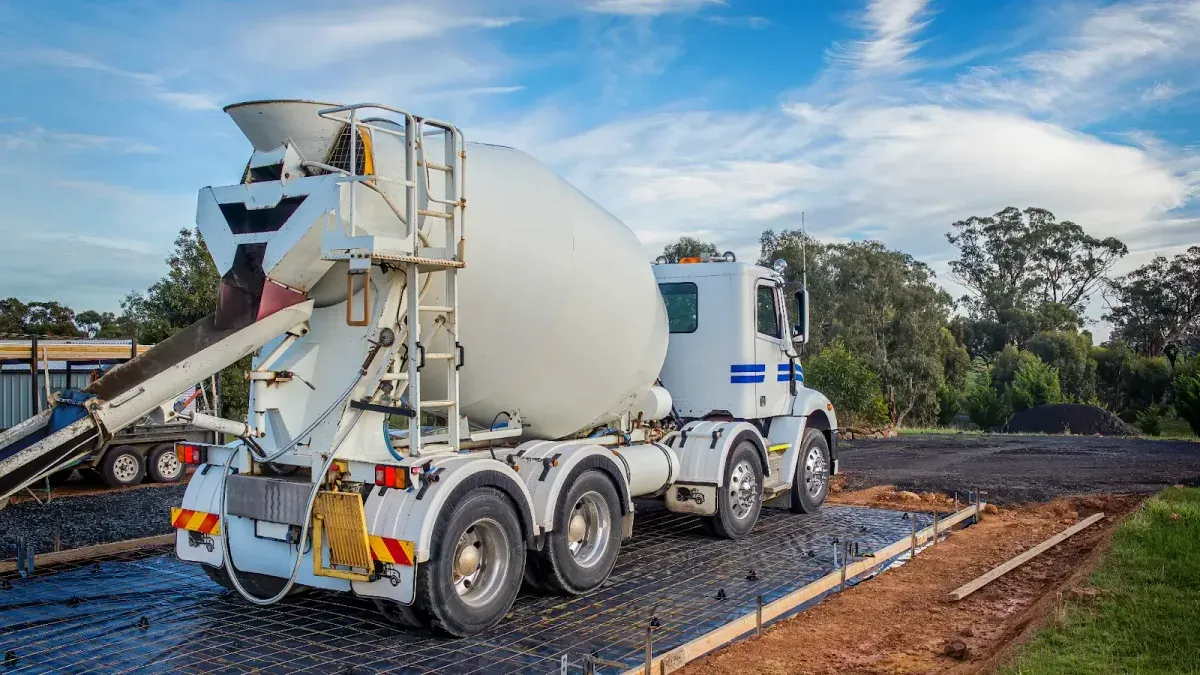
For a ready-mix producer the fleet is the operation, and the mixer trucks are on the road all day. Commercial auto covers the fleet’s liability and physical damage, and with comp running through the state fund it is the clear lead of the private program a broker shapes. The cost scales with how many trucks you run, what they are worth, how many miles they cover, and the records of the drivers behind the wheel. An Ohio fleet feeding warehouse-and-distribution pours off the freight corridors concentrates its exposure on the road, which is exactly where commercial auto responds — so how you schedule and value the fleet is where this driver is managed.
Motor carrier by law: PUCO inside Ohio, USDOT across the line
A mixer fleet is not just a set of trucks — it is a regulated motor carrier, and that profile shapes the cost. A for-hire fleet running wet concrete point-to-point inside Ohio operates under intrastate authority from the Public Utilities Commission of Ohio, which issues the operating certificate and identification number, while the Bureau of Motor Vehicles handles the underlying commercial registration and CDL side. A fleet that crosses state lines instead answers to the Federal Motor Carrier Safety Administration under a USDOT number and carries the MCS-90 endorsement, which guarantees a public settlement up to the applicable federal minimum. Your safety scores, your PUCO and USDOT standing, and your driver qualification records are real inputs a carrier reads closely. This regulatory axis is unique to the ready-mix model — an install crew and a pumper never carry it — and it is a signature part of what the ready-mix cost is built from.
Real-World Scenario: One Columbus producer keeps its mixers inside the state, running PUCO intrastate authority to serve distribution-slab and industrial-floor pours around the metro. A second producer near the Cincinnati line runs for-hire loads across into a neighboring state under its USDOT number and the MCS-90 endorsement. Both pour ready-mix, but the underwriter reads them differently — the intrastate fleet’s PUCO profile and metro routes and the interstate carrier’s federal safety picture each price on their own terms. Same class, but the motor-carrier profile, not the concrete, is what a carrier is really pricing. The producer who can show clean safety scores and driver records gives a carrier a reason to price the fleet down.
Drivers, delivery, and the freeze-durable pour
Because commercial auto leads the private program, the people driving the trucks are a direct cost input. Motor-vehicle records, experience, and driver qualification files feed how a carrier prices the fleet, and disciplined hiring is one of the strongest levers an Ohio producer has. Delivery risk sits right beside it: ready-mixed concrete has a workability window — the industry references the ASTM C94 standard — and a high center of gravity with a moving load makes a mixer truck a real rollover risk on turns and ramps. Northeast Ohio’s punishing freeze-thaw cycles also shape the pour season and the mix, pressing dispatch timing on cold-weather work. A carrier reads your routes, your dispatch discipline, and your rollover record when it prices that exposure, and telematics and load-securement practice show up in the record.
The corridor advantage and what it means for cost
Ohio’s real edge for a batch-plant-to-pour operation is corridor density. The I-70, I-71, and I-75 triangle and the Ohio Turnpike knit Columbus, Cincinnati, Cleveland, and the Columbus intermodal-logistics cluster together, so a loaded mixer can reach large pours without long dead-head runs. That access keeps delivery radius disciplined against the ASTM C94 clock, and it shapes the exposure a carrier reads — a fleet running tight, high-frequency corridor loops presents a different picture than one strung across the state. Ohio’s construction pull skews toward warehouse and distribution slabs, industrial floors, and highway work rather than a single seasonal driver, and the corridors are where that volume concentrates.
The coverage choices that move the number
Finally, what you buy is a driver. The limits your customers and contracts require push a ready-mix producer toward an umbrella that sits over the auto exposure, and higher limits cost more than lower ones — which matters when a single fleet loss on the road can run high. Whether you carry commercial auto at the limits your corridors and the federal minimum call for, whether you schedule the fleet and the plant property to real value, and how your limits are set all feed the number. For a fleet operation these are deliberate choices, not places to under-buy blindly, and the workers compensation line runs through the state fund alongside them.
How to get an accurate Ohio quote
The path to a real number is to describe your real operation. Tell a broker the size and value of your fleet, your PUCO and USDOT standing, your driver records, the corridors you run and how far, your loss history, and the limits your contracts require. From there a carrier with genuine motor-carrier and ready-mix appetite can price the private program, and you can compare apples to apples instead of chasing a headline rate. When you are ready, start a quote and tell us about your fleet and your routes, or browse the full coverage overview to see how each line fits together. For the market and regulatory picture behind these drivers, see the Ohio ready-mix insurance page, and for how the three concrete models differ, our concrete insurance cost explainer. The number at the end will reflect your business — the only number worth having.