

Cost Guides

Ready-Mix Insurance Cost in Maine

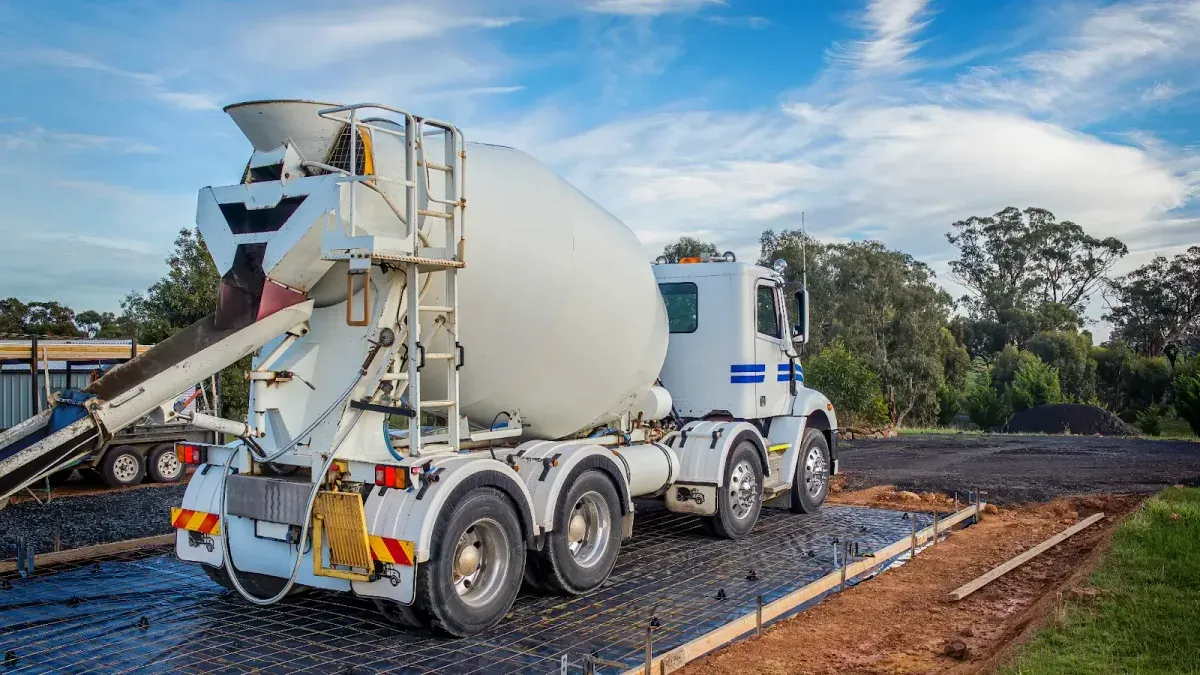
A ready-mix mixer truck parked over a rebar-gridded slab bed — ready-mix concrete insurance

There is no published price for ready-mix insurance in Maine, and any number quoted before an underwriter has looked at your fleet is a guess. A carrier builds the cost from your specific operation — and for a mixer producer that cost is led by a fleet of trucks regulated as a motor carrier. In Maine the defining trait is distance: this is the largest, most sparsely settled state in the region, and a batch plant often serves a wide rural draw area. This guide walks the drivers that decide what a Maine ready-mix producer actually pays.

That distance is what makes Maine’s cost story distinctive. Loads bound for coastal, seasonal, and second-home construction, or for road and bridge work along the I-95 spine, can mean long single-direction hauls on two-lane roads with little margin if a pour is delayed. The plant-to-pour radius, not city traffic, is the pressure here — and it runs straight into the fleet driver that leads this whole model.

Long rural hauls and the set-up window

Ready-mixed concrete has a workability window — the industry references the ASTM C94 standard — and in Maine it is the plant-to-pour radius that threatens it. Because construction demand is geographically dispersed and seasonally compressed, a plant frequently sends a load a long way on rural two-lane roads to reach a coastal or up-country jobsite, and a delay at the pour leaves almost no cushion. That forces tight batch scheduling to beat the set-up clock on a long drive. The insurance consequence is the driving those long hauls force — heavy shifting loads over many rural miles raise the load-shift and rollover exposure that sits on commercial auto. A high center of gravity and a moving drum make a mixer a genuine rollover risk on a winding rural road, and a carrier reads your routes, your dispatch discipline, and your rollover record when it prices it.

The mixer fleet — your leading cost driver

For a ready-mix producer the fleet is the operation, and in Maine those trucks cover long, dispersed draw areas. Commercial auto covers the fleet’s liability and physical damage, and it is the dominant line for this model — the way general liability leads for a flatwork crew and a single boom truck leads for a pumper. The cost scales with the number of trucks, their value, the miles they run, and the records of the drivers behind the wheel. Because Maine’s demand is spread thin across a big state, the miles are real and the exposure rides the rural road, and scheduling the fleet to honest values is where this driver is managed.

What builds a Maine ready-mix operation’s insurance cost — the fleet-led driver stack A highlighted lead band at the top — the mixer fleet on commercial auto — feeds two boxes: the motor-carrier and DOT profile, and the driver records and fleet size. Those feed a stack of supporting driver boxes: load-shift and rollover on delivery; the driver payroll on workers compensation; and coverage limits and umbrella. Every driver feeds a bottom box labeled the premium a carrier builds from the fleet. No figures are shown — each driver is weighed against the specific operation, not applied as a fixed surcharge. What builds your ready-mix insurance cost The mixer fleet on commercial auto Motor-carrier and DOT profile Driver records and fleet size Load-shift and rollover on delivery Driver payroll (workers comp) Coverage limits and umbrella The premium a carrier builds from the fleet
The ready-mix cost picture is led by the mixer fleet on commercial auto and the motor-carrier profile it carries — with drivers, delivery risk, and coverage feeding the premium.

The motor-carrier and DOT profile

A mixer fleet is a regulated motor carrier, and that profile is a signature part of the cost. A fleet that crosses state lines — running loads across the New Hampshire or Canadian line — operates under the Federal Motor Carrier Safety Administration and the U.S. Department of Transportation with a USDOT number, and a for-hire interstate carrier carries the MCS-90 endorsement, which guarantees a public settlement up to the applicable federal minimum. A fleet delivering only within Maine registers through the Maine Bureau of Motor Vehicles. Your FMCSA safety scores, your USDOT standing, and your driver qualification records are inputs a carrier reads closely — a strong safety profile prices better, a weak one narrows the market. This axis is what a flatwork crew never carries, and it is central to what the ready-mix cost is built from. For the full Maine market and regulatory picture behind these drivers, see the Maine ready-mix insurance page.

Real-World Scenario: A for-hire producer runs loads across the New Hampshire line out of a southern Maine plant under its USDOT number and the MCS-90 endorsement, while a second operator keeps its trucks inside the state, registered through the Maine Bureau of Motor Vehicles and serving a wide up-country draw. Both run mixers, but the underwriter reads them differently — the interstate carrier’s federal safety profile and the intrastate fleet’s long rural routes each price on their own terms. Same ready-mix class, but the motor-carrier picture, not the concrete, is what a carrier is really pricing.

Drivers, hiring, and the comp line

Because commercial auto leads, the people driving the trucks are a direct cost input. Motor-vehicle records, experience, and driver qualification files feed how a carrier prices the fleet, and disciplined hiring is one of the strongest levers a Maine producer has — especially where long rural runs put a premium on experienced drivers. Maine runs a competitive workers compensation market, so comp is placed with a private carrier and structured to your real crews and payroll classifications. For ready-mix that comp line sits behind commercial auto in the cost picture rather than leading it, which is what separates it from a flatwork crew’s cost story.

Licensing and the coverage choices that move your premium

Maine has no statewide concrete-contractor license — general contracting is regulated locally while specific trades are licensed by the state, so the gate is local permitting and the contract. That sits beside the ready-mix cost rather than driving it. What you buy, though, is a driver: the limits your customers require push a producer toward an umbrella over the auto exposure, and whether you carry general liability at contract limits and schedule the fleet and plant property to real value all feed the number — which matters when a single fleet loss on a rural road can run high.

How to get an accurate Maine quote

Getting a real Maine number means laying the operation bare. Tell a broker the fleet size and truck values, your USDOT profile, the driver records, how far your loads travel across the rural draw area, your loss history, and the limits your contracts require. From there a carrier with genuine motor-carrier and ready-mix appetite can price it, not guess it. Begin a quote with the fleet and the routes, or open the full coverage overview to see the lines together. Our concrete insurance cost pillar shows how ready-mix stands apart from the other concrete models, and the Maine Bureau of Insurance is the primary source for the state’s filings. The number you reach will reflect your business — the only one worth having.

The bottom line

There is no published price for Maine ready-mix insurance, because a carrier builds it from your specific fleet. For a mixer operation here the cost is led by the trucks on commercial auto and the motor-carrier profile that comes with them — and Maine’s signature pressure is distance: a batch plant often serves a wide rural draw area, so the plant-to-pour radius, not city traffic, is what threatens the delivery window. Describe the fleet, the routes, your USDOT standing, and the coverage limits your contracts require, and the quote follows.

Frequently asked questions

How much does ready-mix insurance cost in Maine?

There is no honest single number, because a mixer operation’s premium is built from the operation, not a rate card. The leading factors are the size and value of your fleet on commercial auto, your USDOT and motor-carrier profile, your driver records, the load-shift and rollover exposure on delivery, your drivers’ payroll on workers compensation, your claims history, and the coverage limits your contracts require. A plant serving a wide rural draw and one near Greater Portland look different to an underwriter. Start a quote and we price your real trucks and routes rather than quote a guess.

Why can’t you give me a ready-mix insurance price online?

Because an honest price needs your real fleet, and a number posted before an underwriter reads it is a guess. A small intrastate fleet delivering around Portland and a for-hire fleet running loads across the New Hampshire or Canadian line carry very different exposures, so a carrier prices them apart. Posting an average would only mislead. What we can do is explain the drivers that decide the cost — the fleet, the DOT profile, the long rural routes — and then market your real operation to carriers that understand a regulated Maine mixer fleet.

Does Maine’s rural distance really change my ready-mix cost?

It shapes the delivery risk a carrier weighs. Ready-mixed concrete has a workability window the industry references through ASTM C94, and Maine’s defining trait is distance — a plant often serves a wide rural draw area, so long single-direction hauls on two-lane roads leave little margin if a pour is delayed. The insurance consequence is the driving those long hauls force — heavy shifting loads over many rural miles raise the load-shift and rollover exposure that sits on commercial auto. A carrier reads your routes, dispatch discipline, and rollover record when it prices it.

Why is commercial auto the dominant driver for a Maine mixer fleet?

Because the fleet is the operation, and the mixer trucks are on the road constantly — often on long rural runs. Commercial auto covers the fleet’s liability and physical damage, and it scales with the number of trucks, their value, the miles they run, and the records of the drivers behind the wheel. On Maine’s wide, dispersed draw areas the exposure concentrates on two-lane roads, which is exactly where commercial auto responds, so it leads the cost the way general liability leads for a flatwork crew.

How do DOT and FMCSA rules affect my Maine ready-mix cost?

They set the regulatory profile a carrier reads. A mixer fleet is a motor carrier: a fleet crossing state lines operates under the Federal Motor Carrier Safety Administration with a USDOT number, and a for-hire interstate carrier — running loads across the New Hampshire or Canadian line — carries the MCS-90 endorsement, which guarantees a public settlement up to the applicable federal minimum. A fleet operating only within Maine registers through the Maine Bureau of Motor Vehicles. Your safety scores, USDOT standing, and driver records are real inputs a carrier weighs, not a fixed charge.

How can I lower my Maine ready-mix insurance cost?

The durable levers are operational. A clean claims history, strong FMCSA safety scores, a well-kept USDOT profile, disciplined driver qualification and hiring, telematics and load-securement that lower rollover exposure on long rural runs, tight batch scheduling to beat the set-up clock, scheduling the fleet to real value, and matching coverage limits to the contracts you run all help a carrier price you accurately. We market your operation to carriers with genuine motor-carrier and ready-mix appetite rather than sending one generic submission everywhere.

About the author

Nate Jones, CPCU

Nate Jones, CPCU, is the founder of Wexford Insurance and Concrete Guard Insurance, a specialty insurance agency placing concrete contractor coverage in 48 states across a 23-carrier specialty panel. He places ready-mix operations across Maine — the fleets serving dispersed coastal, seasonal, and second-home construction and the plants running long single-direction hauls on two-lane roads and the I-95 spine — and weights each program toward the commercial-auto exposure of a regulated motor carrier covering a wide rural draw, the driver and DOT profile a carrier reads, and the delivery risk that decides what a mixer producer actually pays. Connect via the Concrete Guard Insurance quote form or call 317-942-0549.

Insure your concrete operation with a CPCU-led agency

Tell us how you work — an install crew, a pump truck, a ready-mix fleet, or all three — and we will market it to carriers that write the class.