

There is no published price for ready-mix insurance in Georgia, and any number quoted before an underwriter has looked at your fleet is a guess. A carrier builds the cost from your specific operation — and for a mixer producer that cost is led by a fleet of trucks regulated as a motor carrier, running loads against a clock that Georgia traffic and heat make unforgiving. This guide walks the drivers that decide what a Georgia ready-mix producer actually pays.
What makes Georgia’s cost conversation distinctive is not distance but congestion. Metro Atlanta’s interchanges rank among the most gridlocked in the country, so a load can burn much of its usable window sitting in traffic before it ever reaches the pour — and that pressure runs straight into the fleet driver that leads this whole model.
The mixer fleet — your leading cost driver
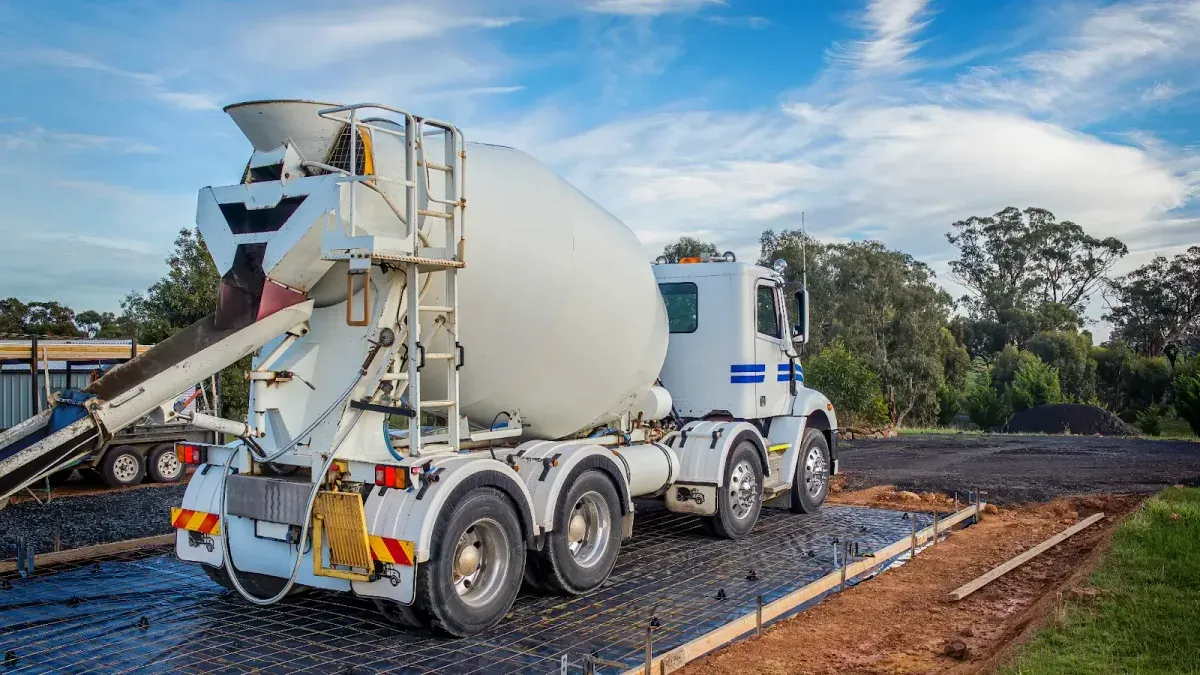
For a ready-mix producer the fleet is the operation, and in Georgia those trucks spend much of their time in heavy metropolitan traffic. Commercial auto covers the fleet’s liability and physical damage, and it is the dominant line for this model — the way general liability leads for a flatwork crew and a single boom truck leads for a pumper. The cost scales with the number of trucks, their value, the miles they run, and the records of the drivers behind the wheel. Stop-and-go Atlanta congestion concentrates the exposure on the road, which is exactly where commercial auto responds, and scheduling the fleet to honest values is where this driver is managed.
Atlanta gridlock, heat, and the delivery window
Ready-mixed concrete has a workability window — the industry references the ASTM C94 standard — and in Georgia congestion and heat press against it together. The I-75, I-85, and I-285 interchanges are among the most gridlocked in the nation, and that traffic eats directly into the usable window before wet concrete becomes unworkable. Georgia’s summer heat compounds the squeeze by accelerating the set, so a plant serving a sprawling, traffic-choked pour has a far tighter margin than the mileage alone suggests. The insurance consequence is the driving this forces: fast turnarounds and heavy shifting loads raise the load-shift and rollover exposure that sits on commercial auto. A high center of gravity and a moving drum make a mixer a real rollover risk in congestion, and a carrier reads your routes, your dispatch discipline, and your rollover record when it prices it.
The motor-carrier and DOT profile
A mixer fleet is a regulated motor carrier, and that profile is a signature part of the cost. A fleet that crosses state lines operates under the Federal Motor Carrier Safety Administration and the U.S. Department of Transportation with a USDOT number, and a for-hire interstate carrier — running the freight lanes toward the Savannah port or across a neighboring state line — carries the MCS-90 endorsement, which guarantees a public settlement up to the applicable federal minimum. A fleet operating only within Georgia registers intrastate operating authority through the Georgia Department of Public Safety and apportions its trucks through the state’s Motor Vehicle Division. Your FMCSA safety scores, your USDOT standing, and your driver qualification records are inputs a carrier reads closely — a strong safety profile prices better, a weak one narrows the market. This regulatory axis is what a flatwork crew never carries, and it is central to what the ready-mix cost is built from. For the full Georgia market and regulatory picture behind these drivers, see the Georgia ready-mix insurance page.
Real-World Scenario: A for-hire producer runs interstate loads out of a plant near the Savannah logistics corridor under its USDOT number and the MCS-90 endorsement, while a second operator keeps its trucks inside Georgia, registered under the state’s intrastate motor-carrier authority and threading loads through Atlanta’s gridlock. Both run mixers, but the underwriter reads them differently — the interstate carrier’s federal safety profile and the intrastate fleet’s congested metro routes each price on their own terms. Same ready-mix class, but the motor-carrier picture, not the concrete, is what a carrier is really pricing.
Drivers, hiring, and the comp line
Because commercial auto leads, the people driving the trucks are a direct cost input. Motor-vehicle records, experience, and driver qualification files feed how a carrier prices the fleet, and disciplined hiring is one of the strongest levers a Georgia producer has — especially where drivers spend long shifts in demanding traffic. Georgia runs a competitive workers compensation market, so comp is placed with a private carrier and structured to your real crews and payroll classifications. For ready-mix that comp line sits behind commercial auto in the cost picture rather than leading it, which is what separates it from a flatwork crew’s cost story.
Licensing and the coverage choices that move your premium
Georgia licenses general contractors above a project threshold through the state licensing board, with concrete work falling under general or specialty contracting; a general contractor or project owner layers its own insurance and certificate requirements on top. That credential sits beside the ready-mix cost rather than driving it. What you buy, though, is a driver: the limits your customers require push a producer toward an umbrella over the auto exposure, and whether you carry general liability at contract limits and schedule the fleet and plant property to real value all feed the number — which matters when a single fleet loss in traffic can run high.
How to get an accurate Georgia quote
The honest way to a Georgia number is to lay out the operation as it runs. Tell a broker how large the fleet is and what the trucks are worth, your USDOT profile, the driver records, how much of the routing fights Atlanta congestion versus running the Savannah lanes, your loss history, and the limits your contracts demand. A carrier with real motor-carrier and ready-mix appetite prices from that. Open a quote with your fleet and routes, or read the full coverage overview to see how the lines fit. Our concrete insurance cost pillar shows where ready-mix parts ways with the other concrete models, and the Georgia Office of Insurance and Safety Fire Commissioner is the primary source for the state’s filings. The figure you reach will reflect your business — the only figure worth having.