

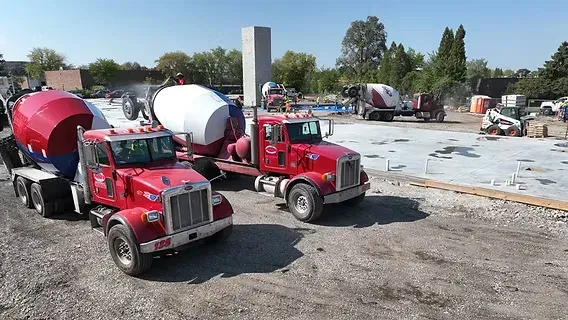
There is no published price for ready-mix insurance in Connecticut, and any figure quoted before an underwriter has seen your fleet is a guess. A carrier builds the cost from your specific operation — and in Connecticut the corridor is the story. The dense, high-value southwestern Fairfield County band functions as part of the greater New York metro, where chronic I-95 and Merritt Parkway backups can consume much of the delivery window before a truck reaches its pour, while plants serving the quieter eastern and northern parts of the state run shorter, less-pressured loops. Around that geography, the cost is led by the mixer fleet on commercial auto and the motor-carrier profile it carries. This guide walks the drivers that decide what a Connecticut ready-mix producer pays.
Owners want a number, and the honest answer is that the number lives in your fleet and your corridor. A fleet fighting Fairfield County traffic and one running eastern intrastate loops are the same class only in name, and a carrier prices them from different pictures. Below is what moves the cost for a ready-mix operation here, starting with the corridor that defines it.
The I-95 corridor sets the delivery window
Connecticut’s ready-mix character is dominated by one road. In the affluent NYC-commuter southwest, I-95 and the Merritt Parkway are among the most congested corridors in the country, and ready-mixed concrete is perishable on a tight clock — the industry references the ASTM C94 workability window. When traffic swallows a large share of that window before a truck reaches the forms, plant siting and dispatch timing become everything, and the insurance consequence is the stop-and-go driving congestion forces. More time on the road, heavy shifting loads, and constant braking raise the load-shift and rollover exposure that sits on commercial auto. A high center of gravity makes a loaded mixer a real rollover risk even at low speed in traffic, and a carrier reads your routes, your dispatch discipline, and your rollover record when it prices that exposure.
The mixer fleet — your dominant cost driver
For a ready-mix producer the fleet is the operation, and the mixer trucks are on the road all day. Commercial auto covers the fleet’s liability and physical damage and is the leading line for this model — the way general liability leads for an install crew and a single boom truck leads for a pumper. The cost scales with the number of trucks, their value, the miles they run, and the records of the drivers behind the wheel. In Connecticut the congested southwest means the same fleet spends more time in traffic per load, concentrating exposure on the road. How big the fleet is, what the trucks are worth, and how hard they run in traffic move this driver most, and scheduling the fleet to real value is where it is managed.
When a Connecticut load becomes an interstate one
A mixer fleet is a regulated motor carrier, and Connecticut’s geography makes that profile shift quickly. A fleet operating only within the state registers through the Connecticut Department of Motor Vehicles, Commercial Vehicle Safety Division. But the southwest is prime interstate-freight territory, so a for-hire fleet running toward or across the New York line falls under the Federal Motor Carrier Safety Administration with a USDOT number and the MCS-90 endorsement, which guarantees a public settlement up to the applicable federal minimum. Your FMCSA safety scores, your USDOT standing, and your driver qualification records are real inputs a carrier reads closely, and how much of your work crosses the line changes the picture. This regulatory axis is unique to the ready-mix model — an install crew and a pumper never carry it — and it is a signature part of what the ready-mix cost is built from.
Real-World Scenario: A Stamford producer runs for-hire loads that routinely cross into New York, operating under its USDOT number and the MCS-90 endorsement and fighting I-95 congestion on every delivery. A second producer near Hartford keeps its work intrastate, registered through the Connecticut DMV and running shorter, steadier loops through the center of the state. Both pour ready-mix, but the underwriter reads them differently — the interstate carrier’s federal safety profile and corridor congestion and the intrastate fleet’s calmer routes each price on their own terms. Same class, but the motor-carrier picture, not the concrete, is what a carrier is really pricing. The producer who shows clean safety scores and driver records gives a carrier a reason to price the fleet down.
Licensing, drivers, and the comp line
Connecticut does not issue a statewide concrete-contractor license — the Department of Consumer Protection runs a registration regime rather than a trade license, so the gate is local permitting and the contract. That does not lighten the motor-carrier picture; it just means a producer presents to a carrier through its safety and contract profile rather than a state credential. Because commercial auto leads this model, the drivers behind the wheel are a direct cost input — motor-vehicle records and driver qualification files feed how a carrier prices the fleet, and disciplined hiring matters most in heavy traffic. Your drivers and plant crew also put payroll on the workers compensation line, which Connecticut runs as a competitive private market, so comp is placed with a carrier and sits behind commercial auto in the cost picture rather than leading it.
Coverage choices and getting an accurate quote
What you buy is a driver. The limits your customers and contracts require push a ready-mix producer toward an umbrella over the auto exposure, higher limits cost more than lower ones, and whether you schedule the fleet and the plant property to real value all feed the number, alongside general liability for the jobsite. The path to a real figure is to describe your real operation: the size and value of your fleet, your Connecticut DMV and USDOT standing, your driver records, the corridors you run and how much crosses the line, your loss history, and the limits your contracts require. Start a quote and tell us about your fleet and your routes, or browse the full coverage overview. For the market and regulatory picture, see the Connecticut ready-mix insurance page and the market overseen by the Connecticut Insurance Department; for how the three concrete models differ, our concrete insurance cost explainer. The number at the end will reflect your business — the only number worth having.