
Hiring and keeping skilled concrete crews is the hardest operational problem most owners in this trade face, because the people who do the work well — finishers, form-setters, pump operators, and ready-mix drivers — are trained over years, and the pipeline of new hands entering the construction trades has not kept up with the work or with the wave of retirements ahead of it. The concrete operator who staffs well is not the one who pays the most; it is the one who treats recruiting, training, and retention as a single connected system and uses safety culture to hold a crew together. This is general education about running the business, not legal or employment advice.
The honest starting point is that this is a real, persistent challenge and not a temporary one. Rather than attach a shortage figure or a turnover rate we cannot stand behind, the useful frame is qualitative and it is the one every owner already feels: skilled concrete hands are scarce, they are expensive to replace once trained, and the operations that win the labor race treat their crews as the asset they are. Everything below follows from that.
Why the concrete trades run short of skilled hands
The skilled-labor shortage across construction is well documented, and concrete feels it as sharply as any trade. The reasons stack: fewer young people enter the trades than the work requires, the experienced generation that trained on jobsites is aging toward retirement, and the skill in concrete is genuinely hard-won — you cannot post a job and hire a finisher who can read a slab as it sets. When demand for concrete work is strong, the shortage bites hardest, because every operator in the market is chasing the same limited pool of trained hands.
For an owner, the practical consequence is that labor is a constraint on growth as much as backlog or equipment is. A crew you cannot staff is a job you cannot take. That is why recruiting and retention are not HR housekeeping in this trade — they are core operations, and they deserve the same attention an owner gives to bidding and cash flow.
The roles you are actually hiring for
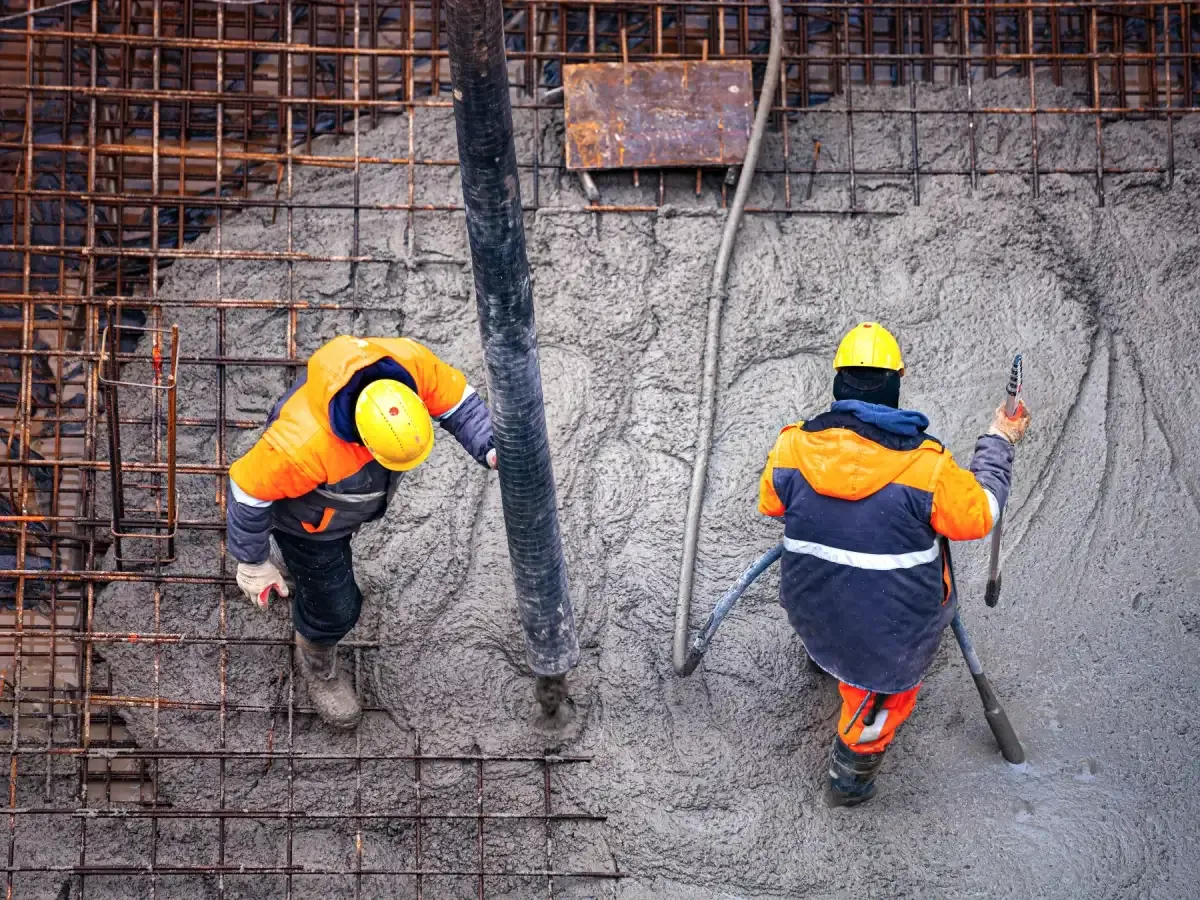
Hiring for a concrete business is not one job; it is several distinct trades, each with its own skill curve and its own risk profile. On the install side, finishers place, screed, float, and finish the concrete — the craft that decides whether a slab performs and looks right — while form-setters and laborers build and strip the forms, set rebar, and keep the pour supplied and moving. On the pumping side, a pump operator runs the boom or line pump and works in close coordination with a spotter to place concrete safely, often near obstructions and overhead hazards. On the ready-mix side, CDL drivers handle loaded mixer trucks under federal motor-carrier rules and a perishable load that runs against the clock.
Naming the roles this precisely matters because the plan to fill each is different. A finisher is developed over seasons under a lead; a CDL driver has to be recruited with the license and the record already in hand and then trained on your equipment. Treating the crew as one undifferentiated pool is how owners mis-hire and mis-train.
Where crews come from: recruiting and the apprenticeship path
Because skilled hands are scarce, the operators who staff well do not rely on a single channel. Referrals from the existing crew are often the strongest source, because a good tradesperson knows other good tradespeople and will not vouch for someone who makes the job harder. Beyond referrals, the durable answer to a shortage is to build your own: apprenticeship programs, partnerships with local trade schools and community colleges, and a deliberate path that brings a green laborer in and develops them toward a trade. That path is slower than hiring a finished finisher, but a finished finisher is exactly who every competitor is also chasing, so growing your own is often the only reliable pipeline.
For the CDL drivers a ready-mix operation needs, recruiting is its own discipline. The license and the driving record have to be there before the person can run a loaded mixer, so the hiring screen — checking motor-vehicle records, verifying the endorsement, and confirming the experience — is part of the recruiting itself, not a formality after the offer. That screen also feeds directly into how the operation underwrites on commercial auto.
Training that turns a hire into a tradesperson
Recruiting fills a seat; training makes the seat productive and safe. Whether the label is a formal apprenticeship or informal on-the-job development under a lead finisher or operator, the point is that training is deliberate rather than accidental. A documented way a laborer advances — toward finishing, form-setting, pump operation, or driving — does two things at once: it builds the skilled hands the operation cannot easily buy, and it gives the person a future, which is one of the strongest reasons they stay.
Training is also where safety is taught, and in concrete the two are inseparable. A pump operator learns placement and clearance discipline as part of learning the craft; a finisher learns to work a pour without putting themselves in harm’s way; a driver learns the load, the clock, and the road. Skill and safety are taught in the same motion, which is why an operation with real training tends to run both a better crew and a lower injury frequency.
Retention: why good crews stay
Losing a trained finisher, operator, or driver is expensive twice over — you lose the productivity and you pay again to recruit and train a replacement into a market where skilled hands are already scarce. Retention is therefore not a soft concern; it is one of the cheapest cost controls an owner has. The levers that actually hold skilled crews are consistent across the trade: steady work through the season so the paycheck is predictable, a clear path from laborer toward a trade so the job has a future, well-maintained equipment and trucks that make a punishing day less punishing, respect and a functioning crew culture, and a genuine safety program so people go home whole.
Pay matters, but experienced crews leave revolving-door operations for stable ones as much for the conditions and the future as for the wage. Retention is built over seasons, not with a single raise — and it compounds, because a stable crew trains the next hires, carries the culture, and reads better to the general contractors who want to see the same faces on site.
Safety culture as a retention tool
Concrete work is physically demanding and carries real hazards — the finishing crew on their knees, the form and rebar work, the pump boom operating near overhead lines, the loaded mixer on the road. A crew that sees the owner invest in training, equipment, and safe practices reads that investment as respect for their bodies and their futures, and that is exactly what keeps experienced people from walking. Safety culture is where retention and risk management turn out to be the same effort.
It also lands on cost. A lower injury frequency is the single biggest long-run driver of workers compensation expense, so the same investment that keeps a crew together improves how the operation underwrites. For the mechanics of how a safety record and an experience modifier translate into premium over time, see how to reduce concrete workers comp costs. The through-line is simple: the operator who runs a real safety culture retains crews and pays less to protect them.
Real-World Scenario: Two concrete contractors in the same market bid against each other for years. One runs a revolving door — green hands cycle through, the experienced ones leave for steadier shops, and every season starts with re-hiring and re-training. The other built an apprenticeship path, keeps equipment maintained, runs the same safety toolbox talks every morning, and holds a core crew season after season. The stable operator finishes cleaner work faster, has fewer injuries on the file, and can take the larger jobs because the crew is there to staff them. Same trade, same market — but one owner spends the season building work and the other spends it rebuilding a crew. The difference was never one raise; it was treating staffing and safety as one connected system.
How your crew ties back to insurance
Staffing well is a labor strategy, but it is also a cost strategy on the two coverage lines that sit directly on your people. Workers compensation rides on who you hire and how safely they work — a trained, stable crew with a real safety program tends to run the lower injury frequency that drives the cost down over time. Commercial auto rides on your drivers, above all the CDL drivers handling loaded mixers, where hiring standards, motor-vehicle-record checks, and training are exactly what an underwriter weighs. A revolving door of inexperienced hands reads as higher risk on both lines; a stable, well-trained crew reads as lower risk on both.
None of this replaces professional advice on employment practices — a labor attorney and an HR professional turn hiring standards into policy for your specific operation. But the operational truth holds across the trade: build the crew deliberately, train it on purpose, and hold it with safety and steady work. When you want the coverage that protects that crew priced to how you actually run, start a quote, or browse the rest of our coverage and owner resources as the library grows.