

A Utah concrete pumping contractor will not find a published price, and any figure quoted before an underwriter has studied the operation is guesswork. A carrier builds the cost from your specific business, and for a pumper it gathers around two things a general concrete crew does not carry: a high-value boom pump truck and the overhead power-line exposure of placing concrete in three dimensions. What gives Utah its own character is where that work happens — the Wasatch Front, a narrow, fast-growing corridor pinned between the Great Salt Lake and the steep Wasatch Range, where development stacks onto valley floors and rising benches. This guide walks the drivers behind a Utah pumper’s number.
Geography does the pricing work here that a rate card cannot. Salt Lake City, Ogden, Provo, and the Silicon Slopes tech build-out crowd into a compact footprint, and the bench-and-foothill ground forces demanding boom setups on graded hillside and terraced lots. The corridor is densifying fast enough that a growing base of downtown and Lehi-area mid- and high-rise pours now sits threaded with overhead lines, while the rural stretches toward the mountains carry long distribution runs. A pumper’s cost reads from that mix, not from any statewide average.
The Wasatch Front also stacks two ground hazards at once — the active Wasatch Fault and expansive valley clays — so a boom on a bench lot in Salt Lake City, West Valley City, or Provo often places concrete for foundations detailed for both earthquake demand and shrink-swell heave. Farther out, St. George in the warm southwest and the high-desert basins add wide seasonal temperature swings that bear on curing, giving the operator one more reason to place a pour without delay.
The boom pump truck on Wasatch Front benches
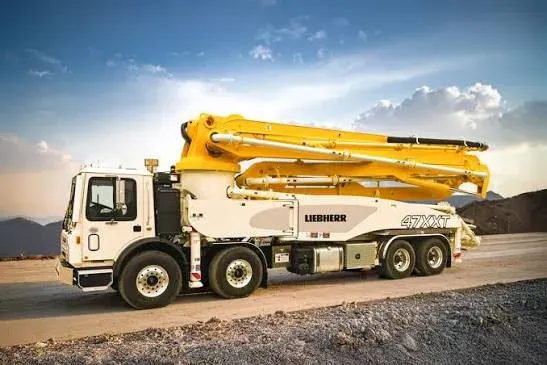
For a pumper the truck is the operation, and it is a high-value, specialized asset that concentrates a large amount of value in a single unit. That already makes commercial auto — the line covering its physical damage and its liability, on the road and while set up — a leading driver, the opposite of a general install crew whose vehicles are ordinary work trucks. Utah presses on this driver in a particular way: the boom often sets on terraced hillside lots and rising benches rather than flat ground, so outrigger footing, leveling, and reach are more demanding, and the truck also runs congested valley-corridor traffic between jobs. The value, type, and reach of the boom, how many trucks you run, and how they hold up on graded work and how they are maintained are all inputs a carrier weighs closely, because a truck loss is both expensive and central to staying in business.
Overhead lines in a fast-densifying valley
The second signature driver is the one that makes pumping underwrite unlike any other concrete work: the overhead power line. A boom places concrete in three dimensions, and contact between it and an energized line is the severe event carriers price against — capable of fatal injury, and exactly the loss general liability and an umbrella are built to answer. Utah’s twist is density in a squeeze. As downtown Salt Lake City and the Lehi area push mid- and high-rise pours into a compact corridor, more of the work sits threaded with overhead lines than the state’s mountain-valley image suggests, and older Wasatch Front neighborhoods carry long distribution runs while newer master-planned tracts trend buried. Add a hillside setup that can put the boom higher relative to a pour, and clearance becomes an everyday urban concern a carrier prices on how you manage it — not a fixed surcharge.
Utah’s contractor license
Utah licenses contractors under the Construction Trades Licensing Act, through the Division of Professional Licensing’s Contractors Board, with general building and general engineering classifications and surety-bond and insurance requirements attached. The classification that applies to your concrete work is part of the cost picture a carrier reads, alongside the certificate-of-insurance and additional-insured requirements a general contractor or project owner layers on top. We confirm the credential that actually fits your work rather than assume one, because standing and contract obligations are part of the operation being priced.
A lighter comp line in a competitive market
Utah runs a competitive workers compensation market, so comp is placed with a private carrier and structured to the real crews and payroll classifications. But a pumping operation runs a smaller crew than a labor-heavy finishing crew — an operator and a spotter rather than a full team — so the payroll-driven comp line is generally a lighter share of a pumper’s cost than a general concrete contractor’s. That is what separates pumping from the Utah concrete contractor cost picture, where payroll leads. For a pumper the truck and the overhead line lead, and comp coordinates with the general liability, commercial auto, and property beside it.
Line and pipe failure on the pour
Beyond the boom and the lines, the delivery system is its own exposure. A line or pipe that fails under pressure during a pour can injure the crew and damage the site, so it is a real part of the general liability picture a carrier prices. Disciplined line and pipe inspection and maintenance are levers here — a documented record reads well because it lowers the frequency of exactly the on-site losses an underwriter is weighing, and on a graded hillside pour, where a failure can send material and pressure downslope, the consequences are not smaller than on flat ground.
Claims and the clearance record
Your loss history is a driver you have already been writing. A clean record opens more markets and prices better, while a serious power-line, auto, or general-liability loss in recent years narrows the field. Carriers read the story behind a loss — one incident followed by corrected clearance and spotter procedure reads differently than a pattern. The durable lever is operational discipline: documented boom-to-line clearance, spotter protocol, and operator training under OSHA standards all show up in the record a carrier prices for a concrete pumping operation. The Utah Insurance Department oversees the admitted market these programs are placed in.
Coverage limits and umbrella
What you buy is a driver. Because the power-line exposure is catastrophic, the limits general contractors require push a Utah pumper toward an umbrella more firmly than most trades, and the large tech and warehouse jobsites of the Wasatch Front often carry steep limit requirements. Higher limits cost more than lower ones. Whether you carry general liability at the limits the boom exposure calls for, whether you schedule the truck and any property to real value, and how your limits are set all feed the number. For a pumper these are not places to under-buy, because the single catastrophic loss the coverage exists to answer is the whole reason the class underwrites as it does.
Real-World Scenario: A crew sets a boom on a terraced Wasatch Front bench lot, leveling outriggers on grade and reaching the boom uphill toward a pour while an overhead distribution run crosses the property line above. The same operation, a week later, threads a boom past tight urban lines on a downtown Salt Lake City mid-rise. Different setups, one defining exposure — the boom near an energized line — and one pair of lead drivers, the truck and the power line. The pumper who can document clearance and spotter protocol on hillside and downtown work alike gives a carrier a reason to price the severity down.
How to get a real Utah quote
A real number comes from describing a real operation. Tell a broker the boom truck you run and its value, the pours you place and how close they sit to overhead lines, whether you work benches, hillside lots, or downtown pours, your clearance and spotter discipline, your crew, your claims history, the limits your contracts require, and the license classification you hold. From there a carrier with genuine pumping appetite can price it. When you are ready, start a quote and tell us about your equipment and placements, or browse the coverage overview to see how each line fits. For the market picture behind these drivers, see the Utah concrete pumping insurance page, and for how pumping compares with the other concrete trades, the concrete insurance cost overview. The number at the end will reflect your business — the only number worth having.