

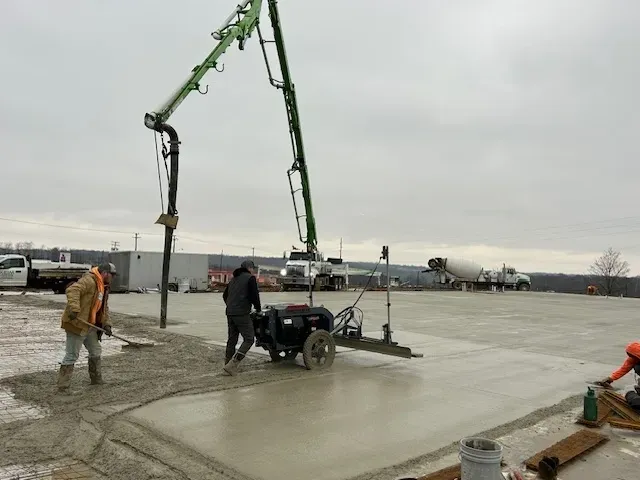
Oregon gives a concrete pumping contractor two very different jobs — a steep, congested Portland hillside on one hand, a spread valley or wildland-edge site on the other — but the cost of insuring either lands on the same two factors, and neither is the crew. A pumper is priced first on the boom pump truck as a single very expensive asset, and second on the overhead power-line exposure that comes with placing concrete in three dimensions. No one has posted a real Oregon number for either, because a carrier assembles the premium from your specific operation rather than a rate card.
That assembly matters more for a pumper than for a general concrete crew. A one-truck operation working Eugene slabs and a fleet threading booms across West Hills hillside pours share a class name and little else, so a carrier reads them from separate pictures. Here is what genuinely moves the number for an Oregon pumping operation.
No published Oregon pumping price — and why
A premium is the output of an underwriting model, not a sticker. The carrier takes your real exposures — the boom truck you run, how close your pours sit to overhead lines, your crew, your loss history, and the limits your contracts require — and prices each line against them. Change one input and the number moves.
Oregon splits between the dense Portland metro and a spread of valley and mountain work, which makes a statewide average hollow. Portland concentrates the state’s vertical pours — Pearl District and downtown high-rise plus demanding West Hills hillside placement on steep, tight lots amid established overhead lines — while the broader Willamette Valley around Salem and Eugene and the fast-growing Bend area run lower-rise and horizontal. A pumper concentrated in Portland vertical work and one on valley-floor spread price from different realities.
Portland hillsides and the high-value boom truck
For a pumping contractor the truck is the operation, and it concentrates a large amount of value in one specialized unit. That is why the commercial auto line covering its physical damage and its liability — on the road and while set up over a pour — leads the cost. Oregon sharpens the point on Portland’s West Hills, where booms set up on steep, tight lots that test reach and outrigger footing at the same time. A foundation crew’s trucks are ordinary; they follow the crew and the finished work. A pumper’s truck is the work. Its value, the reach of the boom, how many units you run, and the maintenance and operating discipline behind them are weighed closely, because a truck loss is expensive and it takes you off the job. Scheduling that unit to its real value is where this driver is decided.
Wildfire country and the overhead line
The second signature cost is why pumping underwrites unlike any other concrete trade, and Oregon gives it a distinctive edge. Utilities across the state run public-safety power shutoffs and grid-hardening programs over higher-risk terrain — a standing reminder of how thoroughly overhead conductors line the rural and wildland-edge corridors a crew works. A boom moves concrete in three dimensions, and contact between that boom and an energized line is the catastrophic event a carrier prices against — it can cause serious bodily injury, and it is exactly what general liability and an umbrella exist to answer. On established Portland streets the boom works near dense service; on wildland-edge and valley sites it works beneath long overhead runs. Because the severity is high, a carrier weighs your clearance protocol, spotter discipline, and placement record heavily — not as a fixed surcharge, but as an exposure priced on how you manage it.
Real-World Scenario: A crew sets a boom on a steep West Hills lot in Portland, negotiating reach and footing near the established overhead service above the street, while another places concrete at a wildland-edge site outside Bend beneath a long distribution run in a hardening corridor. Different terrain, same defining exposure — the boom near energized conductors — and the same two lead drivers, the truck and the power-line risk. The operator who can lay out clearance and spotter procedure clearly gives a carrier a reason to price the severity down.
The delivery line and pipe
Beneath the truck and the overhead line is a third exposure — the pressurized delivery system. A hose or pipe that bursts during a pour can hurt a worker and damage the surrounding site, so it forms part of the general liability a carrier weighs. A documented maintenance log on your lines and fittings works for you, because it trims the on-site losses an underwriter has to assume.
A lean crew, the CCB license, and private comp
A pumping operation runs lean — usually an operator and a spotter, not a labor-heavy finishing crew. Workers compensation is still a real line, and Oregon runs a competitive private market for it, overseen alongside the admitted market by the Oregon Division of Financial Regulation. Oregon does license contractors — anyone working for compensation on construction must hold a Construction Contractors Board license, which itself requires a surety bond and liability insurance — and general contractors commonly require comp regardless. But because the crew is small, the payroll-driven comp line is generally a smaller share of a pumper’s cost than the truck and the power-line exposure, which is exactly why pumping is a different cost conversation than a foundation operation.
Loss history and how carriers weigh it
Your claims record is a driver you have quietly been writing for years. A clean one widens the market and improves the price; a serious power-line, auto, or liability loss in the last few years narrows it and lifts the number. Carriers also read what surrounded the loss — one incident with clearance and spotter fixes afterward differs from a recurring pattern. The lasting lever is documented discipline: boom-to-line clearance, spotter protocol, and operator training under OSHA standards, all present in the record a carrier prices for a concrete pumping operation.
Limits, umbrella, and catastrophic-loss logic
What you buy is a driver in its own right. Because a power-line strike is catastrophic, the limits your general contractors require move an Oregon pumper toward an umbrella faster than most trades, and higher limits cost more than lower ones. Whether general liability sits where the boom exposure demands, whether the truck and any property are scheduled to real value, and how the limits are structured all shape the figure. This is a poor place to under-buy, since the one catastrophic loss the coverage answers is the reason the class underwrites the way it does.
Getting an accurate Oregon quote
An accurate figure starts with an accurate description of the operation. Tell a broker the boom truck you run and its value, the pours you place and how close they sit to overhead lines, your clearance and spotter discipline, your crew, your loss history, the limits your contracts require, and where you work — Portland hillside and high-rise, Willamette Valley and Bend horizontal, wildland-edge corridors, or a mix. From there a carrier with real pumping appetite can price it, and you can compare like for like. When you are ready, start a quote and tell us about your equipment and your placements, browse the full coverage overview, or read the market picture on the Oregon concrete pumping insurance page. To see how these drivers compare across the trade, the concrete insurance cost overview sets them side by side.