

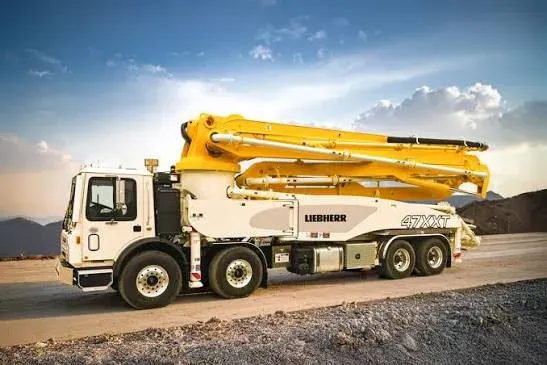
There is no published price for concrete pumping insurance in Mississippi, and any number quoted before an underwriter has looked at your operation is a guess. A carrier builds the cost from your specific business — and for a pumper that cost is led by two things a general concrete crew does not carry: a high-value boom pump truck and the overhead power-line exposure of placing concrete in three dimensions. Mississippi shapes the second driver in a particular way: this is largely a spread, low-rise market, so the boom’s value shows less in tower height and more in reaching across open jobsites threaded by long overhead utility runs.
That answer frustrates owners who just want a figure, but for a pumper the drivers are distinct enough that understanding them beats a fake average. Much of the state is flat — most dramatically the Delta’s broad alluvial plain in the northwest — so boom placement rarely fights grade, but the dispersed pattern of development means crews work residential and light-commercial sites strung under overhead distribution across rural and small-town corridors. The Jackson metro and the rebuilt Gulf Coast around Gulfport and Biloxi supply most of the denser commercial and mid-rise pours; elsewhere the work is scattered and overhead-lined. That geography leads the cost story.
Why long overhead runs, not tower height, lead the exposure
Start with what makes Mississippi distinctive. The catastrophic general-liability exposure that defines pumping is boom-to-power-line contact, and here it comes not from stacking a boom against a downtown skyline but from reaching one over open, spread sites where energized distribution runs overhead along roadsides and field edges. A boom places concrete in three dimensions, and contact with one of those lines is the severe event carriers price against — it can cause serious bodily injury, and it is exactly the loss that general liability and an umbrella are built to answer. Because so much placement is dispersed rural and small-town work rather than dense buried-grid infill, a crew has to keep clearance and spotter discipline sharp on every open lot, and a carrier weighs that discipline heavily. For the full market picture, see our Mississippi concrete pumping insurance page; this is the cost companion to it.
The boom pump truck — a high-value asset that logs real miles
For a pumper the truck is the operation, and in a spread, low-density state it logs real road miles reaching scattered pours. A boom pump truck concentrates a large amount of value in one specialized unit, so the commercial auto line that covers its physical damage and its liability — on the highway between jobs and set up on an open site — is a leading driver of your cost. That is the opposite of a general install crew, whose vehicles are ordinary work trucks. The value, reach, and type of the boom, how many units you run to cover the territory, and how disciplined the maintenance is are inputs a carrier weighs closely, because a loss involving the truck is both likely to be expensive and central to keeping you working. Scheduling the truck to its real value is where this driver is won.
Line and pipe failure on the pour
The delivery system itself is an exposure beyond the boom and the lines. A line or pipe that fails under pressure during a pour can injure people and damage property on the site, so it is a real part of the general-liability picture a carrier prices. On spread rural work where the pump runs at distance from the plant, documented line and pipe inspection and maintenance are genuine levers — a clean record reads well because it lowers the frequency of the on-site losses an underwriter is trying to weigh.
The license, the crew, and a lighter comp line
Mississippi licenses contractors: the state issues a commercial contractor license through the Mississippi State Board of Contractors for commercial and public projects above a set value, and carrying the right classification signals a settled operation while general contractors add their own insurance and additional-insured requirements. On the crew, a pumping operation runs smaller than a labor-heavy install crew — an operator and a spotter rather than a full finishing crew. Workers compensation is still a real line, placed with a private carrier in Mississippi’s competitive market, but because the crew is small, the payroll-driven comp line is generally a smaller share of a pumper’s cost than the boom truck and the power-line exposure — which is what makes pumping a different cost conversation than a general concrete crew, where payroll leads.
Claims history and coverage choices
Your loss record is a driver you have been writing for years. A clean history opens more markets and prices better; a serious power-line, auto, or general-liability loss in recent years narrows the field and raises the number, and carriers read the story behind the losses — one incident followed by corrected clearance and spotter procedures reads differently than repeated events. Documented operator training under OSHA standards shows up in that record, and on a spread rural book of work a carrier reads how consistently that discipline travels from job to job. What you buy matters too: because the power-line exposure is catastrophic, the limits your general contractors require push a pumper toward an umbrella more firmly than most trades, and whether you schedule the truck and any property to real value feeds the number. The Mississippi Insurance Department oversees the carriers your program is placed with.
Expansive ground and the distance a boom truck covers
Central Mississippi’s Yazoo Clay is one of the most notoriously expansive soils in the country — its extreme shrink-swell drives void-form, over-excavation, and stiffened-slab detailing across the Jackson belt. That ground condition shapes the foundations and slabs a pumper places, but for the cost picture the more telling factor is distance. Outside the Jackson metro and the Gulf Coast, Mississippi is rural and dispersed, so a high-value boom truck logs real highway miles reaching scattered pours, and the commercial-auto driver reflects both the on-site setups and the road exposure of a unit that travels far between jobs. A truck that runs long distances to reach a spread rural site is exposed on the highway as much as on the pad, and an underwriter weighs that mileage alongside the value of the boom itself.
Demand keeps that travel steady rather than seasonal. Gulf Coast rebuilding and casino work around Gulfport and Biloxi, the industrial corridor near Canton, and scattered highway and residential projects across a low-density state give a pumper a workload that is spread out but ongoing, and the Deep-South heat that shortens the placement window on long hauls only sharpens the premium on a well-maintained boom and disciplined line handling. The through-line for the cost story stays the same: a high-value truck covering long distances, and the overhead-line exposure that rides every open, dispersed site it reaches.
Real-World Scenario: One crew places a commercial pour in the Jackson metro, working the boom on a denser built-up lot where the overhead distribution runs close, while another crew drives out to a scattered light-commercial site on the flat Delta, setting up under a long primary line strung along the field edge with the nearest plant well behind them. Same low, spread state, same two lead drivers — the truck and the power-line risk — but very different miles and settings. The operator whose clearance and spotter discipline holds up on every open lot gives a carrier a reason to price the severity down.
How to get an accurate Mississippi quote
The path to a real number is to describe your real operation. Tell a broker the boom truck you run and its value, the territory you cover and how the open, overhead-lined sites present, your clearance and spotter discipline, your crew, your claims history, and the limits your contracts require. From there a carrier with genuine pumping appetite can price it, and you can compare like-for-like instead of chasing a headline rate that was never built for a spread, low-rise, long-haul operation like yours. When you are ready, start a quote and tell us about your equipment and placements, browse the full coverage overview, read the broader concrete insurance cost picture, or see the concrete pumping service detail. The number at the end will reflect your business, which is the only number worth having.