

There is no published price for concrete pumping insurance in Kansas, and any number quoted before an underwriter has looked at your operation is a guess. A carrier builds the cost from your specific business — and for a pumper that cost is led by two things a general concrete crew does not carry: a high-value boom pump truck and the overhead power-line exposure of placing concrete in three dimensions. Kansas makes a statewide average especially misleading because it concentrates its high-value pumping in two unlike metros against a broad rural remainder.
That answer frustrates owners who just want a figure, but for a pumper the drivers are distinct enough that understanding them beats a fake average. Wichita, the state’s largest city and a heavy aviation-industry center, brings large industrial plants and hangar-scale pours where a boom threads around sprawling structures and their overhead service lines. The Kansas City metro on the eastern edge — Overland Park and the dense Johnson County suburbs — is a built-up commercial and multi-family market with tighter, curb-to-building setups near urban overhead utilities. Beyond those two, the state runs to oil-and-gas country and the Flint Hills, flattening into spread, low-rise agricultural and energy work fed by long rural overhead runs. That two-metro-plus-rural pattern leads the cost story.
Two unlike metros and a broad rural remainder
Start with geography, because in Kansas it changes the boom exposure. In Wichita the pours are hangar-scale, so the boom works across large structures and around the overhead service lines that feed them. In the Johnson County suburbs the setups are tight and curb-to-building, close against urban overhead utilities. Out in the south-central and western counties, the state flattens into spread work strung under long rural distribution runs. In every one of those settings the catastrophic exposure is the same — boom-to-power-line contact — but the way it presents differs sharply, which is exactly why a carrier weighs the mix you actually work rather than a state average. A boom places concrete in three dimensions, and contact with an energized line is the severe event that general liability and an umbrella are built to answer. For the full market picture, see our Kansas concrete pumping insurance page; this is the cost companion to it.
The boom pump truck — your leading cost driver
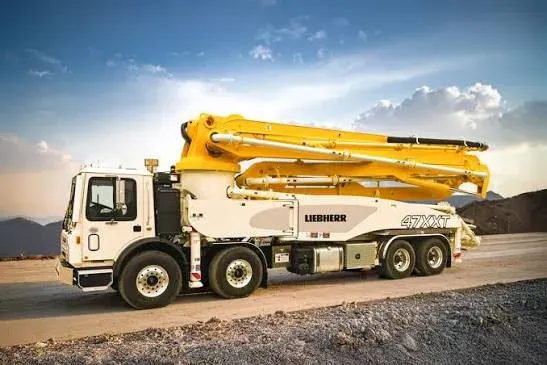
For a pumper the truck is the operation, and Kansas runs it across settings as different as a hangar-scale Wichita pour and a tight Overland Park lot. A boom pump truck concentrates a large amount of value in one specialized unit, so the commercial auto line covering its physical damage and its liability — on the road and set up on site — is a leading driver of your cost. That is the opposite of a general install crew, whose vehicles are ordinary work trucks. The value, reach, and type of the boom, how many units you run to cover both metros and the rural remainder, and how disciplined the maintenance is are inputs a carrier weighs closely, because a loss involving the truck is both likely to be expensive and central to keeping you working. Scheduling the truck to its real value is where this driver is won.
The overhead power-line exposure — the catastrophic driver
The second signature driver is the reason pumping underwrites unlike any other concrete work. Contact between the boom and an overhead line is the severe event carriers price against — it can cause serious bodily injury, and it is exactly the catastrophic loss general liability and an umbrella exist to answer. In Wichita it rides the overhead service feeding sprawling industrial structures; in the Johnson County suburbs it sits close against urban distribution on tight lots; on the western plains it runs along long rural lines over open sites. Because the severity is high wherever it presents, a carrier weighs your clearance discipline, spotter protocol, and placement record heavily — a real exposure priced on how you manage it, not a fixed surcharge.
Line and pipe failure, licensing, and a lighter comp line
The delivery system is an exposure beyond the boom and the lines: a line or pipe that fails under pressure during a pour can injure people and damage property on the site, so documented inspection and maintenance are genuine levers a carrier reads. On licensing, Kansas has no statewide general or concrete contractor license — licensing is entirely local by city and county, with only roofing requiring statewide registration — so the gate is local permitting and the contract, and what a carrier prices is your operation while general contractors set their own insurance requirements. On the crew, a pumping operation runs smaller than a labor-heavy install crew, so workers compensation, placed with a private carrier in Kansas’s competitive market, is generally a smaller share of a pumper’s cost than the boom truck and the power-line exposure.
Claims history and coverage choices
Your loss record is a driver you have been writing for years. A clean history opens more markets and prices better; a serious power-line, auto, or general-liability loss in recent years narrows the field and raises the number, and carriers read the story behind the losses — one incident followed by corrected clearance and spotter procedures reads differently than repeated events. Documented operator training under OSHA standards shows up in that record. What you buy matters too: because the power-line exposure is catastrophic, the limits your general contractors require push a pumper toward an umbrella more firmly than most trades, and whether you schedule the truck and any property to real value feeds the number. The Kansas Insurance Department oversees the carriers your program is placed with.
Shrink-swell ground and the miles between the metros
Eastern Kansas and the Kansas City metro sit on very-high-shrink-swell clays that swell wet and shrink dry, making expansive-soil movement the state’s defining concrete and foundation risk. That ground shapes the slabs and foundations a pumper places in the populated east, but for the cost picture the more telling factor is the spread. Kansas concentrates its high-value work in Wichita and the Kansas City corridor, then thins into hundreds of miles of oil-and-gas country, wheat plains, and Flint Hills where the pours are scattered and far apart. A high-value boom truck that reaches from an industrial Wichita pour one week to a rural energy or agricultural site the next logs real highway miles, so the commercial-auto driver reflects both the on-site setups and the road exposure of a unit that travels a wide territory. An underwriter weighs that mileage alongside the value of the boom.
The two-metro-plus-rural shape also means a Kansas pumper often carries more variety in a single book of work than a contractor in a compact state — hangar-scale industrial reach, tight curb-to-building suburban setups, and long-run rural placement under distribution lines all in one season. That variety is exactly why a statewide average is close to useless and why describing the mix you actually work matters. The two lead drivers hold across all of it: a high-value truck covering distance, and the overhead-line exposure that changes shape from the Wichita service grid to the Johnson County curb line to the open western run.
Real-World Scenario: One crew reaches a boom across a hangar-scale industrial pour in Wichita, threading around the sprawling structure and its overhead service, while another crew sets up on a tight Overland Park commercial lot where the distribution runs close against the curb. Same state, same two lead drivers — the truck and the power-line risk — but two very different setups a hundred-odd miles apart. The operator whose clearance and spotter discipline reads the same on both gives a carrier a reason to price the severity down.
How to get an accurate Kansas quote
The path to a real number is to describe your real operation. Tell a broker the boom truck you run and its value, the metros and rural territory you work and how the pours present, your clearance and spotter discipline, your crew, your claims history, and the limits your contracts require. From there a carrier with genuine pumping appetite can price it. When you are ready, start a quote and tell us about your equipment and placements, browse the full coverage overview, read the broader concrete insurance cost picture, or see the concrete pumping service detail. The number at the end will reflect your business, which is the only number worth having.