

There is no published price for concrete contractor insurance in Washington, and any figure quoted before an underwriter reviews your crew is a guess. Washington is also unusual: its workers compensation runs through a state fund rather than a private carrier, which reshapes how the rest of your install program is built and priced. This guide walks the drivers that decide what a concrete contractor actually pays.
That answer frustrates owners who just want a figure, but the state-fund reality makes it worth understanding rather than guessing. A flatwork crew pouring subdivisions near Spokane and a foundation contractor working seismic ground around Seattle are the same class only in name, and a carrier reads them from different pictures. Below is what moves the number for an install operation in Washington, starting with the piece the state handles differently from almost everywhere else.
Where Washington starts different: comp runs through the state fund
Washington is a monopolistic workers-compensation state, which means the comp piece of your program does not sit with a private carrier at all. Workers compensation is written only through the state fund, administered by the Washington State Department of Labor and Industries, and no private carrier can sell it here. The state’s insurance market more broadly is overseen by the Washington State Office of the Insurance Commissioner. None of that makes comp irrelevant to your cost — it moves it. The lines a private carrier actually prices are your general liability, commercial auto, property, and umbrella, and we are direct about that split rather than implying a private comp market that does not exist.
The practical effect is that your crew payroll still drives your private number, just through a different door. Payroll is a rating basis for general liability, so the labor-heavy nature of concrete — pouring, finishing, lifting, and material handling — still shows up in what you pay even though the comp line lives with the fund. Reading the two together, and being honest about which sits where, is the first step in an accurate Washington quote. For the full market and regulatory picture, see our Washington concrete contractor insurance page; this guide is the cost companion to it.
Your L&I registration and bond, and how they touch your cost
Washington does not let a concrete contractor work on a handshake. Contractors must register with Labor and Industries as a general or specialty contractor and carry a surety bond and liability insurance to hold that registration. The registration and bond are a gate to work rather than an insurance rate, but they interact with your program: a general contractor or project owner layers its own certificate-of-insurance and additional-insured requirements on top of the state minimum, and those contract requirements are what push your general-liability and umbrella limits upward. The credential you carry and the contracts you sign therefore shape the coverage you buy, which is one of the real cost inputs on the private side.
Crew payroll still leads the private number
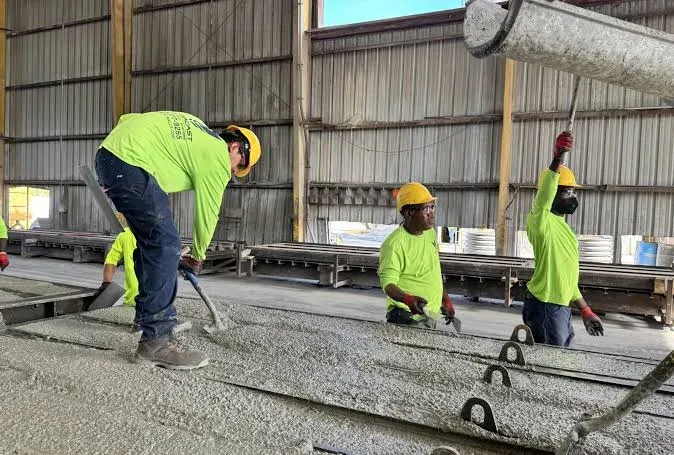
Even with comp at the state fund, payroll is the input a private carrier watches most closely, because it is the rating basis for general liability. It is not just the dollar figure — it is which work the payroll covers. Pouring, finishing, lifting, and setting and stripping forms carry a different injury and liability profile than supervisory or estimating work, so a carrier rates each by what the crew actually does. The physically demanding reality of placing and finishing concrete on Washington’s terraced Puget Sound lots is exactly the exposure being priced, and describing your workers-compensation posture through the fund alongside your general-liability payroll is part of getting this driver right.
Completed operations: the seismic and marine-moisture tail
For an install contractor the exposure that defines the class is completed operations — the work you leave behind. A slab, a driveway, a foundation, or a structural pour keeps existing after your crew is gone, and installed concrete that fails downstream can become a serious third-party claim long after the work. Western Washington raises the stakes: high Cascadia-driven seismic hazard, a wet marine climate, and liquefaction-prone ground mean a foundation that settles or a slab that moves is a real, and potentially severe, way that tail shows up. The completed-operations side of general liability is the signature line built to answer for it, so your revenue and your finishing record are inputs a carrier weighs closely — this is the install contractor’s defining cost driver.
Real-World Scenario: A Bellevue contractor sets structural foundations on a hillside site engineered for seismic loads, while a Tacoma crew pours flatwork across a warehouse project near the port. Both leave finished concrete that must perform for years, but an underwriter reads them differently — the foundation work carries a heavier, higher-stakes completed-operations tail on seismic ground, while the flatwork rides on more, smaller pours. Same Washington, same install class, same state-fund comp — but the revenue mix and the completed-work picture price differently. The owner who can describe that clearly gets a sharper quote.
The yard, your forms, and your equipment
The property line covers what you own and store — the yard, the forms, the power trowels, screeds, floats, and mixers, and any shop space. For an install contractor this is usually a smaller driver than the crew and the completed-work exposure, but it is real, and it is one you control by scheduling your equipment to its true value rather than guessing. In a wet climate that is hard on stored steel and gear, underinsuring the equipment that gets your crews to a finished pour is a false economy.
Work trucks — the minor auto line
Unlike a pumping or ready-mix operation, an install crew’s vehicles are ordinary work trucks and trailers hauling crews, forms, and tools. Commercial auto is a genuine line, and it grows with your rolling stock, but it does not lead the way it does for the other concrete operating models. Puget Sound traffic makes it a line worth carrying at real limits, but it remains a supporting driver behind the crew and the completed-work tail, not the center of the risk for the concrete construction model.
Claims history and coverage limits
Your loss record is a driver you have already been writing. A clean history opens more markets and prices better; a serious general-liability or completed-operations loss in the last several years narrows the field, and a frequency of small claims can matter as much as one large one. Carriers read the story behind the losses too, and documented crew training and finishing quality under OSHA standards show up in the record they price. Finally, what you buy is a driver: the limits Seattle-area general contractors and public-infrastructure contracts require push you toward an umbrella, and higher limits cost more than lower ones — which matters because a single completed-operations failure on a seismic foundation can run well above a primary limit.
The Puget Sound market behind your limits
Washington’s construction demand concentrates in the technology-driven Puget Sound corridor — Seattle, Bellevue, and Tacoma — with Spokane anchoring the eastern side of the state and Vancouver the southwest, and a steady base of public-infrastructure work running underneath it all. For an install contractor that mix matters to cost because it shapes who you contract with and on what terms. Tech-campus and commercial developers, public-works owners, and general contractors on dense, congested urban sites all set demanding certificate-of-insurance and additional-insured requirements, and they tend to require higher limits than a small private job does. The more your revenue leans on that work, the more your general-liability and umbrella limits — and therefore the private number a carrier builds — reflect it. That demand also concentrates on constrained hillside and infill sites where finished concrete has to perform under seismic and moisture stress, which keeps the completed-operations tail front of mind. Telling a broker which corridors you work, which clients you serve, and the contracts you sign lets a carrier price the private program to the operation you actually run rather than to a statewide guess.
How to get an accurate Washington quote
The path to a real number is to describe your real operation. Tell a broker your crew payroll and the work it covers, your revenue and the concrete you leave behind, your equipment values, your claims history, the limits your contracts require, where in Washington you work, and confirm your comp runs through the state fund. From there a carrier with genuine concrete appetite can price the private side — and you can compare apples to apples instead of chasing a headline rate. When you are ready, start a quote and tell us how your crews work, browse the full coverage overview to see how each line fits together, or read the national concrete insurance cost pillar for the cross-state view. The number at the end will reflect your business, which is the only number worth having.