

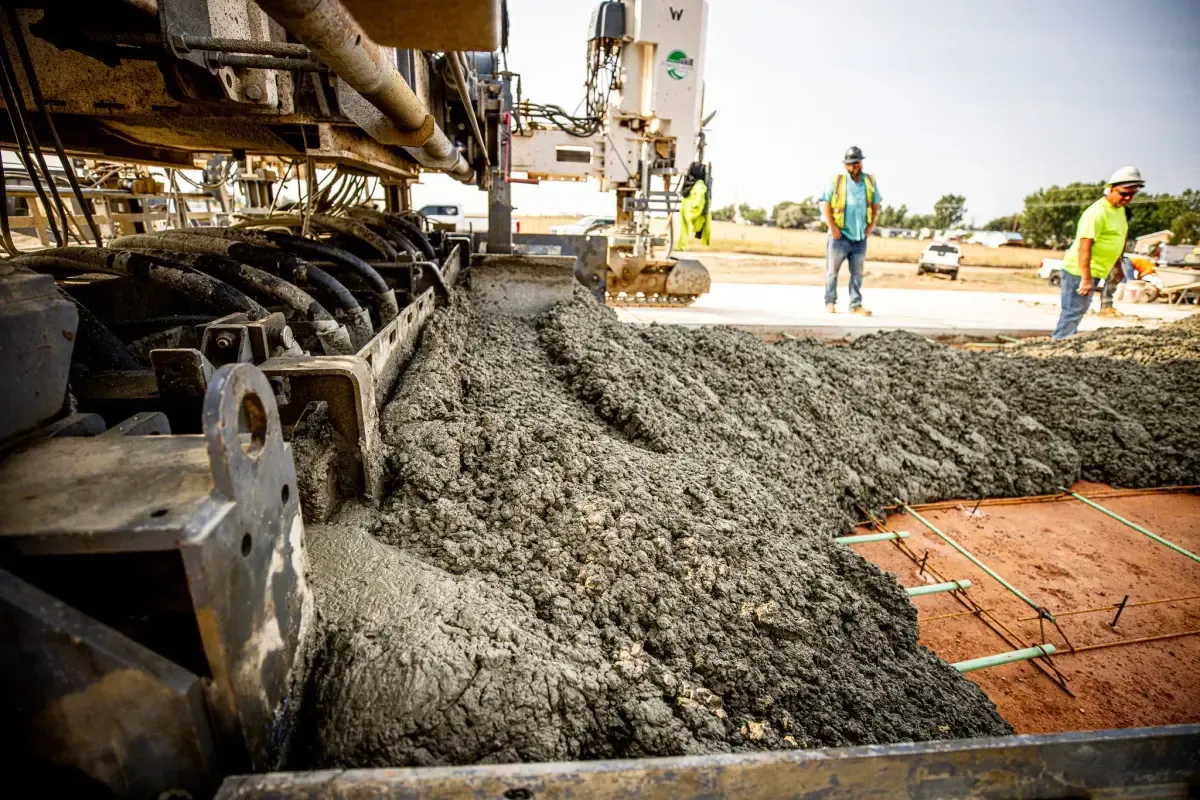
There is no published price for concrete contractor insurance in Oklahoma, and any number you see before an underwriter has looked at your crew is a guess. Oklahoma leads its cost story with unusually movement-sensitive ground: expansive clays that can exert enormous heave pressure paired with human-induced seismicity, both sharpening the completed-operations tail on the concrete you leave behind, with crew payroll driving the rest. This guide walks the drivers that decide what an install contractor pays.
That answer frustrates owners who just want a figure, but it is the honest one, and Oklahoma’s ground makes the completed-work exposure worth understanding rather than guessing at. A residential flatwork crew and a commercial foundation contractor are the same trade only in name, and a carrier prices them from different pictures. Below is what moves the number for an Oklahoma install operation, starting with the ground that sets it apart.
Movement-sensitive ground — Oklahoma’s completed-operations pressure
For any install contractor the exposure that defines the class is completed operations — the work you leave behind — and Oklahoma’s ground makes it unusually demanding. The state pairs expansive clays that can exert enormous heave pressure with human-induced seismicity tied to wastewater injection, so foundation and slab work is unusually movement-sensitive. A slab or foundation you pour keeps existing after your crew is gone, and concrete that heaves on reactive clay or cracks under ground movement is exactly how installed work fails downstream — becoming a serious third-party claim years after the pour. The completed-operations side of general liability is the signature line built to answer for it, which is why your revenue and your soils-preparation-and-finishing record are inputs a carrier weighs closely. This is the install contractor’s defining cost driver in Oklahoma.
Real-World Scenario: An Oklahoma City foundation contractor sets structural footings on high-pressure expansive clay, while a Tulsa-area flatwork crew pours slabs and approaches for commercial build-out. Both leave finished concrete behind that has to hold on movement-sensitive ground for years, but the underwriter reads them differently — the foundation contractor’s completed-operations tail rides on fewer, higher-stakes pours where a heave claim can be severe, the flatwork crew’s on higher-volume work. Same Oklahoma, same trade, but the revenue mix and the completed-work picture price differently. The owner who can describe that clearly gets a sharper quote.
Crew payroll and your operator classifications
Payroll is usually the single biggest driver for an install contractor, because it scales both your workers compensation and a large part of your general liability. It is not just the dollar figure — it is which work the payroll covers. Pouring, finishing, lifting, and setting and stripping forms carry a different injury profile than supervisory or office work, so a carrier rates each by what it actually does. Oklahoma runs a competitive workers-comp market — overseen by the Oklahoma Insurance Department — so comp is placed with a private carrier, and getting your payroll classifications right against how your crews actually work is where this driver is won.
No statewide license — the honest picture
Oklahoma does not require a statewide license to work as a general or concrete contractor; there is no state concrete-contractor license to hold. Licensing is handled at the city and county level, while specialty trades are state-licensed through the Construction Industries Board, so the gate here is local permitting and the contract, not a statewide credential. We are honest about that rather than implying a license that does not exist, and honest that its absence does not lower your cost by itself. A general contractor or project owner still sets its own certificate-of-insurance and additional-insured requirements, and those push your limits. Higher limits cost more than lower ones, so the contracts you sign remain a genuine driver even where no statewide license applies.
Revenue, the energy economy, and why an “average” misleads
Your revenue is a rating basis for general liability, and it interacts with the completed-work tail: more revenue behind installed concrete means more work carrying that long exposure. A premium is the output of an underwriting model, not a sticker, and Oklahoma — carrying energy-sector, commercial, residential, and highway-and-infrastructure construction — bundles operations a carrier would never price the same way. A blended statewide number tells you almost nothing about an Oklahoma City foundation contractor versus a small flatwork crew. For the full market picture, see our Oklahoma concrete contractor insurance page. This guide is the companion cost explainer.
The yard, your forms, and your equipment
The property line covers what you own and store — the yard, the forms, the power trowels, screeds, floats, and mixers, and any shop or storage you run. For an install contractor this is usually a smaller driver than the crew and the completed-work exposure, but it is real, and you control it by scheduling your property and equipment to real value rather than guessing. Underinsuring the gear that gets your crews to a finished pour is a false economy.
Work trucks, claims history, and the coverage you carry
An install crew’s vehicles are usually work trucks and trailers hauling crews, forms, and tools — real, but not the center of the risk, so commercial auto is a genuine but minor line for this model, growing with your rolling stock and the long runs Oklahoma work can demand. Your loss record is a driver you have been writing for years: a clean history opens more markets and prices better, while a serious general-liability, completed-operations, or workers-comp loss narrows the field. Carriers read the story behind the losses — a claim followed by corrected soils-preparation and finishing procedures reads differently than repeated incidents, and operational discipline under OSHA standards shows in the record. What you buy is a driver too: the limits your contracts require push you toward an umbrella, and higher limits cost more, which matters because a single completed-operations failure on a foundation can run well above a primary limit.
Where your Oklahoma work happens
Your Oklahoma footprint feeds the underwriting picture. Oklahoma City and Tulsa anchor the state’s two real metros with commercial, residential, and highway-and-infrastructure construction; Norman, Broken Arrow, Edmond, and Lawton add steady work; and energy-sector construction pulls pours toward the fields. Expansive-clay heave pressure, induced-seismicity sensitivity, and the balance of foundation to flatwork vary across those markets, so an OKC foundation on high-pressure clay and a lighter suburban slab carry different completed-work tails.
Oklahoma’s economy ties closely to energy alongside its metro commercial and infrastructure work, and that mix shows up in where the heavy pours land. A statewide average cannot capture the difference between a movement-sensitive foundation job and routine flatwork. When you tell a broker which Oklahoma markets your crews serve and the concrete you leave in each, a carrier can weight the completed-operations exposure on movement-sensitive ground to your real footprint and price the operation rather than an Oklahoma-wide guess. The fuller that account, the more exactly a carrier can match your limits to the heave-prone work your crews leave behind. Whether a pour sits on high-pressure clay near the metros or on ground touched by induced seismicity, the details you bring move the number more than any published figure can.
How to get an accurate Oklahoma quote
The path to a real number is to describe your real operation. Tell a broker your crew payroll and the work it covers, your revenue and the kind of concrete you leave behind on movement-sensitive ground, your equipment values, your claims history, the limits your contracts require, and where in Oklahoma you work. From there a carrier with genuine concrete appetite can price it. When you are ready, start a quote and tell us how your crews work, or browse the full coverage overview to see how each line fits together for the concrete construction model. For the market and regulatory picture, see the Oklahoma concrete contractor insurance page and our concrete insurance cost pillar. The number at the end will reflect your business, which is the only number worth having.