

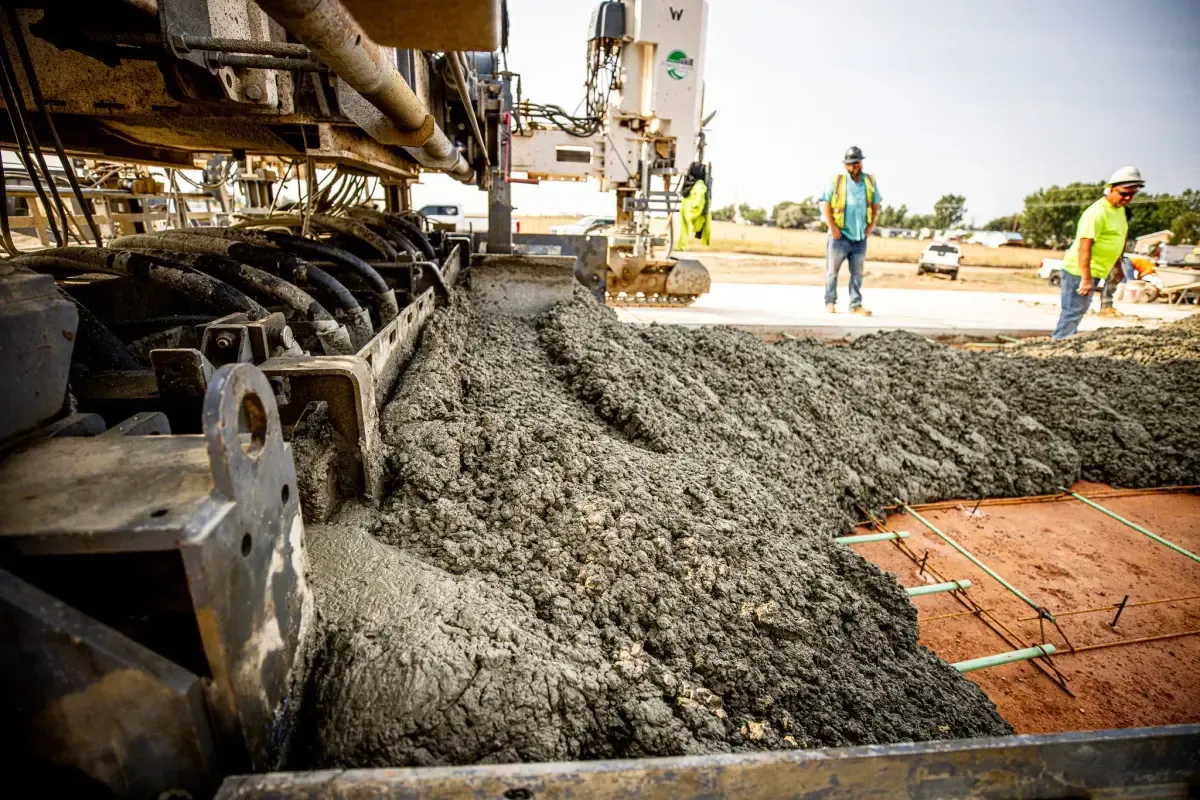
There is no set sticker for concrete contractor insurance in Idaho, and a quote handed over before an underwriter has seen your crews is guesswork. A carrier constructs the figure from your specific install work — who is on the crew and what they do, the revenue trailing your finished concrete, your history, and the limits you carry. What follows is the anatomy of that figure for an Idaho install contractor.
Few states are growing faster, and Idaho concrete reflects it: the Treasure Valley — Boise, Meridian, Nampa — throws off subdivision, warehouse, and tilt-up volume, while crews around Idaho Falls, Pocatello, and Coeur d’Alene cover far longer distances between jobs. An underwriter reads a tight-radius valley operation and a distance-heavy mountain one as separate animals, which is why a blended Idaho figure is close to useless for your own.
The ground Idaho pours on — frost and faults together
Begin with the demands the state places on the concrete, because they flow straight into the risk a carrier prices. Idaho puts hard mountain freeze-thaw and real seismic exposure in the same place: central and eastern Idaho sit inside the Intermountain Seismic Belt, among the most active ground in the lower forty-eight. A slab or foundation poured here has to shrug off both the repeated freeze cycles that spall and craze weak concrete and the movement of a seismically live region — so when finished work goes wrong downstream, Idaho hands it more than one route to failure.
Registration, not an exam — and what that means for your book
Idaho does require its contractors to be on the books, but the mechanism is distinctive: it registers construction work above a low threshold rather than testing it through a competency exam, and it issues no concrete-specific credential — the Idaho Contractors Board inside the Division of Occupational and Professional Licenses runs it. For pricing, that registration matters less as a fee and more as the peg your contracts hang on — the general contractor or owner on a job layers its certificate-of-insurance and additional-insured terms onto it, and those demanded limits are a live input to your premium. We pin down the credential your Idaho work truly needs first. The market-and-regulatory side of all this lives on the Idaho concrete contractor insurance page; this is its cost companion.
Payroll drives comp and much of your liability at once
On most install books payroll is the single largest lever, because a carrier pulls it into both workers compensation and a wide band of your general liability. The figure alone is only half of it — the other half is the task behind the hours. Placing and finishing a slab, or handling forms, carries a sharper injury profile than office or oversight time, and each class is priced to what the crew is really doing; in Idaho’s cold stretches that hands-on work often adds cold-weather handling on top. Comp here trades in a competitive private market, and splitting your payroll classes accurately is where the driver is decided.
Completed operations: the long tail Idaho ground extends
Revenue anchors your general-liability rating, but completed operations is the exposure that actually names the install class — the concrete standing after the crew leaves. A footing, a slab, a walk, a foundation keeps bearing load for years, and installed concrete that later moves or fails can return as a third-party claim well after the pour. On Idaho’s freeze-thaw-and-seismic ground the failure modes stack — surface spalling from freeze cycles, or movement where the fault system is active. The completed-operations arm of your general liability is the line written to answer, so a carrier looks hard at your revenue and your finish quality before pricing. This is the driver that sets an install contractor apart.
Real-World Scenario: A Meridian crew turns out slabs and foundations across new Treasure Valley tracts through a compressed building season, while a contractor east of Idaho Falls sets footings on seismically active ground and races a short cold-weather window. Both leave concrete that must last, but the underwriter separates them — the valley book runs on volume, the eastern book on ground where frost depth and seismic design are live. Same state, same class, two prices — and the owner who can narrate the difference gets the better one.
The storage yard, your forms, and mobile gear
Property coverage stands behind what you own and store — the storage yard, the forms, and the floats, screeds, trowels, and small mixers that travel Idaho’s long roads to each job. It usually sits below the crew and the completed-work exposure in weight, but across those distances it is real, and you own the outcome by insuring the gear to genuine replacement cost rather than a guess. Underinsuring the equipment that gets a crew to a finished pour is false thrift; honest scheduling is the whole point.
Work trucks — the secondary auto line here
An Idaho install crew moves on ordinary trucks and trailers carrying people, forms, and tools. That keeps commercial auto a real but supporting line — it grows with the fleet but never leads the way a mixer fleet or a boom-pump truck would. One trade, but the method of placing concrete forks it into distinct cost stories.
How your claims record reads
Your loss history is a driver you have been writing for seasons. A clean sheet opens markets and prices tighter; a serious liability, completed-operations, or comp loss in recent years closes markets and pushes the number up, and repeated small claims can bite as hard as one large one. Carriers weigh the shape of it too — one loss answered by better safety and finishing practice reads far better than the same thing twice. The lever you hold is field discipline: training, fall and lifting protection, and finishing kept to OSHA standards all land in the file a carrier reads.
Buying limits deliberately
Finally, the coverage you choose is itself a driver. Contract-required limits above your primary push you into an umbrella, and more limit costs more than less — which counts when a single completed-operations failure on a foundation can outrun a primary policy. Whether your general liability holds the products-completed-operations aggregate your revenue warrants, whether your gear is scheduled to value, and where you set limits all cycle back into price. These are decisions to make on purpose, not corners to cut, and they separate a cheap concrete construction policy from the right one.
Reaching an accurate Idaho quote
A real number begins with a real description. Give a broker your crew payroll and its class split, your revenue and the concrete you leave behind, your storage yard and equipment values, your claims history, the limits your jobs require, and where in Idaho you pour — Treasure Valley, mountains, or high desert. A carrier with real concrete appetite prices from that, and you weigh true like-for-like rather than a headline. When ready, open a quote and describe how your crews run, or scan the coverage overview to see the lines fit. Confirm the regulator yourself at the Idaho Department of Insurance, and for the national shape of these drivers, read the concrete insurance cost pillar. The figure you land on will describe your business — the only one worth carrying.