

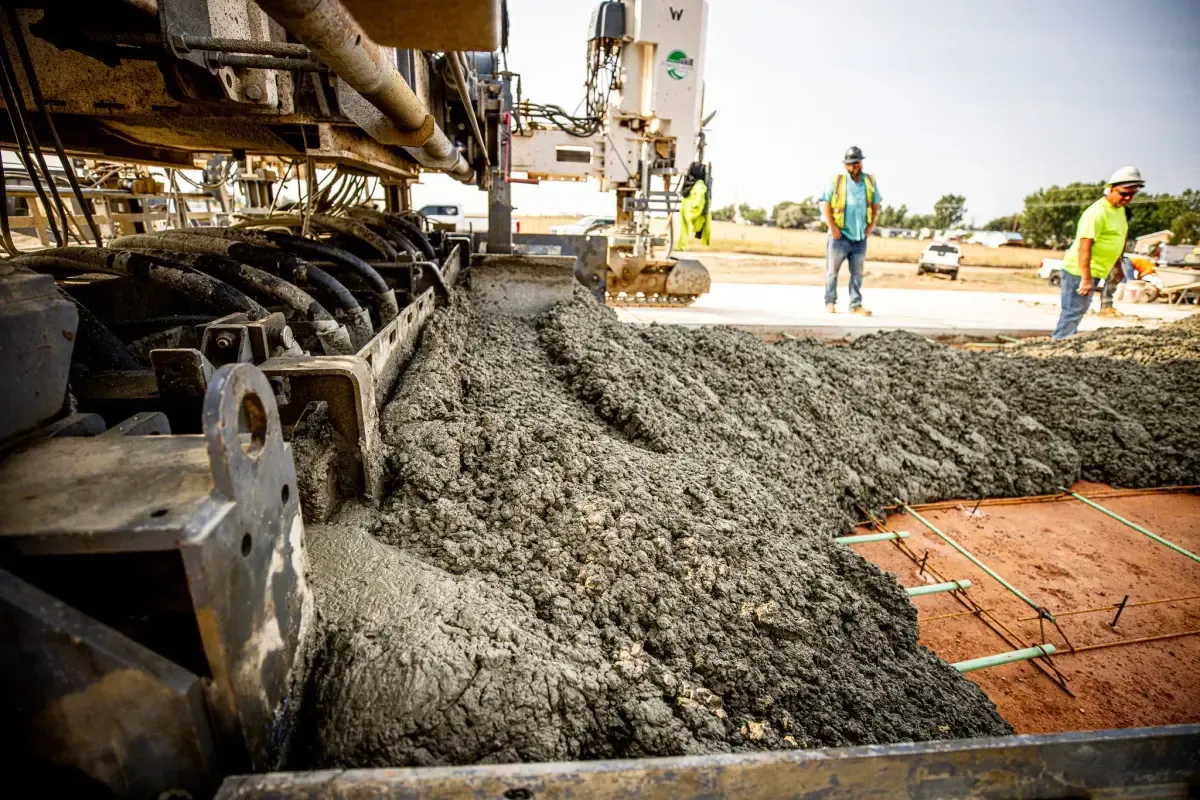
There is no published price for concrete contractor insurance in Arizona, and any figure quoted before an underwriter has seen your crew is a guess. A carrier builds the cost from your specific install operation — the ROC classifications you hold, your payroll and the work it covers, the revenue behind the concrete you leave behind, your record, and the coverage you carry. This guide walks those drivers.
Arizona is unusual among the states we place in that it pairs a genuine statewide licensing gate with a competitive private workers-comp market, and both feed the cost conversation. Before you rate a single line, the Arizona Registrar of Contractors decides whether you can hold the work at all, and the classification you carry tells a carrier what your crews actually do. Start there, then move to the crew.
The Arizona contractor license comes before any premium
Arizona licenses contractors, and the license is the eligibility gate that sits in front of the whole cost conversation. A contractor license is required for nearly all contracting work regardless of project size, and concrete falls under the Registrar of Contractors’ commercial, residential, or combined concrete classifications. Which one you hold is not a formality to a carrier — it describes the work you actually perform, and that description shapes how your payroll and your completed-operations exposure rate. On top of the license, a general contractor or project owner layers its own certificate-of-insurance and additional-insured requirements, which is a second, contract-driven input to the coverage you end up carrying. You can confirm classification requirements with the Arizona Department of Insurance and Financial Institutions and the Registrar; the Arizona concrete contractor insurance page carries the fuller market and regulatory picture that sits behind this cost explainer.
Why crew payroll leads the number
For a labor-heavy install contractor, payroll is usually the single biggest driver, because it scales both your workers compensation and a large part of your general liability at once. Arizona runs a competitive workers-comp market, so comp is placed with a private carrier and priced to your real crews — the pouring, finishing, lifting, and material handling that define the concrete injury profile. It is not only the dollar figure; it is which work the payroll covers, since crews placing and finishing concrete in desert heat carry a different exposure than supervisory or office staff. Structuring comp to the actual work, and coordinating it with general liability, commercial auto, and property, is how this driver is priced accurately rather than guessed.
Revenue and the completed-operations tail on desert ground
Your revenue is a rating basis for general liability, but the exposure that defines the install class is completed operations — the work you leave behind. This is where Arizona’s ground matters. The populated low desert sits on caliche hardpan and expansive clays that shrink and swell through monsoon-and-drought moisture cycles rather than freeze-thaw, and that movement is exactly how installed concrete fails downstream. A slab, a walkway, or a foundation keeps existing after your crew is gone, and one that heaves or settles as the desert ground moves can become a serious third-party claim long after the pour. The completed-operations side of general liability is the signature line built to answer for it, which is why your revenue and your finishing-and-quality record are inputs a carrier weighs closely — this is the driver that separates concrete from trades that leave nothing behind.
Real-World Scenario: A Phoenix flatwork crew pours a run of driveways and sidewalks across a fast-growing Sun Belt subdivision, while a Tucson foundation contractor sets slabs over caliche and shrink-swell clay near a large data-center project. Both leave finished concrete that has to perform for years, but an underwriter reads them differently — the flatwork crew’s completed-operations tail rides on many smaller pours, the foundation contractor’s on fewer, higher-stakes slabs where a settlement claim can be severe. Same Arizona, same install class, but the revenue mix and completed-work picture price differently. The owner who describes that clearly gets a sharper quote.
Claims history and the record a carrier reads
Your loss record is a driver you have already been building for years. A clean history opens more markets and prices better; a serious general-liability, completed-operations, or workers-compensation loss in the last several years narrows the field, and a frequency pattern of small claims can matter as much as one large one. Carriers also read the story behind the losses — a single claim followed by corrected safety and finishing procedures reads differently than repeated, similar incidents. The durable lever is operational discipline: documented crew training, fall and lifting safety, and heat-illness prevention under OSHA standards all show up in the record a carrier prices.
The property line — the yard, forms, and equipment
The property line covers what you own and store — the storage yard, the forms, the power trowels, screeds, floats, and any shop you run. For an install contractor this is usually a smaller driver than the crew and the completed-work exposure, but it is still real, and it is one you control by scheduling your equipment to its actual value rather than guessing. Underinsuring the gear that gets your crews to a finished pour is a false economy; scheduling it accurately is where this driver is won.
Work trucks — the minor auto line
Unlike a pumping or ready-mix operation, an install crew’s vehicles are ordinary work trucks and trailers hauling crews, forms, and tools — real, but not the center of the risk. Commercial auto is a genuine line for this model and it grows with the size of your rolling stock, but it does not lead the way it does for the other concrete operating models. Getting it coordinated with the rest of the program matters more than treating it as the headline.
Coverage limits and the umbrella decision
Finally, what you buy is a driver. The limits your general contractors, developers, and project contracts require push you toward an umbrella, and higher limits cost more than lower ones — which matters for a concrete contractor because a single completed-operations failure on a foundation can run well above a primary limit. Whether you carry general liability with the products-completed-operations aggregate your revenue actually calls for, whether you schedule your equipment to value, and how your limits are set all feed the number. None of these are places to under-buy blindly; they are places to buy deliberately for the concrete construction model.
Getting an accurate Arizona quote
The path to a real number is to describe your real operation. Tell a broker your ROC classifications, your crew payroll and the work it covers, your revenue and the kind of concrete you leave behind over Arizona ground, your storage yard and equipment values, your claims history, the limits your contracts require, and where between Phoenix, Mesa, Chandler, Scottsdale, Gilbert, and Tucson you work. From there a carrier with genuine concrete appetite can price it. When you are ready, start a quote and tell us how your crews work, browse the full coverage overview, or read the national concrete insurance cost pillar for how the drivers behave across states. The number at the end will reflect your business, which is the only number worth having.