

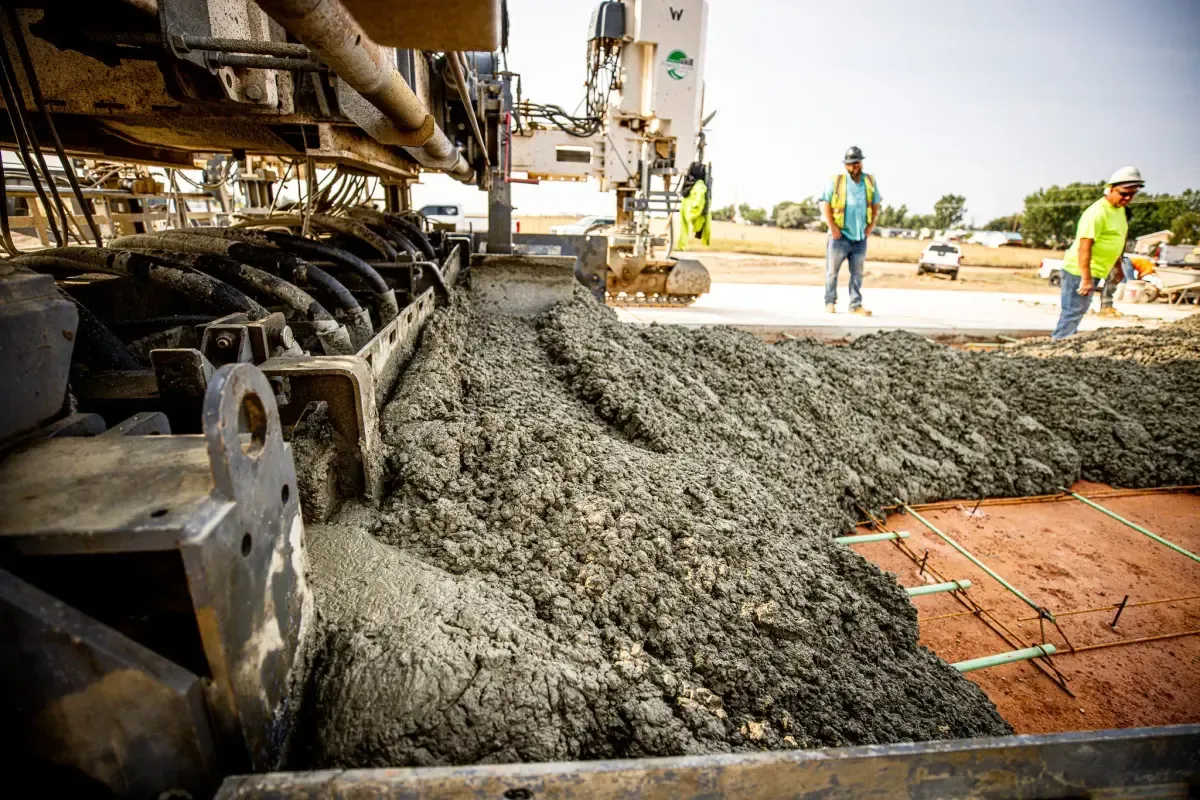
A Virginia concrete contractor’s commercial insurance is usually built from the same core lines: general liability, commercial auto, workers’ compensation, an umbrella and property or equipment coverage. The lines are the same as in any state. What Virginia changes is the licensing, the workers’ comp enforcement and the contract rules that sit around them.
This post is for Virginia contractors who pour flatwork, foundations, walls and commercial slabs, from small residential crews to subs on large public jobs. For the state overview, start with the Virginia page.
The core lines and what each one does
- General liability. Injury and property damage to others from your operations and your finished work. The completed operations part matters most for concrete, because slabs, walls and sidewalks keep being used long after the crew leaves.
- Commercial auto. Pickups, dump trucks, mixers, pump trucks and the trailers that haul forms and equipment. Hired and non-owned auto covers vehicles you rent or employees drive on business.
- Workers’ compensation. Employee injuries, from back strains on a screed to a fall from a wall form.
- Umbrella. Limits above general liability, auto and employer’s liability when a contract calls for more than the primary policies carry.
- Property and equipment. Your shop, yard and office, plus inland marine for forms, saws, power trowels, laser screeds and other tools that move between jobs.
The does a concrete business need an umbrella policy post explains when the excess layer is worth it.
Virginia workers’ comp rules
Virginia applies its workers’ compensation law to every employer and employee by conclusive presumption, except as the title states. Its definition of employee leaves out the workers of a business that regularly has very few employees in the state, unless they and their employer elect to be bound (Va. Code 65.2-101). Read that definition before deciding a small crew is exempt, and remember that general contractors commonly ask for a comp certificate regardless. An executive officer may reject coverage for injury by accident by notice filed with the Commission, but that rejection does not reach the crew.
A covered employer must secure its liability through an insurer authorized to write workers’ compensation in Virginia, a Commission certificate as an individual self-insurer, or membership in a licensed group self-insurance association, among the listed methods (Va. Code 65.2-801). The Workers’ Compensation Commission can assess a civil penalty for each day of noncompliance and order the employer to cease business operations after notice. Knowing and intentional failure to insure is a criminal misdemeanor.
Next step. Send your current policies, your license class and your payroll by type of work through the quote form. We write concrete, so the questions will be the ones a concrete underwriter asks.
Real-World Scenario: A Virginia flatwork contractor with a small license class wins a bid on a larger commercial slab. The general contractor’s subcontract asks for a higher umbrella limit, additional insured status on a completed operations basis and a comp certificate. The contractor discovers the license class is too small for the contract value and the umbrella does not follow the general liability form. Both have to be fixed before mobilization, and the general contractor will not release the job until they are.
Licensing and the Concrete Contractor specialty
Virginia law says no person may engage in or offer to engage in contracting work in the Commonwealth unless licensed under the contractors chapter. License classes are tied to the value of individual contracts and total work over a year, and contracting without a license, or without the right class for the value of the work, is a misdemeanor. Virginia’s contractor regulations also define a Concrete Contractor specialty covering the processing, proportioning, batching, mixing, conveying and placing of concrete (18VAC50-22-30).
Insurance and licensing grow together. A contractor moving up a license class is usually moving into contracts that ask for higher limits, broader additional insured wording and an umbrella.
Contracts, time limits and safety
Virginia’s construction-contract indemnity statute voids an indemnity provision covering liability caused solely by the other party’s negligence, and applies to contracts with public bodies as well (Va. Code 11-4.1). Shared-fault indemnity is still common, so match the contract to the additional insured endorsement.
Virginia also bars injury and property damage actions arising from a defective improvement to real property against those who performed the construction once a set period has passed after the work. Keep completed operations in force through that window. Ground conditions feed those claims: Virginia’s Department of Energy describes the Coastal Plain as unconsolidated and partially unconsolidated material, with sand, silt and clay. Settlement is a common allegation in slab and foundation claims there, so read any earth movement exclusion before the policy binds. Virginia operates its own OSHA-approved state plan for private employers, and underwriters commonly ask about fall protection on wall forms and trench work for footings.
The Virginia concrete construction page shows how the lines fit together for install crews. To have a Virginia concrete account reviewed, use the quote form.